Sex in the age of ambiguity
Every few years, a new set of terms enters the conversation and everyone pretends this is where the story begins. “Hetero-flexible.” “Bi-curious.” Even “hetero-phobia,” a word that sounds reactionary until you realize it is trying to name a feeling of drift, the sense that what once felt central now feels oddly out of focus.
Language is always late. Desire arrives first, unannounced and unmannered, and only afterward do we scramble to give it a name polite enough for daylight. No one wakes up wanting a label. They wake up wanting a person. The label comes later, usually to make other people more comfortable. In a culture like ours, defined by what is left unsaid, desire is even more of a fugitive. We find ourselves searching for a vocabulary that won't disturb the peace of a Forbes Park lanai or a Cebu City boardroom, even as the heart has already crossed the border.
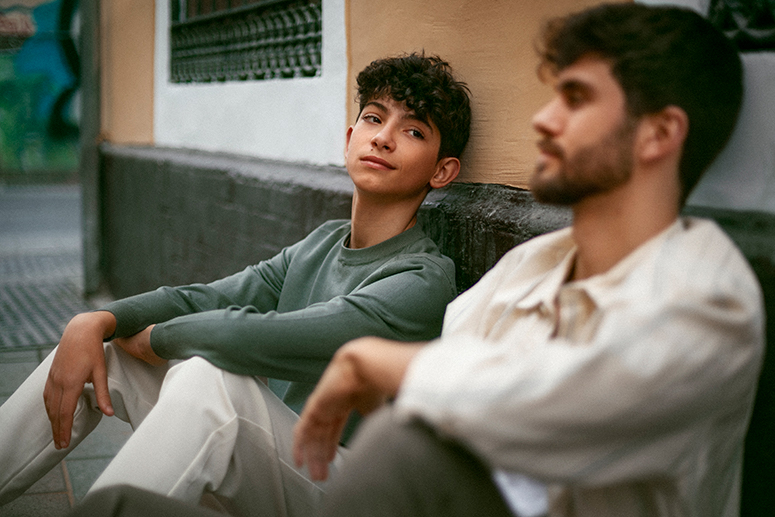
What has shifted is not sex itself but the pressure to turn every encounter into an identity statement. For a long time, sex came with instructions and consequences attached. Who you touched dictated who you were, what you could be, and how loudly or quietly you were allowed to exist. That logic is losing its grip, and not everyone is pleased.
You can see the change most clearly in the stories we circulate. When Call Me by Your Name, Luca Guadagnino’s film adaptation of André Aciman’s novel of the same name, first went viral, it was treated like an event, a test, a cultural litmus paper dipped into a glass of desire. Was it tender enough? Was it dangerous? Was it corrupting? The film carried the burden of representation because we still expected sex between men to explain itself.
Less than a decade later, Heated Rivalry, a Canadian television series about romance in major league hockey, streams on HBO Max under a different climate. The sex is frank, choreographed, unapologetic, and strangely calm. It does not rush to declare what it means. Two men want each other. They negotiate power, pride, secrecy and pleasure, and the story trusts the audience to sit with that without demanding a moral footnote. In Manila, we are seeing the same thaw. The old, rigid machismo of the action star era is being replaced by something more fluid, a reality where the heirs of our traditional families are allowed to be both fierce in the boardroom and fragile in the dark.

This is what unsettles people. It’s not the explicitness, but the lack of hysteria. It’s the sex that refuses to behave like a confession.
Part of this shift has to do with how children are being raised. Girls are taught to be resilient, vocal, and unafraid of friction. They are encouraged to take space, to name harm, to survive systems that were not built with them in mind. That project is deliberate and overdue. At the same time, boys are being raised differently than before. They are encouraged to be attentive, emotionally articulate, receptive rather than dominant by default. They are praised for tenderness that previous generations learned to hide or harden.
This asymmetry makes adults uneasy. It produces the question no one asks without embarrassment over a long lunch at Rockwell. Are we raising girls to be strong and boys to be soft and, if so, what does that do to the traditional structures we have spent generations pruning?
The question assumes sexuality is something engineered rather than discovered. It treats desire as an outcome of training instead of an encounter with oneself. It also reveals how fragile heterosexuality still is, how much rehearsal it seems to require to feel secure.
Hetero-flexibility is less a revolution than a loosening. It allows attraction to register without panic. A kiss does not require a biography. Curiosity does not demand a rebrand. People are permitted to want without immediately drafting a press release about what that wanting means for the rest of their lives.
This does not eliminate confusion or consequence. People still hurt each other. People still hide, mislead, and arrive late to their own honesty. What has changed is the belief that there is only one correct shape for desire, and that deviation must be punished or explained away.
Popular culture reflects this shift. Sex on screen has become less about shock and more about texture. Bodies meet without the old insistence on justification. Masculinity bends without collapsing. Androgyny appears not as provocation but as fact. The result can feel gentler, even when the stakes remain high.

Older viewers sometimes mistake this gentleness for emptiness. They were raised on a version of sex that felt like a trial, something that could brand you for life. They learned to approach it with caution and strategy. Younger people are not immune to fear, but they are less impressed by it.
They grew up watching identities change shape online, watching people revise themselves in public. They understand that presentation is provisional. Sex becomes one part of a larger life, not the final verdict on who you are allowed to be.
Ironically, this makes room for straighter straight people as well. Men who love women do not need to perform hardness to prove it. Women who desire men are not diminished by that desire. When the center stops feeling besieged, it no longer needs to shout.

Sex remains complicated. It is private and public at the same time. It binds and it destabilizes. It can be a refuge or a mess. What feels new is not sex itself but the permission to let it be plural, unresolved, and occasionally unfinished.
If there is grooming happening, it is not toward gayness. It is toward ambiguity. Toward the ability to live without immediate answers. Toward a world where desire can be acknowledged without being turned into either a prison or a banner.
For those of us raised under stricter rules, this can look like carelessness, or decline, or loss. It may be nothing more than a refusal to let sex do all the talking for us.