

Yes, 'Heated Rivalry' is steamy—that’s not the point
The viral success of Heated Rivalry, produced by Crave Productions and shown on HBO Max, can’t be explained by steam alone—though it would be dishonest not to acknowledge that the show is very steamy, in a way that has made even seasoned viewers glance around like they’re doing something slightly illicit. The heat is real, intentional, and unapologetic. But what transformed those scenes from titillating moments into a full-blown cultural fixation was how deliberately they were embedded in character, power, and emotional history.
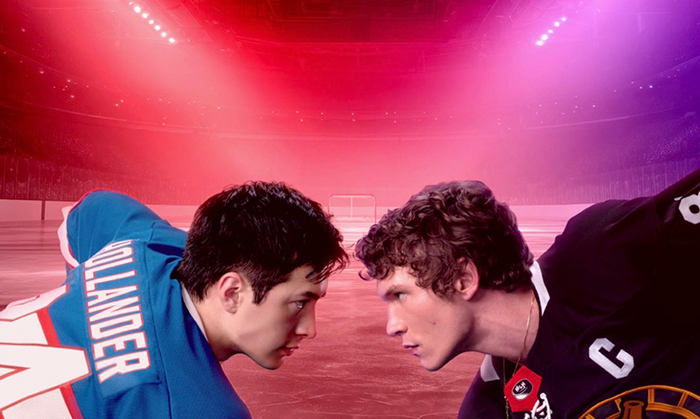
Adapted from the books by Canadian writer Rachel Reid, and directed by Jacob Tierney, the series understands that eroticism is most potent when it’s earned. At its center are Shane Hollander (played by Hudson Williams) and Ilya Rozanov (portrayed by Connor Storrie), two elite hockey players whose professional rivalry doubles as emotional cover.
The viral gay hockey drama made viewers blush — but its real appeal lies in its emotional honesty, cultural timing, and two breakout performances.
Canadian Shane is the league’s golden boy: media-trained, sponsor-friendly, and visibly tense in the way of someone constantly calculating what he can afford to lose. His masculinity is controlled, rehearsed, and legible to the public. Russian Ilya, by contrast, performs excess. He’s provocative, confrontational, and emotionally reckless, projecting confidence while refusing to make himself smaller for comfort. Where Shane survives by minimizing risk, Ilya survives by daring the world to look.
Their chemistry doesn’t stem from opposition so much as recognition. Each man represents a path the other might have taken. The show makes this legible not through dialogue-heavy confession, but through physicality: the way they instinctively stand too close, the way irritation slides seamlessly into intimacy, the way eye contact feels charged rather than accidental. We’re dropped into moments that feel mid-history—arguments already half-had, silences already weighted with repetition. There’s no narrative hand-holding, because the series trusts viewers to read bodies and pauses as fluently as words.
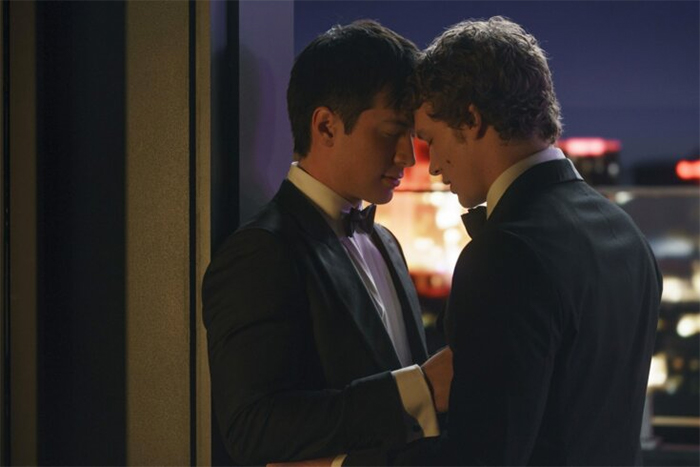
This trust is key to why the show resonated so widely. Desire in Heated Rivalry isn’t framed as discovery or sudden liberation; it’s framed as endurance. The tension isn’t will they want each other but how long can they keep living like this. Loving each other requires constant negotiation—with careers, with public scrutiny, with internalized fear. For many queer viewers, this feels familiar. The show reflects a reality shaped by delay: waiting until it’s safe, until it won’t cost too much, until you’re sure you can survive being seen.
The hockey setting intensifies that reality. Professional sports remain one of the last mainstream spaces where queerness is treated as theoretical rather than present. Within that environment, rivalry becomes a socially acceptable excuse for fixation. Aggression becomes a mask for longing. Every press conference, locker room scene, and casual joke quietly reinforces what’s at stake. The show never lectures about masculinity or repression; it lets the setting do that work organically.
CONTINUE READING BELOW

And yes, when the series chooses to be explicit, it does so boldly. The sex scenes are intimate, unguarded, and deliberately unsanitized—enough to feel transgressive without ever feeling gratuitous. They function as emotional punctuation marks rather than spectacle, articulating what the characters can’t safely say out loud. That frankness is part of what made the clips spread so quickly online. Viewers weren’t just reacting to nudity; they were reacting to vulnerability being treated as erotic rather than embarrassing.
The casting amplified the impact. Williams and Storrie were largely unknown before the show circulated online, which allowed audiences to meet the characters without preexisting expectations. That anonymity made the chemistry feel startlingly immediate. When the series went viral and the actors became overnight stars, the real-world response echoed the show’s central anxiety: What happens when something private becomes visible before you’re ready? The audience didn’t just watch that tension—they participated in it.
Crucially, the adaptation never flinches in response to attention. It doesn’t dilute its intimacy or rush toward easy reassurance. It allows contradiction to remain unresolved: that love can be sustaining and destabilizing at once; that desire doesn’t automatically lead to clarity; that some stories burn precisely because they take time.
Heated Rivalry resonated because it treated longing as something structural, not decorative. Because it under- stood that what people respond to isn’t just being shown everything—but being allowed to feel the weight of what’s being withheld.
It is steamy. It does make you blush. But it’s the control beneath the heat—the precision, the patience—that made it explode.
It didn’t just give viewers something to look at. It gave them something to feel—and to feel caught feeling.

WATCH: Save for retirement or enjoy life now? (Generations Ep. 21)
September 16, 2026
WATCH: Is OPM still as good as it used to be? (Generations Ep. 20)
September 9, 2026