

Evelio Javier remembered
When I visited Antique late last year for the inauguration of heritage landmarks, whose restoration was spearheaded by Antiqueña Sen. Loren Legarda, I happened to meet old-time residents who recalled the martyrdom of former Gov. Evelio B. Javier. Javier was gunned down in broad daylight on Feb. 11, 1986, two weeks before People Power erupted on EDSA.
One of them recounted that Evelio was shot by hooded men less than 100 meters away from the provincial Capitol, where election returns were being canvassed and tallied after the “snap” presidential elections of 1986.
“Evelio could have run back to the Capitol to seek refuge,” I was told, “but he was protecting the people inside. He didn’t want them hit by stray bullets.”
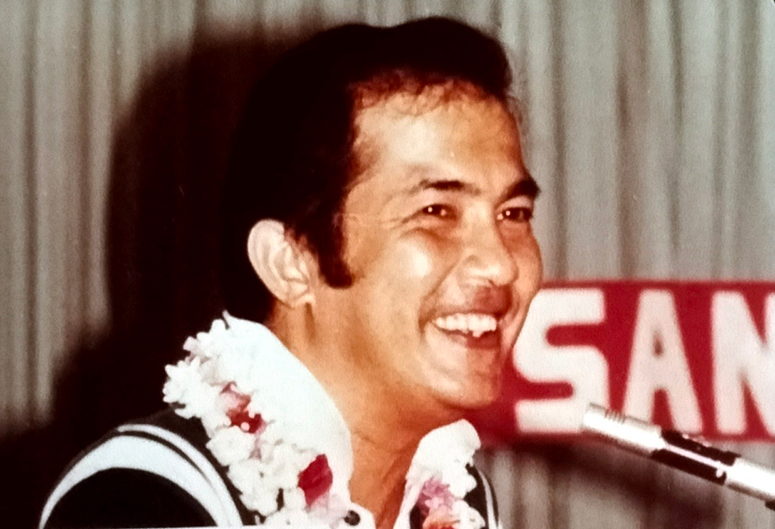
Instead, the wounded Evelio ran through the plaza in front of the Capitol, droplets of his blood leaving indelible marks on some rocks there. His assassins caught up with him in an outhouse across the plaza. Someone remembered him saying “lock the gates” to protect the residents.
His son Gideon, now 56, recalled during rites last Feb. 11 marking his father’s 40th death anniversary in the very same plaza where he was gunned down, “Forty years ago, my father came to this plaza ready to die. He had placed a long distance call to Los Angeles and spoke to each of us—my mother, my younger brother and myself to say goodbye.”
CONTINUE READING BELOW

“The killers walked into the plaza, guns blazing as everyone ran. My father’s companions were unarmed because any resistance would just be a win-win for the heavily-armed goons. Resistance would simply be their excuse to claim it was an encounter,” he said.
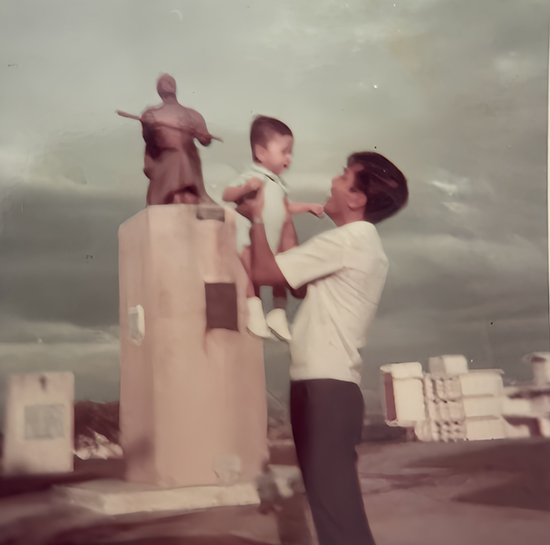
Gideon said his father was not driven by the things that normally drive politicians.
“We don’t really have a word for in English or karay-a. The closest I can come up with is in Latin, the language he favored when drinking with priests and classmates. The Latin word is civitas. English has a hard time explaining it. The best I can come up with is the karay-a demokrasya, but with feeling.”
(According to online sources, civitas means “citizenship,” especially as imparting shared responsibility, a common purpose, and sense of community.”)
“Some of the older ones in this audience will also remember that my father spoke in this plaza in 1980 to say that he could do no more as governor and so he was not seeking re-election. That is what it means to lead. It is to be there when your people need you, not to be a burden on them otherwise,” he concluded.
***
Evelio studied at the Ateneo de Manila, where he finished high school and college. He became president of the student council and while in law school, editor-in-chief of The Guidon. He taught at the Ateneo but returned to Antique.
At the age of 29, Evelio became the youngest provincial governor in the Philippines at the time. Throughout martial law, he maintained his political independence. He served for eight years. After that, he declined to serve another term, and instead went to Harvard University to take up a master’s course in public administration at the John F. Kennedy School of Government. He and Ninoy Aquino were reportedly at Harvard at about the same time.
Shortly after Ninoy’s assassination in 1983, Evelio returned to the Philippines.
Five days after the snap presidential elections, Evelio was shot dead.
His body was flown to Manila where it lay in repose at the Ateneo de Manila. His remains were then flown back to Antique for burial. His province mates mourned him “in an epic funeral procession that ran the 160-kilometer length of the island of Panay.”
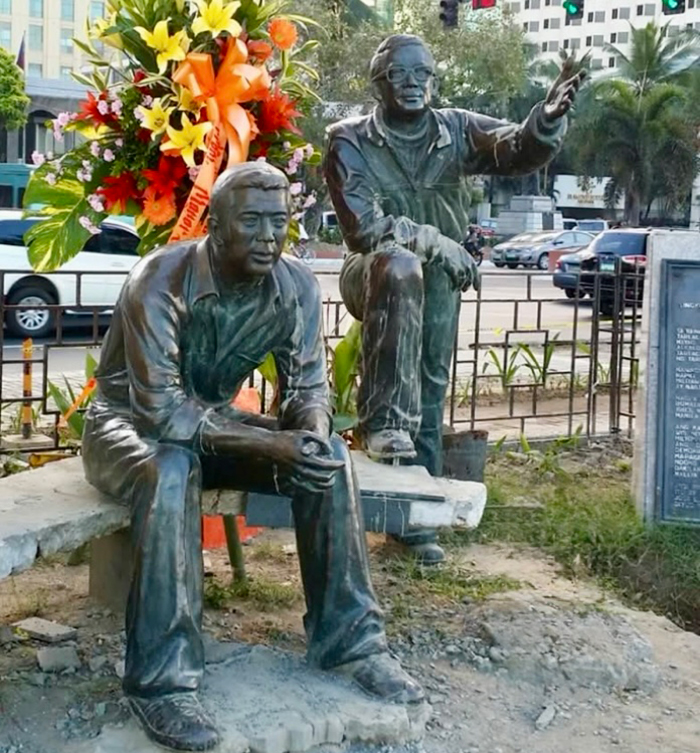
Last Friday, his family, friends, and admirers laid a wreath before the Aquino-Javier monument on the bay walk along Roxas Boulevard in Manila. The statues of Ninoy and Evelio that glow in the sun’s rays were created by sculptor Julie Lluch, who visited Gideon and took a close look at him before starting on the project. Lito Atienza, who was Manila mayor when the monument was first unveiled, provided Julie with more photographs.
Among those present during the wreath-laying were Evelio’s son Gideon and Eric Lachica, a Fil-Am advocate.
***
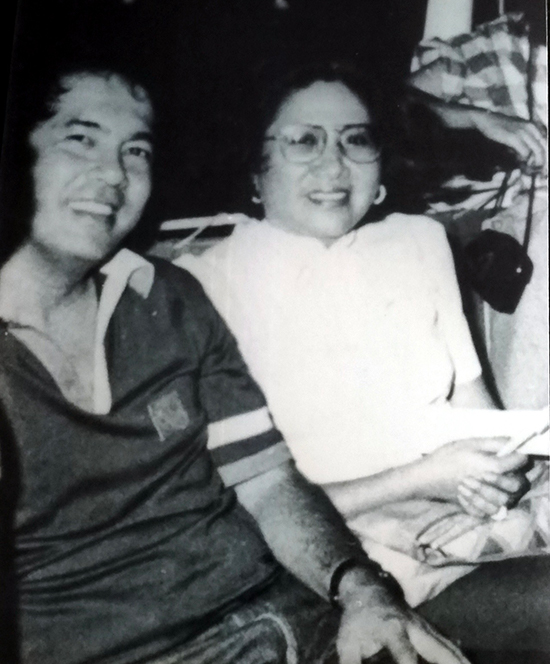
Former Antique Gov. Sally Perez also paid tribute to Evelio on the 40th year of his martyrdom.
“Forty years since Feb. 11, 1986, when bullets tried to silence a man whose only true weapon was courage. Forty years since we lost Evelio B. Javier in the vigor of his youth. Forty years since Antique wept in disbelief.”
Inday Sally added, “Money did not tempt him. Threats did not daunt him. Power did not awe him.”
“I remember him not only as a leader, but as a friend. I remember the exhaustion in his face after long days of meeting our people. I remember the tenderness with which he embraced farmers and market vendors. I remember children clinging to him, elderly mothers weeping on his shoulders, entire towns waiting for hours just to see him pass.
“That was not politics. That was love. And I remember the danger. The warnings. The whispers that he was being watched. I remember knowing that every step forward carried risk. Yet he never retreated. He believed that if Antiqueños could stand brave, he must stand braver.”
Inday Sally said the Supreme Court once compared Evelio to Saul and Jonathan, “swifter than eagles and stronger than lions.”
***
Postscript:
The only airport in Antique province, inaugurated on Jan. 19, 2026, is named after Evelio B. Javier. Present during the inauguration were President Bongbong Marcos, Sen. Legarda, Antique Rep. AA Legarda, Evelio’s nephew Gov. Paolo Javier, municipal mayors, and other local officials. The P1.576-billion project includes a new 360-passenger terminal building, an expanded 1,800-meter runway, and infrastructure to support up to four jet aircraft simultaneously.

WATCH: Is Gen Z too soft? (Generations Ep. 23)
September 30, 2026
WATCH: How to experience Bangkok and Kanchanaburi in one trip
October 21, 2026