

Mastering breathing to manage stress
A few weeks ago, I found myself as a surprise replacement instructor for an online mat Pilates certification class. One reason I readily agreed was my high regard for YogaFit founder Beth Shaw and one of its master instructors, Kim Gray. I also enjoy yoga and Pilates and welcomed the opportunity to learn how to conduct a beginner class.
Kim began by introducing the class to the YogaFit Essence.
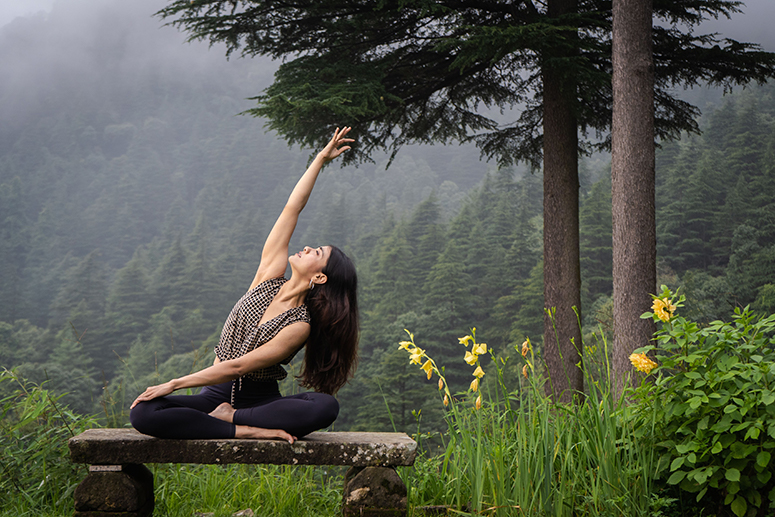
“Our instructors communicate in every class and remind students of the YogaFit Essence: breathing, feeling, listening to the body, staying in the present moment, and letting go of competition, judgment, and expectations,” Kim said.
“Breathing in our YogaFit classes is typically done through the nose. Deep diaphragmatic breathing is the key to a successful practice. The breath is our most powerful tool to calm and relax our bodies and clear our minds. It also helps us get deeper into our poses. Regardless of the pose, we always want to focus on maintaining a long, smooth breath,” she added.
Breathwork can help promote relaxation, reduce stress, support emotional release, and contribute to a sense of well-being.
On the importance of feeling, Kim said: “We want to feel something in every pose. During class, we remind students to check in with their bodies and modify poses to provide less or more sensation, as appropriate. When we feel something in each pose, we are more grounded in the moment and fully aware of our bodies and their potential.”
In this spirit of being present and aware, we are also trained to listen to our bodies. We are encouraged to let go of competition, judgment and expectations.
CONTINUE READING BELOW

“In yoga, we turn our attention inward. Letting go of external comparisons and judgments allows us to have a deeper experience in our practice. We learn to let go of competition and expectations; we practice based on how we feel today, not how we felt in our last yoga class. Yoga is a process and a journey, not a destination,” Kim explained.
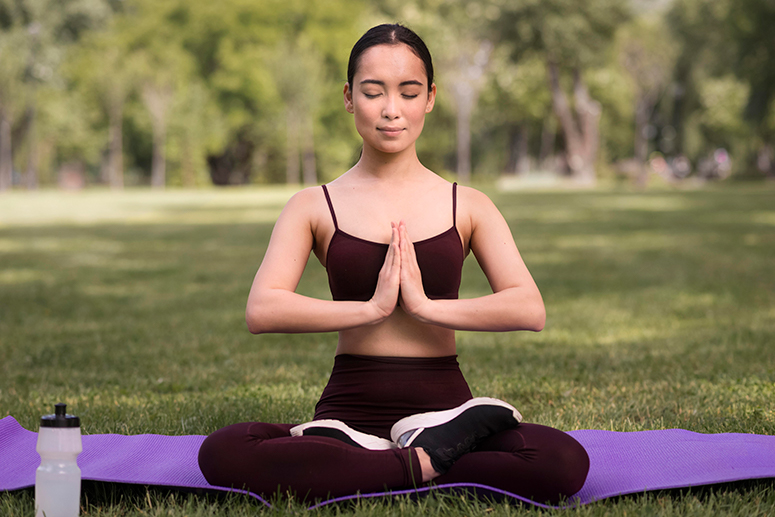
And that is how we stay in the present moment.
The key to doing this is breathwork. It involves breathing techniques and exercises used to influence a person’s physical, mental or emotional state. These techniques involve the conscious control of breathing, using patterns that may be deep, rhythmic or rapid. Breathwork can help promote relaxation, reduce stress, support emotional release, and contribute to a sense of well-being.
A 2023 study from Vanderbilt University School of Medicine examined whether yoga-based slow breathing with an exhale longer than the inhale, compared with breathing in which the exhale and inhale are equal in length, produces measurable differences in physiological and psychological stress. The 12-week, randomized, single-blind trial involved 100 participants. It found that slow breathing significantly reduced psychological stress, but extending the exhale relative to the inhale did not produce a significant additional effect.
Slow-breathing techniques are commonly used to reduce stress. Although mind-body practitioners have long believed that extending the exhale promotes greater relaxation, the Vanderbilt study suggests that slow breathing itself may be more important than the relative length of the inhale and exhale.

Kim also discussed breathing in PilatesFit, which focuses on activating the deep abdominal muscles while avoiding unnecessary muscular tension.
“PilatesFit breathing helps to fully activate the deep abdominal muscles while avoiding muscular tension or stress. Instead of shallow breaths into the upper chest or abdominal breathing with relaxed core muscles, PilatesFit focuses on deep breathing while maintaining an active core. By drawing the breath into the lower lobes of the lungs, efficient oxygen exchange takes place, and the ribcage expands dimensionally. We should feel the back and sides of the ribcage expanding on the inhale and contracting on the exhale. During this breathing, we work to keep the front of the ribcage from flaring or popping up to maintain active and supportive abdominal muscles,” Kim explained.
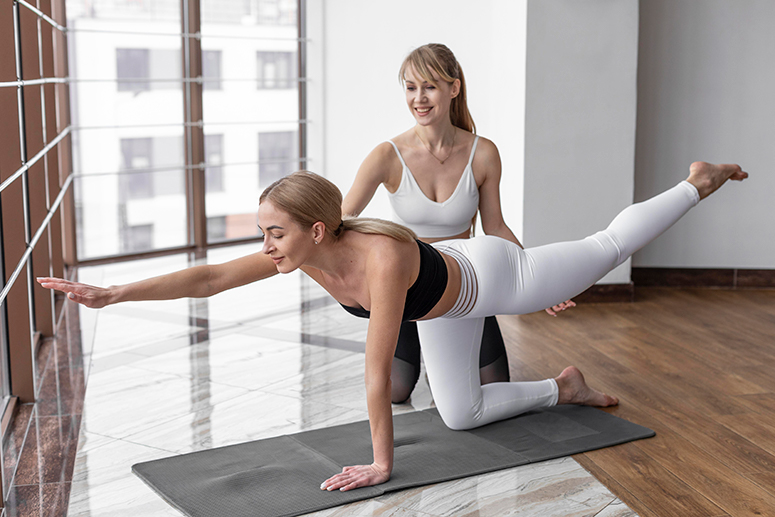
“Some people have difficulty coordinating breathing and movement. The important point is not to hold the breath, but to breathe continuously without straining during the exercises. As students become more familiar with the movements, they can focus on linking their breath with each exercise. Since spinal flexion encourages exhalation, while spinal extension encourages inhalation, we generally breathe this way when doing PilatesFit exercises that flex and extend the spine. In PilatesFit, we generally inhale through the nose to warm and cleanse the air, and exhale through the mouth.
“Students may need to breathe in and out through just the nose or just the mouth if that is more comfortable. During this breathing, we try to keep the front of the ribcage from flaring or popping up to maintain active and supportive abdominal muscles. Slightly constricting the airflow on the exhale can help increase abdominal compression. We can exhale through pursed lips, as if blowing out a candle, or pretend we are fogging up a mirror,” Kim added.
A 2023 study by the University of Sussex, which analyzed 26 randomized controlled trials involving 785 participants, also examined the effects of breathwork on stress and mental health. It found that breathwork interventions were associated with lower self-reported levels of stress, anxiety and depression compared with control conditions.
When learning new moves, poses and flows, it can be difficult to focus on both breathing and proper form, let alone give clear instructions to a class at the same time. But, like anything else, it takes concentration, practice and time.
It is best to start by mastering the breath. Even without movement, sitting still and breathing with awareness and intention can help calm racing thoughts and frayed nerves.

WATCH: Pixar Summer Fest adventure at Hong Kong Disneyland
August 10, 2026