

But the tarot lady on TikTok said he was still thinking of me
There are few things more modern, or more devastatingly ancient, than staring at your phone at 1:13 a.m. and believing that the universe is speaking directly to you through a stranger with a ring light.
Somewhere between the third replay of a TikTok tarot reading and the fifth time you zoomed in on an unread message, a feeling starts to harden into conviction. She shuffled the deck, looked into the camera, and said it plainly: he still thinks of you. Suddenly, your heartbreak has a plot. The story is no longer just that someone left, or pulled away, or chose not to choose you. The story becomes: this is temporary. This may be cosmic. Perhaps he is thinking of you right now.
It is easy to scoff at this until you have been the one refreshing someone’s profile, only for it to blink back first. In 2026, yearning is no longer a private ache. It is content. You do not sit with uncertainty; you ask the internet to translate it into signs.
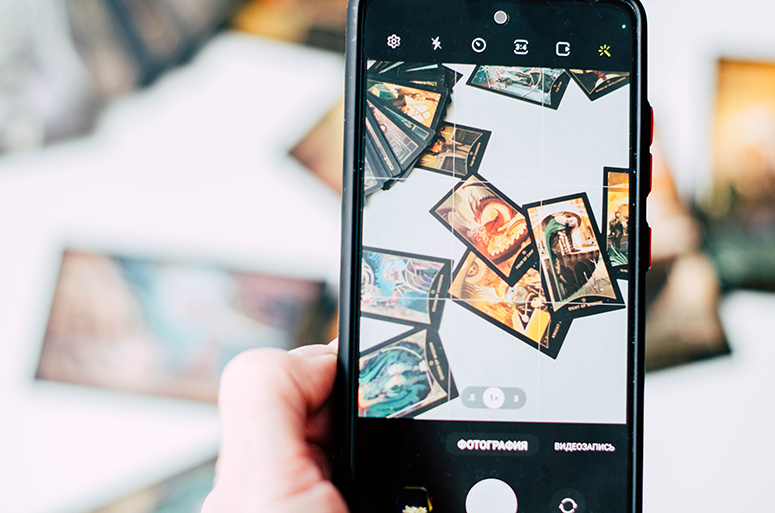
For many of us, especially in a culture that has never really separated the mystical from the mundane, this is not as absurd as it sounds. Filipinos have always lived close to omens. We consult instincts, dreams, street corners, traffic lights, coincidence, the time on the clock, and the lyric that plays at exactly the wrong moment. We know how to read mood, weather, delay, and silence. We are fluent in subtext. We have long understood that meaning is often smuggled in sideways.
So when the tarot lady on TikTok says he is still thinking of you, part of us wants to believe, not because we are foolish, but because belief is a form of refuge. It gives shape to what hurts. It tells us that what feels unfinished might still be alive somewhere, unseen.
CONTINUE READING BELOW

There is a difference between intuition and insistence. These tarot videos, especially in the age of virality, can become less an oracle than a mirror. It reflects what you most want to hear. It can be generous in that way, but also dangerous. The reading does not create the feeling; it intensifies it. It takes a vulnerable person and offers them a language for attachment. Sometimes that language is healing. Sometimes it is just beautiful fuel for denial.

Still, there is tenderness in the fact that people keep returning to signs. We are not merely delusional. We are trying to survive ambiguity. Modern dating has made ambiguity a way of life: half-replies, soft launches, “seen” receipts, mutuals who know too much, and exes who lurk without consequence. In that landscape, it makes emotional sense to outsource clarity to something more theatrical than a text message. If a person will not say what they mean, perhaps the cards will.
Filipino yearning, in particular, has its own flavor. It is rarely loud at first. It arrives as restraint, as waiting, as the discipline of not sending the second message, then sending it anyway. It lives in the old habit of reading between the lines, of understanding that “ingat ka” can mean I still care, that “busy lang ako” can mean I am pulling away, that someone’s silence may be a sentence. We are trained to notice signs because directness is often too expensive, too vulnerable, too final.
So the tarot video becomes more than entertainment. It becomes a site of emotional negotiation. You watch because you want a verdict, but also because you want a little theater around your pain. You want your longing to feel special, not foolish. You want to believe that what you feel is not merely one-sided, but cosmically echoed. Social platforms are remarkably efficient at feeding us what we linger on. Watch one love reading and 10 more appear. Pause on “communication is coming” and suddenly your feed becomes a cathedral of almosts. What feels like fate may sometimes be recommendation software with excellent timing.

That is the hidden ache beneath all this modern mysticism: not simply “Does he still want me?” but “Why does a stranger on the internet feel easier to trust than my own unanswered experience?” The answer may be because signs are kinder than rejection. They preserve possibility. They let us stay in the story a little longer.
It could be embarrassing that, in a world of abrupt endings and curated indifference, we are still searching for meaning, even if we have to borrow it from a tarot reader on TikTok. It may also be deeply, recognizably human.
So yes, the tarot lady might say he is still thinking of you. And maybe he is. Maybe he is not. Maybe he remembers you only in fragments, in a song, in a street, in a moment he can no longer name. But the real revelation is not his thought. It is yours. That you are still capable of hoping. Still capable of building a universe out of a glimmer.
That is not nothing. But neither is it the whole truth. And perhaps growing up, emotionally speaking, is not about stopping yourself from believing in signs altogether. It is about being able to say: yes, this resonated with me, but no, I will not build my future on a reading I needed to hear.

WATCH: Is OPM still as good as it used to be? (Generations Ep. 20)
September 9, 2026
WATCH: Good parent ka ba? (Generations Ep. 28)
November 4, 2026