

How Ronald Ventura redrew the Louis Vuitton map
I used to travel because of a map I did not draw.
When I was young, I found a vintage Louis Vuitton map of the Orient and it helped give shape to a world I had yet to see. Its sea routes and romanticized ports belonged to the same geography I encountered in the books I read, from Rudyard Kipling, W. Somerset Maugham and Joseph Conrad to James Hilton, who gave Shangri-La its name in Lost Horizon. It was an East imagined through distant ports, grand hotels, steamships, railways, and journeys that seemed to promise another version of life.
I carried that map in my head when I first went to Penang, barely an adult, on a solo adventure with very little money and not a single friend in the city to show me the places I had pictured. I went on to Malacca, too. I returned to Penang just three years ago, decades after that first visit, and discovered how much of the city I had missed the first time around. The map had given me an idea of the world. Experience had a way of revising it.
Louis Vuitton was founded in 1854, when steamers and locomotives were transforming travel. Its trunks answered the practical demands of an increasingly mobile world, protecting possessions and making them easier to transport. Over time, they became objects of desire in their own right, their craftsmanship and distinctive design inseparable from the romance of travel. They were made to carry things across distances, but they also became repositories of personal histories.
CONTINUE READING BELOW

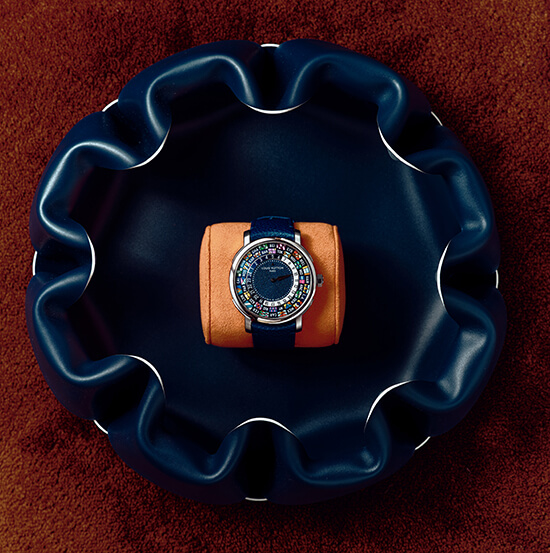
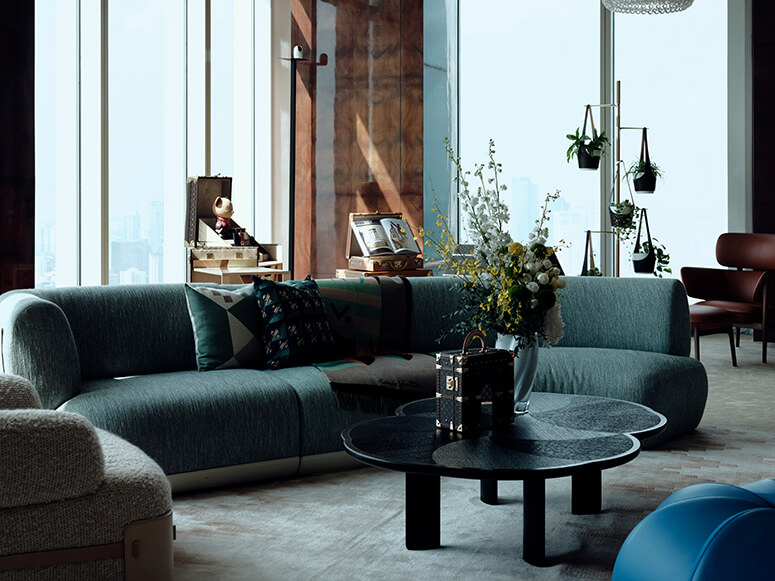
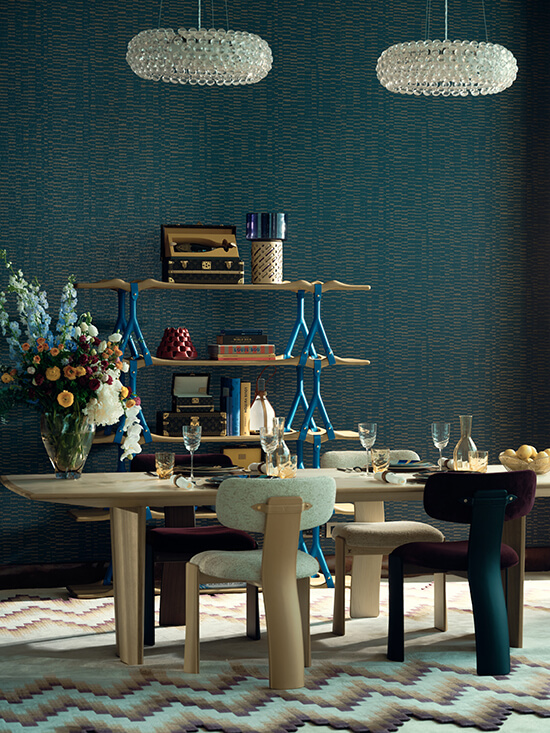
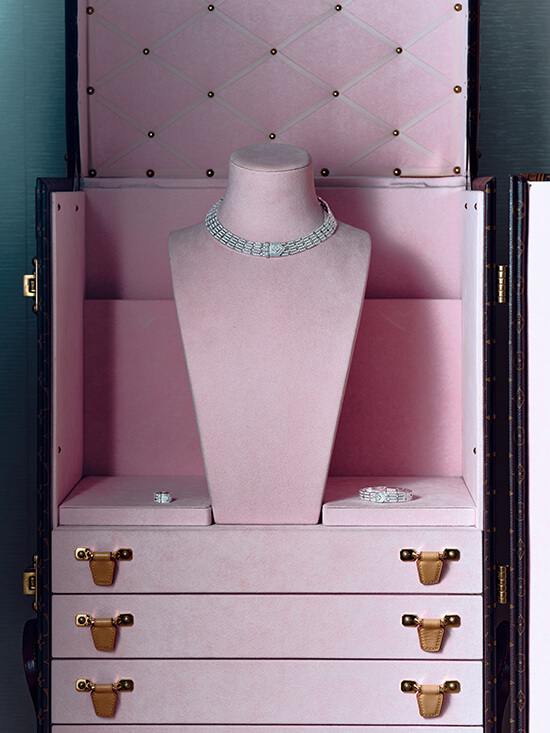
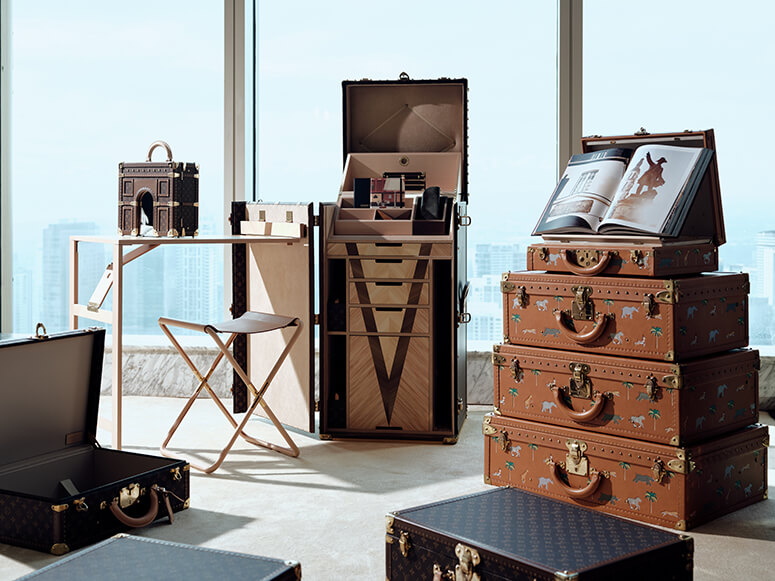
History set the stage for Les Extraordinaires, Louis Vuitton’s private presentation of its rarest creations in the presidential suite of Grand Hyatt Manila. Across the suite, trunks built for utility or purely as sculpture share space with the Tambour Spin Time and Monterey watches, LV Diamonds shaped into the house’s signature four-petaled Monogram Star cut, a basket modeled on the Monogram flower, and Andrew Kudless’s Swell Wave shelf, its undulating oak tiers held in tension by thick leather straps.
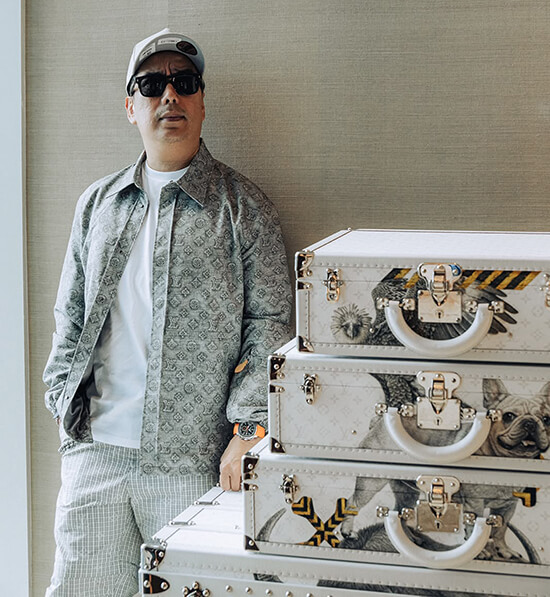
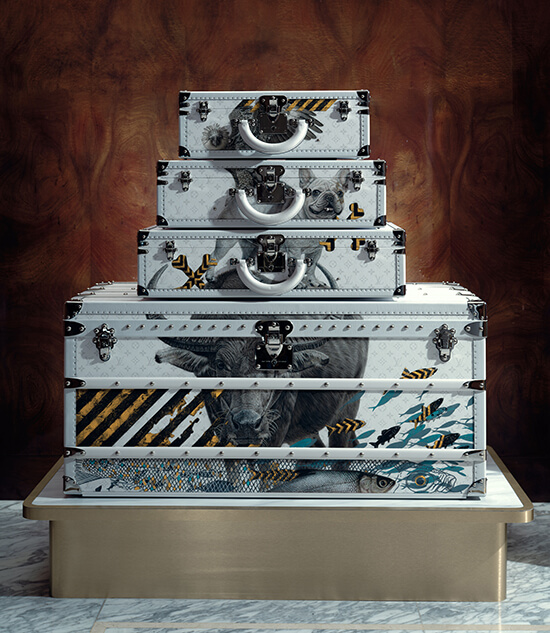
Yet among all the customizable objects on view, it is the work of Filipino artist Ronald Ventura that draws me in. He has transformed a series of white Taiga leather trunks into a vertically stacked sculptural installation, populated by a carabao, a Philippine eagle, a tilapia, and Bobro, his French bulldog. The familiar travel object has become a canvas for Ronald’s visual language, with its overlapping references to realism, folklore, popular culture and personal memory.
There is Bobro, and beside him sits a trunk sized as a kennel. Leave it to Louis Vuitton to make even a dog’s quarters a collector’s item. Yet the detail I cannot shake is the small map of the Philippines painted around Bobro’s left eye. It is an arresting intervention, almost easy to miss amid the other images, but it changes the way the entire work can be read.
The Louis Vuitton trunk has traveled through a history shaped by European routes and the romance of distant destinations. Ronald takes that vessel and makes it unmistakably Filipino. The carabao, the eagle and the tilapia bring familiar creatures from the Philippine landscape into a house whose visual codes have traveled far and wide. Bobro adds a personal dimension, while the map around his eye makes the geographical claim unmistakable. The Philippines is no longer an exotic stop on somebody else’s map. It is home, carried into the world on an object synonymous with travel.
The gesture also brings to mind Louis Vuitton’s Travel Books and City Guides, which have invited artists and writers to interpret places through their own eyes. Ronald’s contribution extends that conversation through an artwork that places his own country, memories, and visual imagination within the maison’s heritage. The result is a meeting of two distinct forms of authorship, one rooted in the making of travel objects, the other in the artist’s freedom to transform what he encounters.
At lunch after the preview, at Gallery by Chele, Ronald joined me for a cigarette break. I asked how he separated the work he did for himself from the work he did on commission. His answer, which I am paraphrasing, was that he would approach everything as though it were his own, because everything belonged to the bigger picture of who he was.
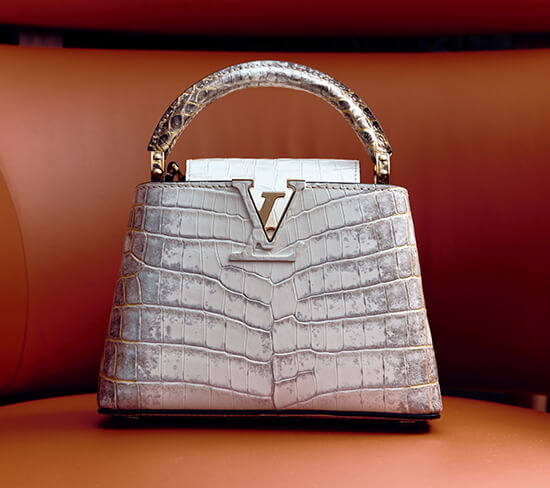
the maison’s savoir-faire in leather craft and collectible design. Louis Vuitton
“Ginagawa mo na eh,” he explained. “Sayang naman, if you don’t use it to say what you have to say, what you are here in this world to say.”
That answer makes sense when looking at what he has done for Louis Vuitton. The commission gave him an extraordinary object and a house with a formidable history of craftsmanship. He brought his own language to both. The trunks remain recognizably Louis Vuitton, yet the installation is unmistakably Ronald Ventura.
I began with a map that once sent me looking toward an imagined East. At Les Extraordinaires, Ronald has drawn a different map on a stack of Louis Vuitton trunks, one that places the Philippines firmly within the picture. His is a country to be seen, remembered, and carried into the world on its own terms.

WATCH: Is OPM still as good as it used to be? (Generations Ep. 20)
September 9, 2026
WATCH: Is Philippine cinema still thriving? (Generations Ep. 19)
September 2, 2026
WATCH: Is Gen Z too soft? (Generations Ep. 23)
September 30, 2026