

Should you say sorry to your kids after a fight? Here's why it matters
Do you know how to say sorry to your children, or do you just let arguments pass as if nothing happened? While the latter seems harmless at first, unresolved conflicts can eventually take a toll on the relationship between parents and their children.
In the 28th episode of PhilSTAR L!fe's Generations podcast titled "Good Parent Ka Ba?", actress-comedian Tuesday Vargas opened up about initially carrying over the same parenting style she grew up with, which included having anger outbursts just as her own parents did.
Reflecting on how people often look to their parents as role models when raising their own families, she said, “Hindi lang ang namamana looks; namamana mo rin ‘yung attitude ng parents mo, their stories, their traumas, all of that. Tapos minsan nami-mirror mo ‘yun sa sarili mong children.”
She acknowledged that parents must recognize where their reactions are coming from. “Alam din namin na this is a product of our own dysregulation. Hindi ‘to kasalanan ng bata.”
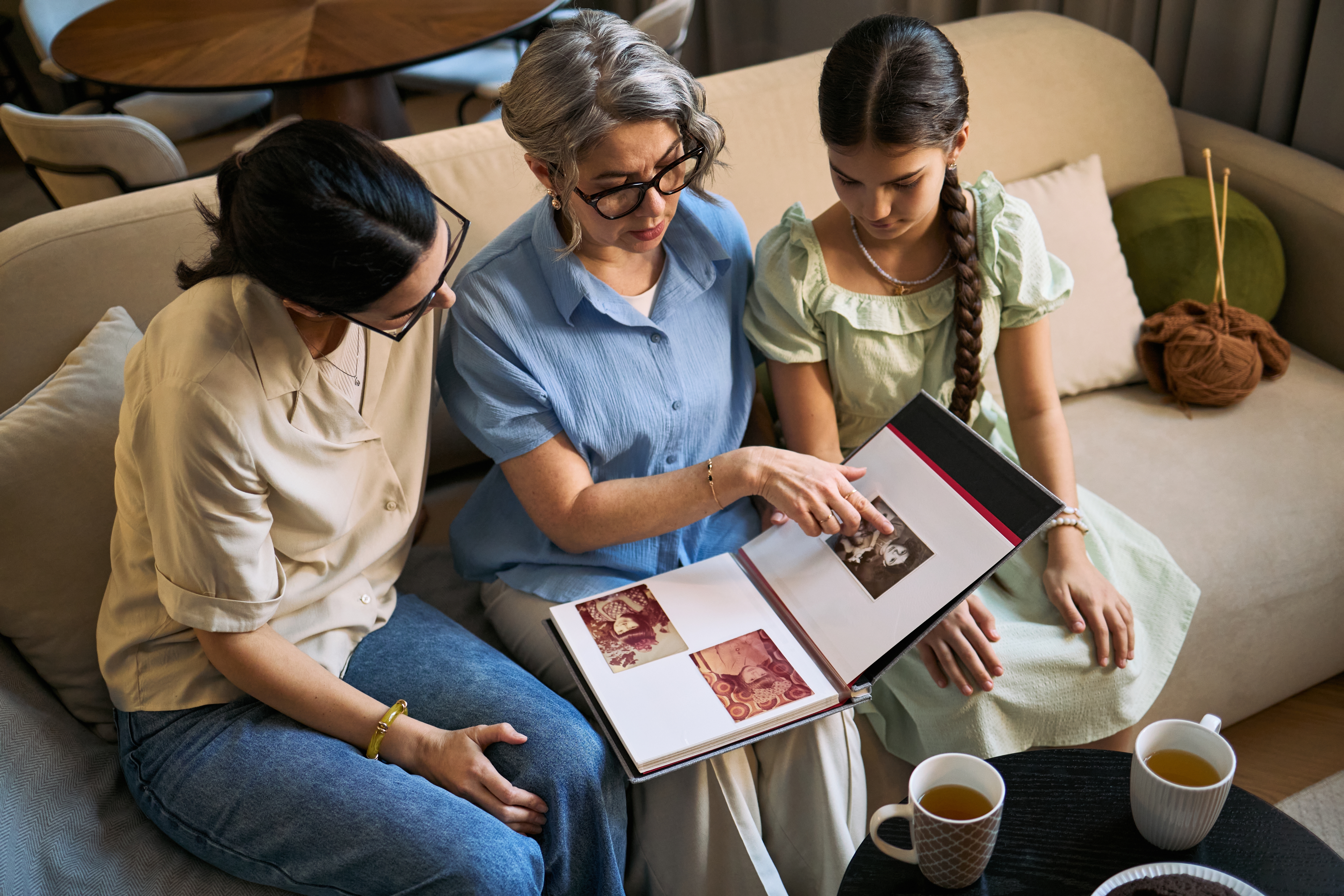
In the episode, Vargas emphasized that disagreements are inevitable in family relationships. “I think with family love, what’s not important is kung kailan kayo nag-aaway, gaano karaming beses; I think the repair is more important," she said.
CONTINUE READING BELOW

As a Xennial mom, she pointed out how her generation has become more open to apologizing to their children and taking accountability for their actions.
“In my generation, we learned to say sorry, which our parents didn’t have," she said. "Hindi mag-o-open up ang batang takot, because there’s a boundary between obeying because of fear-based discipline, rather than genuinely understanding why you have to change and abide by the rules."
"Learn to say sorry to your children and be accountable if you made a mistake because sa usapang pagkakamali, lalo na may tinapakan kang emosyon, wala nang kung sino nagsimula, magulang o bata," Vargas said.
Why do some parents find it hard to apologize to their kids?
Psychologist May Malabanan-Fernando, who focuses on parenting and family support, explained that some parents struggle to apologize to their kids because they fear it may undermine their authority or make them appear weak.
"In some families, this mindset has been passed down from generation to generation. There is an established belief that older family members are always the authority and that younger members should simply follow and obey," she told L!fe.
Clinical psychologist Mikko De Vera echoed this, adding that parents may find it hard because they are repeating the parenting patterns they grew up with and learned to see as normal.
"We need to understand that authority and accountability are not opposites. A parent does not lose respect by admitting a mistake. In fact, doing so can strengthen a child's trust," he underscored.
How does saying sorry affect children?
De Vera explained to L!fe that parents teach accountability by example, showing children the value of humility, empathy, and taking responsibility for their mistakes.
"They deserve the apology. Children are not simply individuals who must follow authority. Rather, they are persons whose feelings and experiences deserve acknowledgment," he said, adding that doing so also helps kids repair emotional connections.
"A healthy parent-child relationship is not one without conflict, but one where both can reconnect after conflict," he added.

Malabanan-Fernando stressed that saying sorry is not a matter of age, but of humility.
"When parents know how to apologize to their children, they teach them that home is a safe space where admitting mistakes does not automatically lead to punishment. Instead, it encourages understanding, acceptance, and accountability," she explained.
"By doing so, parents also serve as role models. Children learn that it is okay to make mistakes, but it is equally important to acknowledge them and take responsibility for their actions, even when those mistakes are unintentional," Malabanan-Fernando said.
How to genuinely say sorry
Both psychologists advised parents to avoid apologies that shift blame or make excuses for their actions. Malabanan-Fernando stressed that parents should sincerely acknowledge their mistakes rather than apologize merely because they hurt their child or want to end the conflict.
"Children’s responses are influenced by how they interpret and perceive the words and actions of their parents," she said.
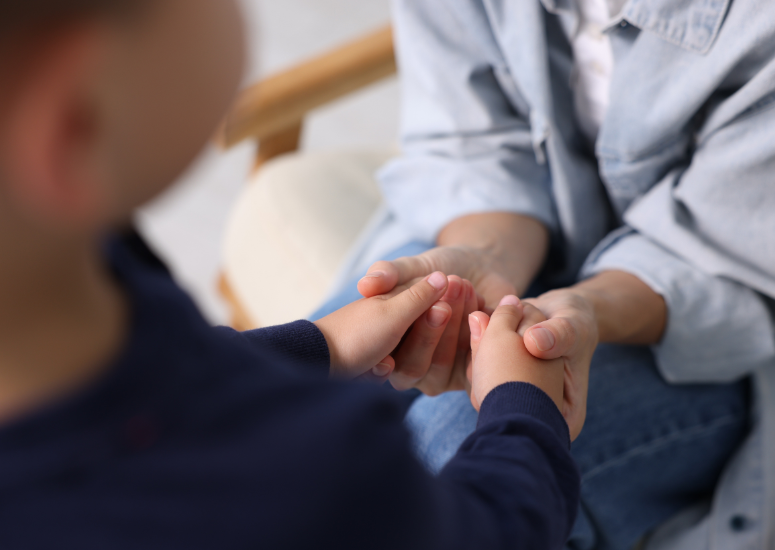
Malabanan-Fernando advised against saying sorry with the following statements:
- "You’re too emotional. Para 'yun lang?” – This dismisses kids' feelings and makes them feel invalidated.
- "Ikaw kasi!” – This shifts the blame to the child instead of acknowledging the parent’s actions.
- "I’m sorry if you got hurt.” – This makes the child’s emotions seem to be the problem rather than recognizing the hurt caused.
- "I’m the parent here. I have the right to get angry.” – This uses parental authority to justify behavior that may have caused emotional distress.
- "I already said sorry, and yet you’re still mad?” – By saying this, you expect your children to immediately get over their feelings after an apology.
"We need to understand that an apology does not automatically erase the hurt. Children should be given time and space to process their feelings. We cannot dictate how quickly they should recover emotionally simply because we have already apologized," Malabanan-Fernando said.
A sincere apology, according to De Vera, should be accompanied by behavioral changes. "We should make a conscious effort not to repeatedly commit the same mistakes for which we have already apologized," he added.
The psychologist underscored that apologizing does not undermine parental authority, as parents can still enforce discipline and boundaries while taking responsibility for how they handled a situation.
"We can preserve Filipino values such as paggalang sa nakakatanda and family closeness without teaching children that respect means adults are always right," he said.
Malabanan-Fernando emphasized the importance of creating a good home environment for children.
"Remember: We are not raising children who are afraid to tell us when we hurt them," she stressed. "We are raising children who feel safe enough to express their emotions, knowing that their parents are willing to listen, acknowledge their feelings, accept responsibility, and make things right."
What does it mean to be a good parent? Watch the full Generations episode below as Vargas, Zillennial dad Alec Cuenca, and hosts Luchi Cruz-Valdes, Abi Marquez, and Raco Ruiz share their thoughts on parenting—from breaking generational patterns and taking accountability to building healthy parent-child relationships.

WATCH: Boomers: Hirap mag-adjust o ayaw lang? (Generations Ep. 27)
October 28, 2026
WATCH: LGBTQIA+ people with unlikely professions
June 28, 2026