

Should you add your co-workers on Instagram? Here's what to consider
You get along with your co-workers, share lunch breaks, exchange stories about your day, and maybe even hang out after work. Then one day, a follow request from someone at the office pops up on your Instagram.
Do you accept it?
A Threads post offered a rather firm answer: “Don’t ever give co-workers access to your social media. Ever.”
The post included screenshots of an exchange in which a manager questioned an employee about an Instagram Story that appeared to show them out with friends while they were supposedly on sick leave. It struck a nerve with users who have experienced the awkwardness of having their personal online lives overlap with their professional ones.
But is keeping co-workers off your Instagram always the best move? For some employees, following colleagues can help build friendships and make the workplace feel more connected. For others, it means giving workmates a view of their lives they would rather keep private.
To follow or not to follow?
For 23-year-old photo editor Karl Estrada, the answer is a hard no. “I don’t follow my coworkers on Instagram because I don’t want to mix my personal social life with my professional life,” he told PhilSTAR L!fe, adding that having colleagues on his feed makes him overly conscious of what he shares.
CONTINUE READING BELOW

Estrada said having colleagues on social media makes him more conscious of what he shares on his personal account.

Carl Hizon, a CXEC channel monitoring junior manager, also takes a selective approach to following colleagues.
“If we're genuinely close, then yes, I don't mind following them,” he said. “But if we're just workmates and don't really interact outside work, I prefer not to. I believe we should still have boundaries between our professional and personal lives, and social media is one of those personal spaces I'd like to keep private.”
Carla Najes, a millennial admin assistant, has a different perspective. She enjoys following some colleagues to see what is happening in their lives outside the workplace.
"It's nice to stay updated, especially with those I'm close to. It makes me happy to see them enjoying life, going on trips, or celebrating special moments,” she said. She believes following close colleagues can help build better connections beyond the workplace.
Risks of mixing work and your feed

Before hitting "accept," etiquette coach Ingrid Nieto recommends doing a quick check: Are you comfortable with this colleague seeing what you post, like, and interact with—and are you actually interested in theirs?
“While there is no strict rule (it’s your social media account anyway), it’s perfectly fine to choose who to accept or not,” she said.
Human resources professional Arvin Dermo echoed this, noting that employees need to be intentional about who they let into their personal online space. While connecting online can encourage camaraderie, he warned that it can also blur lines and backfire offline.
“It can also introduce misunderstandings, unnecessary comparisons, jealousy, and even workplace tension,” Dermo said, explaining that colleagues might judge you based on a post rather than your actual work ethic. “Ultimately, employees must remember that online friendships should never compromise fairness, respect, or professional collaboration in the workplace.”
It gets trickier when the follow request comes from a boss or supervisor—something Najes learned the hard way after accepting her manager's request.
“I sometimes regret it because there were times when I posted something during working hours, and I knew he could see it. It made me feel a little conscious because he might think I wasn't working or was just spending time on Instagram instead of doing my job,” she shared.
According to Dermo, employees should never feel pressured to accept a supervisor's request just to be polite.
“While there is nothing inherently wrong with connecting on social media, the power dynamics between managers and employees must be considered,” he said, adding that bosses should never treat social media access as “a measure of loyalty, trust, or workplace engagement.”
How to set boundaries
If you want to keep the peace without giving your entire office a front-row seat to your personal life, you don’t necessarily have to hit decline—you can use Instagram’s built-in features that help users manage their online boundaries, such as Close Friends, Hide Story, Mute, and Restrict.
Close Friends lets users share Stories and posts with a selected group, while Hide Story prevents specific accounts from viewing their Stories and live broadcasts. Meanwhile, Mute lets users stop seeing another account's posts or Stories without unfollowing them, while Restrict limits how certain accounts can interact with them, including how their comments and messages are handled.
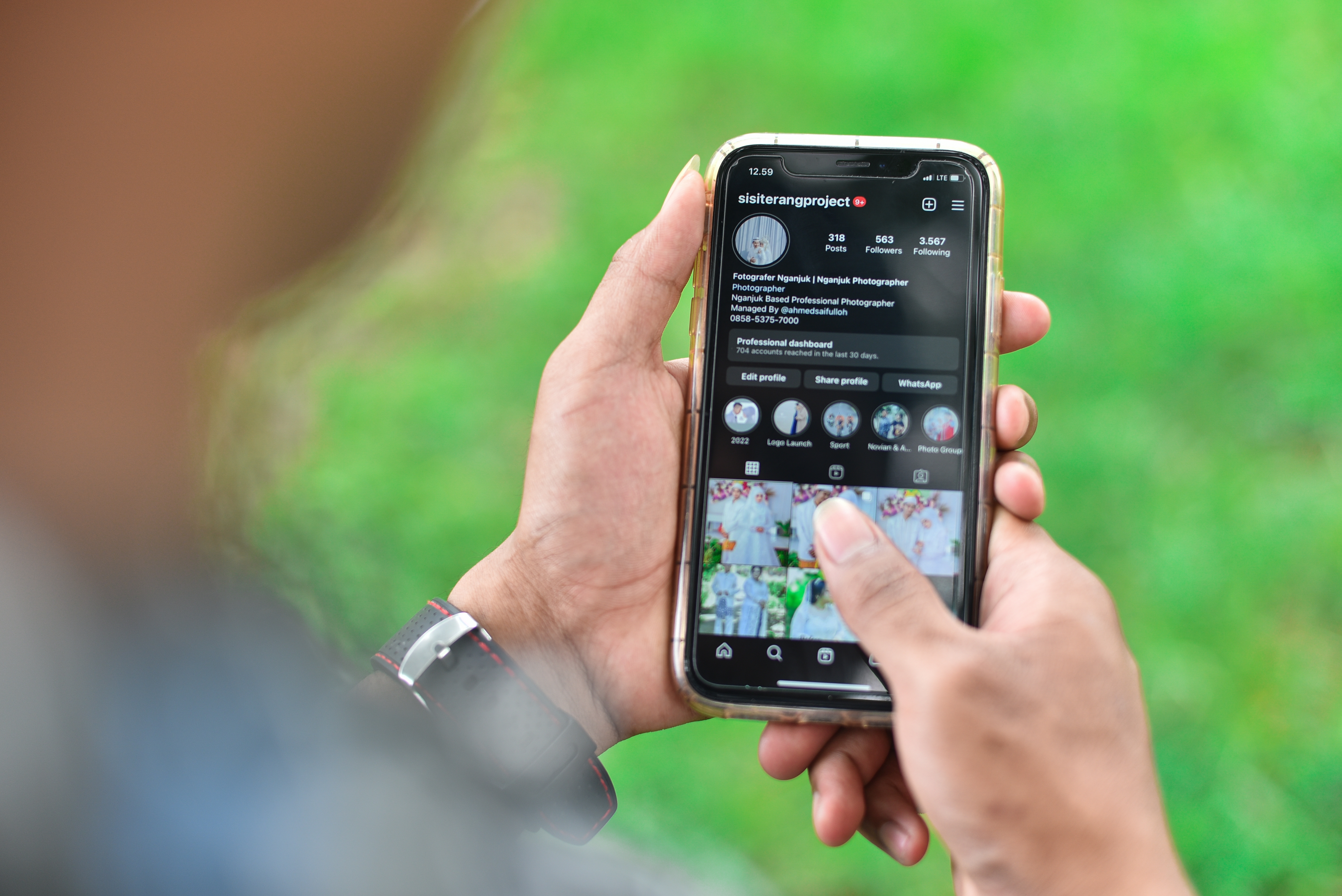
Some users also maintain a secondary account, commonly called a Finsta, for a smaller and more trusted audience. Unlike a main account that may include acquaintances and colleagues, it is often used for more candid or personal posts.
Nieto said having separate accounts is a common way to compartmentalize one's professional and personal life.
“This is quite common now. [...] It’s totally fine to compartmentalize your work and your personal life,” she said, advising users to “be mindful of what you post and who you tag.”
At the end of the day, Dermo emphasized that you can be a great teammate without being an open book online.
“You do not have to share every aspect of your personal life with the people you work with. You can be friendly, approachable, and collaborative in the workplace without giving everyone access to your private life,” he said.
Ultimately, employees should remember that they can maintain good relationships with colleagues without connecting with everyone online.
“Professionalism is not about being connected to everyone; it is about knowing how to respect people, maintain boundaries, and conduct yourself with integrity,” Dermo said.

WATCH: Can you still trust someone who betrayed you? (Generations Ep. 22)
September 23, 2026