

The beauty of inconvenience
I got to thinking recently—you know those days when everything just seems to work out? You hit every green traffic light, your coffee is perfect, and you feel a little like the Baby Bear from “Goldilocks and the Three Bears” because everything is just right. On days like these, life feels easy. You get things done, you move through your day without much resistance, and somewhere along the way, you think, Oh, yay. We got this! We are not an abject failure to the bloodline!
And then there are the other days.

The coffee machine decides not to cooperate. Your internet suddenly stops working right when you need it. A simple errand takes three times longer than expected, and the one thing you thought would take five minutes somehow becomes the most frustrating part of your day. Even a sick day that was supposed to give you a break ends up making you sick anyway.
These are the days when even the smallest inconveniences feel personal. But what if there is something beautiful about them? What if the moments when things don’t go according to plan can teach us something that the easy days can’t? What if being uncomfortable and inconvenienced can be beautiful?
When everything works as expected, we don’t have to think very much about how things work. We follow our routines, rely on what we know, and move from one task to another. There’s nothing wrong with that. Convenience makes life easier, and we all appreciate a little less friction in our day.
CONTINUE READING BELOW

But when something goes wrong, we have to figure things out.
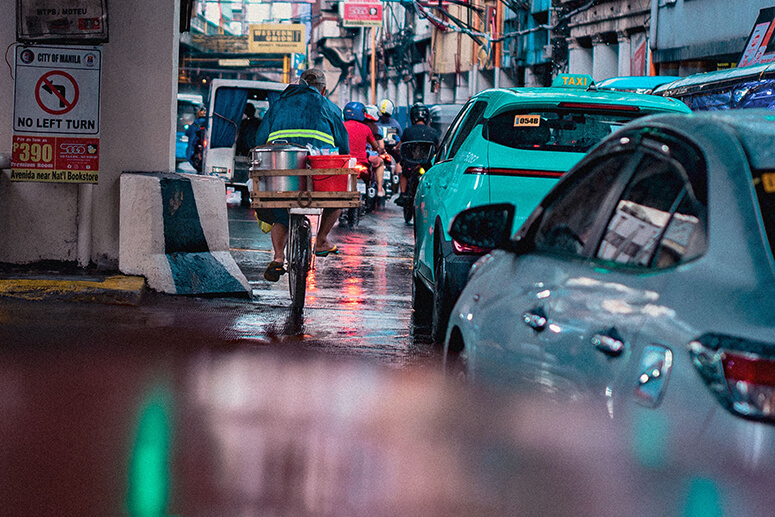
Maybe we find another route when traffic is unbearable. Maybe we learn how to fix something instead of immediately replacing it. Maybe we improvise when our original plan falls apart.
Sometimes, we find a way to make the situation less inconvenient. Other times, we realize that the thing frustrating us isn’t actually that important and decide to let it go.
Either way, we learn something about ourselves.
Every time we do something we’ve been avoiding, we build a little more trust in our ability to handle uncomfortable situations.
We discover that we can adapt. We can think on our feet. We can make decisions even when things aren’t going exactly the way we want them to.
And that realization matters because confidence doesn’t always come from getting things right the first time. Sometimes, it comes from knowing that even when things go wrong, we can figure out what to do next.
We don’t need every situation to be perfect to move forward. Sometimes, anticipation is the real inconvenience. Have you ever put off a task because you were convinced it would be difficult, exhausting, or time-consuming, only to finish it in five minutes once you finally got around to it?
I know I have.

Sometimes, the thing we dread takes up more space in our minds than it does in our actual day. We imagine all the things that could go wrong, all the effort it might require, and all the ways it could become a problem. Before we even begin, we’ve already convinced ourselves that it’s going to be a whole ordeal. So we put it off. And the longer we put it off, the bigger it seems.
Then, eventually, we do it. And it’s done.
That’s it. Five minutes. Maybe 10. And suddenly, we wonder why we spent so much time worrying about it in the first place. These small moments can change how we see ourselves. Every time we do something we’ve been avoiding, we build a little more trust in our ability to handle uncomfortable situations. We learn that feeling overwhelmed doesn’t always mean a task is impossible, and feeling unprepared doesn’t necessarily mean we’re incapable.
Sometimes, we just need to start.
This line of thinking came about because I read somewhere on Substack or saw a clip on YouTube about how one way to raise kids who aren’t entitled is to teach them to be comfortable with being uncomfortable. Then it occurred to me: well, yeah, isn’t that kind of how adaptation works? Darwin’s theory of evolution explains how species evolve over generations, with traits that help organisms survive and reproduce becoming more common over time. And while personal growth isn’t quite the same thing as biological evolution, the idea got me thinking: adapting means responding to an environment that doesn’t always accommodate you. Which makes me wonder: if you’re only comfortable when everything goes your way, are you really in your comfort zone, or just in an environment that hasn’t challenged you yet?
There’s a difference between an inconvenience that prevents us from doing something important and one that merely disrupts how we wanted to do it.

Maybe we’re upset because a plan changed, even though the new plan works just as well. Maybe we’re annoyed because we have to wait, even though we don’t have anywhere urgent to be. Or maybe we’re frustrated because something requires a little more effort than we think it should.
These moments give us an opportunity to adapt and pivot our actions, thoughts, and whatnot. As Homo sapiens, we are wired to find ways to work through difficult things. That doesn’t mean we have to pretend we’re never annoyed. It’s perfectly normal to be frustrated when things don’t go our way. The point isn’t to become endlessly patient or to turn every minor problem into a life lesson.
I still want the easy days, of course. Give me the perfect coffee, the green traffic lights, and a day where everything gets done without a single inconvenience. I will happily take it. Who wouldn’t?
But maybe I don’t need every day to be that way, even if I want it to be.
Maybe it’s okay to be annoyed when the internet stops working or when a simple errand turns into a whole production. Maybe I can complain a little, take a breath, and figure it out anyway. Make Darwin proud.
Because the point isn’t to become a person who never struggles, it’s to become someone who trusts herself enough to know that struggling doesn’t automatically mean she can’t handle something.
And perhaps that’s the beauty of inconvenience. Not that it makes life better in the moment, but that it reminds us we can make it through moments that aren’t particularly great.
And if that isn’t a little comforting, I don’t know what is.

WATCH: Is Philippine cinema still thriving? (Generations Ep. 19)
September 2, 2026