

What I have learned about love, growth, and becoming
May boyfriend ka na?”
As a woman, you might be familiar with the question. It is a popular one among curious titas and relatives you probably only see at reunions. It’s funny how quickly everything else disappears whenever they ask. You could graduate, start a business, move to another country, and still, someone will eventually ask you about your love life.
Recently, I caught up with a few of my mom’s friends, and the first explanation they offered for my weight loss was, “Are you in love?”
I was flattered that they noticed, but also puzzled by how quickly the change was attributed to someone else. As though the only reason a young woman might suddenly care for her body, change her habits, or become more disciplined was because there was a boy waiting at the end of it. There wasn’t.
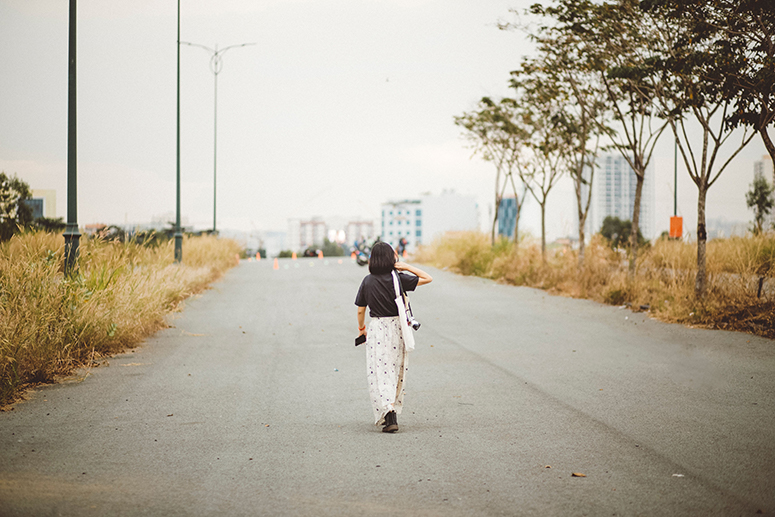
While there is nothing wrong with associating love with happiness or a certain kind of glow, the instinct to connect every transformation in a woman’s life to romance reveals something deeper: In Filipino culture, love is often treated as the explanation for why a woman begins to bloom.
I would like to argue that women can bloom for reasons entirely their own.
CONTINUE READING BELOW

Current conversations suggest that more people are beginning to question the traditional sequence of adulthood.
“Solo-maxxing,” a term circulating this summer, describes investing in friendships, careers, hobbies, travel and personal development instead of putting life on hold until a partner arrives.
At the same time, expectations within relationships are becoming less rigid. The growing visibility of dual-income couples choosing not to have children, along with fathers taking on more caregiving responsibilities while their partners pursue their careers, suggests that partnership no longer has to place women and men into predetermined roles. Love is becoming one part of a full life, rather than the moment that finally makes it complete.
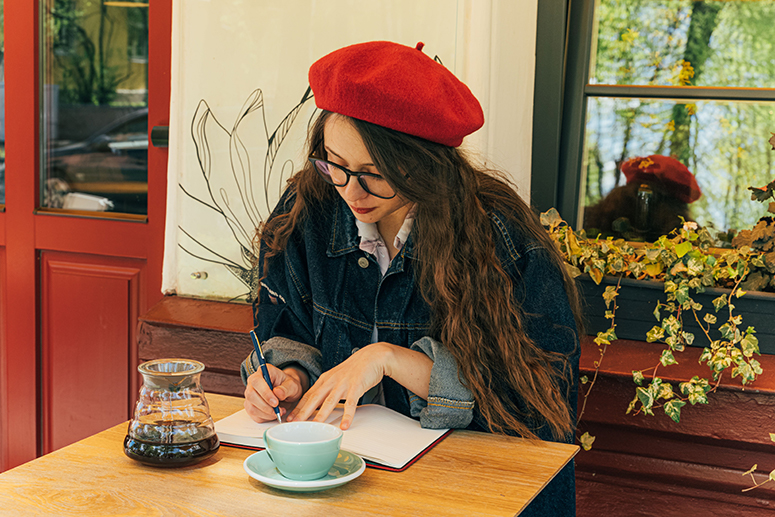
And yet, the old assumptions remain. If men can nurture, women can provide, couples can reject parenthood, and single women can build full lives, why do we still interpret a woman’s growth as evidence that romance has entered the picture? When I began thinking about the women around me, I realized that many of them were already challenging that assumption.
Francesca and I have known each other throughout our university lives, yet I only recently learned her boyfriend’s name. When I asked her why she’d talked so little about him, she answered: “I didn’t want to be known only as someone’s girlfriend.”
It was not that she cared any less about her boyfriend. He remained an important part of her life. She simply did not want being loved by someone to become the most remarkable thing about her. Francesca had interests, ambitions, and stories that existed long before I knew her boyfriend’s name. Her relationship was part of her life, but it was not the explanation for everything she had become.
My friend Tara arrived at the same realization, though under messier circumstances.
When you look good or lose weight, you are asked: ‘You’re blooming. Are you in love?’
After difficult breakups and complicated situationships, she recently declared that she was “done with men.” She spoke about singleness less as an absence and more as a return to herself and her time.
It is a feeling many women may recognize after a relationship ends: the uncomfortable realization that your boyfriend may have caused you to place parts of yourself on hold. You look around and notice the hobbies you stopped doing, the friends you saw less often, or the goals you postponed to make space for your relationship.
Heartbreak is not only over the person you lost. Sometimes, it is also grief for the version of yourself that disappeared while you were trying to make the relationship work—proof that love does not make a woman bloom when it requires her to shrink.
But there can be something liberating about beginning again after a breakup. An ending creates space, and it becomes yours to reclaim. Tara was not working to become a better version of herself so that someone else might eventually choose her. She was learning how to choose herself again.
Still, the distinction is not as simple as choosing yourself or choosing a relationship. Some wonder what they might be missing without romantic love; others have found relationships that still left room for everything else they wanted to become. A dear friend of mine, Estela, has never been in a relationship and sometimes worries that she has “missed out on young love.”
Yet whenever I look at her life, it is difficult to see that she has missed out on anything at all.
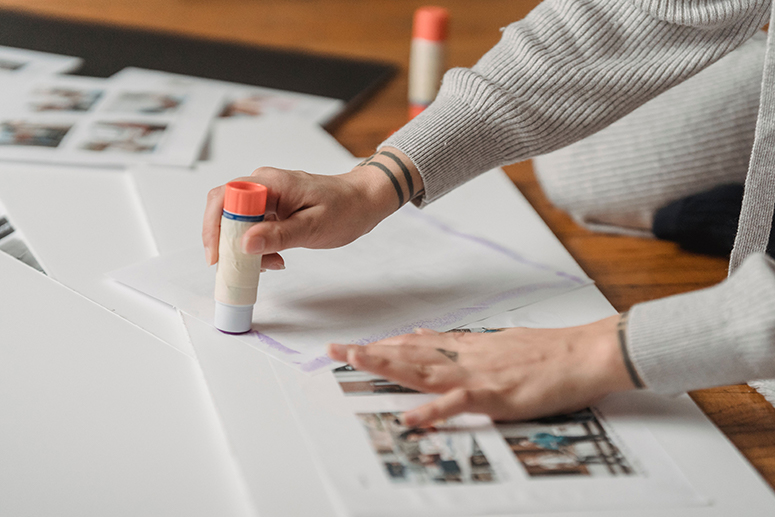
She has built a life that leaves a paper trail. The hobbies she has picked up, places she has visited, and friendships she has made are preserved in stacks of scrapbooks. Their pages hold photographs, small keepsakes, and reminders of even the ordinary days she believed were worth remembering.
Despite the occasional fear that she is falling behind on love, Estela says her singleness has been surrounded by love in every other form.
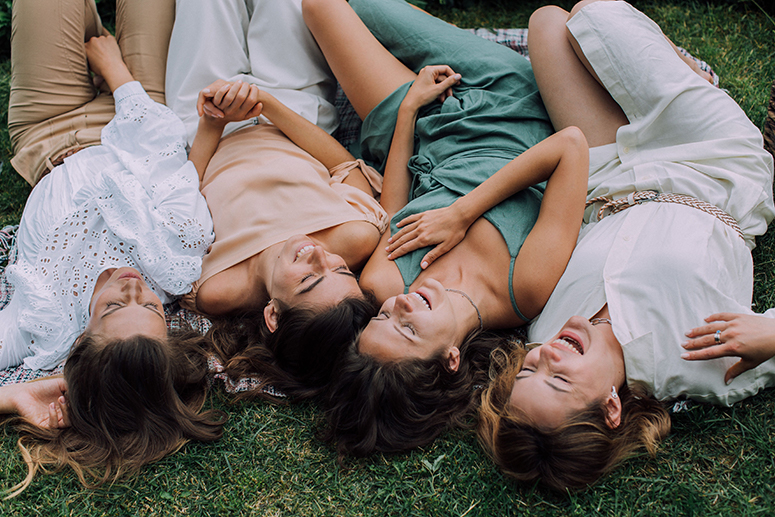
“It’s not something I’m rushing to get rid of,” she says.
The pressure does not come from anything truly missing in her life, but from the belief that romantic love is what finally confirms a woman has arrived. Singleness is treated as a pause between more meaningful chapters, even when the woman living it is already growing, loving and building a life she does not consider incomplete.
Though blooming on your own does not mean rejecting love altogether.
My friend Nicolette has built an equally full life with her boyfriend, Ryan, beside her. At 20, she is already a business owner balancing school, writing, social media work, and her fitness.
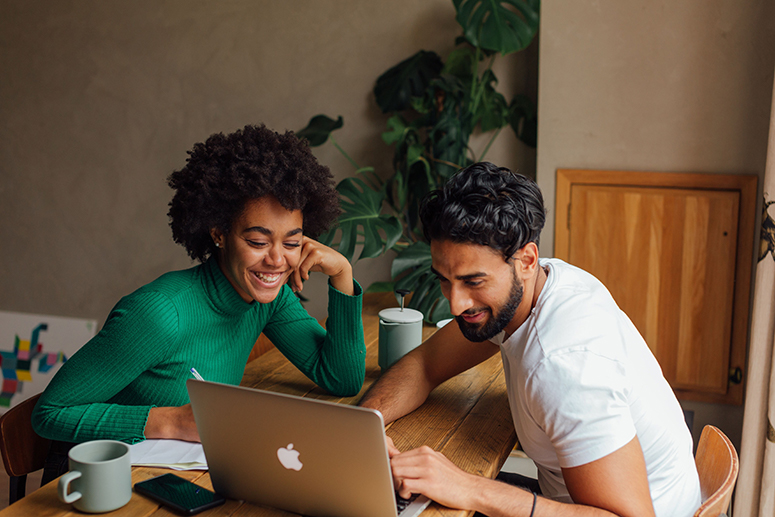
When she decided to start running, Ryan created a workout program for her. When she needs help filming content for her business, he’s there—not as the reason she pursues those things, but as someone willing to support her while she does.
Nicolette’s accomplishments are still her own. Ryan does not make her bloom; he simply does not ask her to stop.
That may be the distinction overlooked when attributing every transformation in a woman’s life to romance. Love can accompany growth. It can encourage it and make space for it. But it does not have to be its source.
A woman may change because she has fallen in love. But she may also change because of a decision entirely her own.
So the next time a woman appears happier, more confident, or somehow different, perhaps we should resist immediately asking who inspired it.
Because maybe she did.

WATCH: Can you still trust someone who betrayed you? (Generations Ep. 22)
September 23, 2026
WATCH: LGBTQIA+ people with unlikely professions
June 28, 2026