
The books I will never read
Saying that I have a rather unreasonable relationship with books I haven’t read is a massive understatement. I buy them, save them, make lists of them, hear about them in conversations, and add them to an ever-growing mental inventory of things I absolutely must get around to.
Every recommendation seems to arrive with the promise of an entirely new world. A novel someone insists changed their life. A history book that explains something (especially if it is about food!) I thought I understood. The trouble is that the reading list grows much faster than the number of hours available to read it.
Books, like wine, can wait for the right occasion.
I once came across the suggestion that we should think of our bookshelves as wine cellars. Luc van Donkersgoed puts it this way: “Think not of the books you’ve bought as a ‘to be read’ pile. Instead, think of your bookcase as a wine cellar. You collect books to be read at the right time, the right place, and the right mood.”
We don’t expect to drink every bottle of wine we own in one sitting, so why feel guilty about not having read every book on our shelves? Books, like wine, can wait for the right occasion. I find this argument extremely convenient and have adopted it with very little resistance. When someone asks whether I’ve read all the books I’ve bought, I simply ask if they’ve finished all the wine in their cellar. I rest my case.
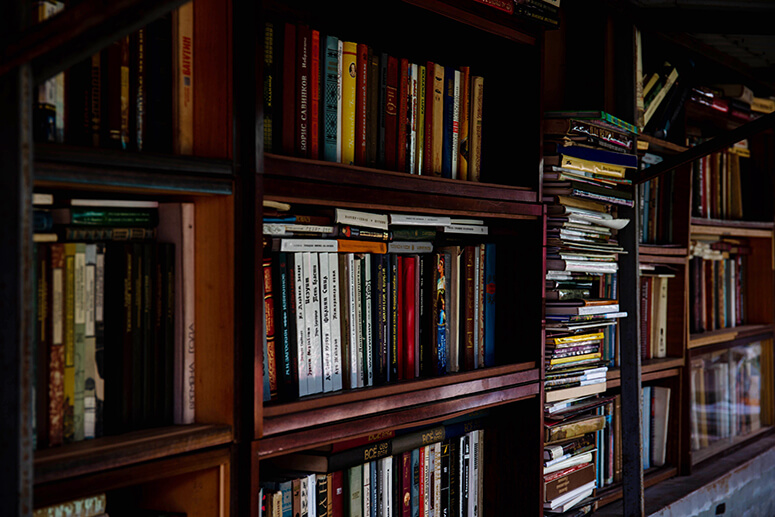
Wine eventually gets opened, but books can sit on a shelf for years, watching us acquire more books as though we’re running some sort of retirement home for unread literature. Every now and then, I pick one up, dust it off, read the back cover, and put it down again, like an old acquaintance I’m delighted to see but still not quite ready to have coffee with.
CONTINUE READING BELOW

The mathematics of reading are particularly cruel. Even if I devoted several hours a day to books and abandoned frivolous activities such as sleeping, eating and maintaining relationships, I would never catch up. Every year brings thousands of new books, while millions of older ones continue to wait for readers. Somewhere, there is a brilliant novel I haven’t heard of, a biography that might change how I understand someone, or a book that could answer a question I haven’t thought to ask. And apparently, I am still expected to do the laundry. It hardly seems fair.
Besides, reading isn’t a race. Some books deserve to be read slowly, until my fingers get all pruny. Some sentences need to be revisited several times. Some passages make us put the book down and stare into the distance. And some are so good that we deliberately slow down because we don’t want them to end.
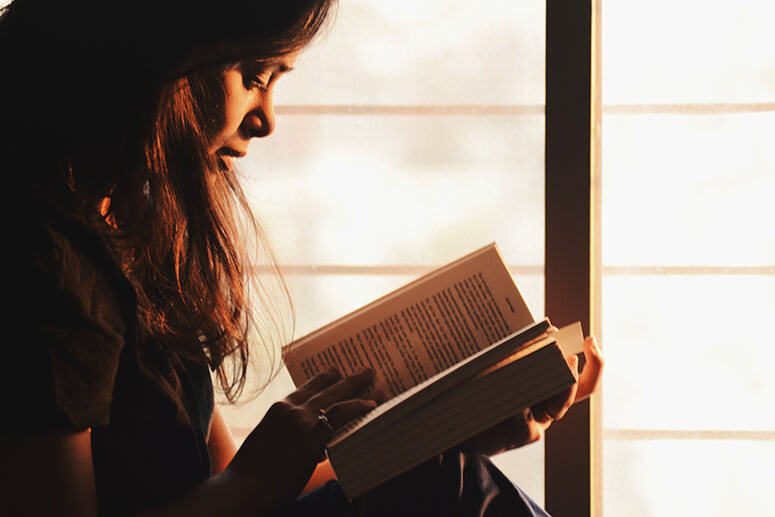
What bothers me more than the books I won’t get to read is what I might be missing. Perhaps this is one of the few times I get a real hit of FOMO. Somewhere in those unread pages could be a sentence that changes how I see the world, an idea that challenges an assumption, or a character whose experience makes me feel a little less alone. There might be a book that would have been exactly what I needed at a particular point in my life. I’ll never know, and I am slowly and very reluctantly coming to terms with this.
An unread book is more than a story I haven’t encountered. It is a conversation I haven’t had, a place I haven’t visited, a person I haven’t met. How do you miss a book you’ve never read? How do you mourn a story you don’t even know you’re missing? And I suppose this is why people say reading gives you empathy, but that’s another article, to be written at another time.
Then there’s the question of timing. Some books find us at precisely the right moment; others have to wait until we’re ready for them. A novel I couldn’t get through 20 years ago might be exactly what I need today. Hemingway is a good example of how our reading experiences change with time. A book I read in my 20s might mean something entirely different when I revisit it in my 40s. (Harry Potter takes on a whole new meaning.) We don’t always read the same book, even when we’re holding the same copy. We bring our experiences, disappointments, and accumulated wisdom to every page. Sometimes the book hasn’t changed. We have.
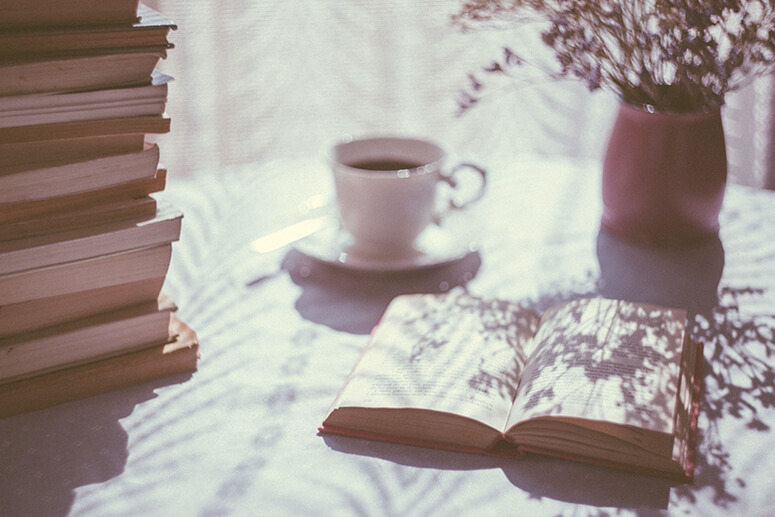
And that’s another rather inconvenient thing about time. There are books I might have loved had I encountered them earlier, authors I might have followed for years, and entire literary worlds I might have inhabited if only I’d found them sooner. I can’t go back and read a book at 20 with the mind I had at 20. Nor can I guarantee I’ll get around to reading it at 50. There are only so many reading years left, and I find this information deeply offensive.
I also suspect that some of the books I buy are intended for a version of myself that is considerably more accomplished, intellectually adventurous and well-rested than the person who actually has to read them. The version of myself I imagined in my youth, with all the potential I was so convinced I would fulfill. She is interested in learning Russian so she can properly read some 19th-century Russian literature, continuing her French lessons for those biographies of obscure European dynasties, and tackling the philosophy of consciousness and perhaps a particularly demanding book about economics, which I know is folly. She has no emails to answer, no dinner to prepare, and no work to do. She has a lovely reading chair, a cup of coffee, and absolutely no intention of checking her phone.
I buy books for this woman all the time. I’m not entirely sure when she’s expected to show up, but her library is coming along beautifully.
Perhaps this is the peculiar heartbreak of being a reader. You start every book knowing that there are thousands of others you won’t get to. You finish one and discover five more. You find an author you love and realize you’ve already missed out on a whole lifetime of their work. It’s a rather unfair arrangement, really. To love something so much and know you can never have enough of it.
I suppose I could stop buying books. I could be sensible, work my way through the shelves, and only buy another when I’ve finished what I already own. But let’s not get carried away. I am clearly not going to do that.
I will never read all the books I want to read. I will probably never even read all the books I already own. There will always be another author to discover, another subject to investigate, another story waiting patiently on a shelf while I am occupied with something else. But I don’t want reading to become another exercise in catching up, another item on a list that needs to be ticked off before I run out of time. I want to enjoy the books I do get to read, take my time with the particularly good ones (in my mind, anyway), occasionally abandon the ones that aren’t working for me, and continue buying books with wildly unrealistic expectations of my available reading hours.
If that’s a problem, I suspect it’s one I’ll have to live with. There are, after all, worse ways to spend a lifetime than wanting to read more books than you possibly can.
WATCH: Is Gen Z too soft? (Generations Ep. 23)
September 30, 2026
WATCH: Do you still believe in marriage? (Generations Ep. 17)
August 19, 2026