

Caught in the Siargao curse
What happens when a place changes your idea of the life you should be living?
Five hundred kilometers from Addis Ababa, in the Ethiopian highlands of Harar, Arthur Rimbaud discovered what it meant to settle, embraced by gentle weather, lush greenery, and unhurried, persistent peace.
“I live here very poorly, but I prefer this freedom to a life of dependency in Europe,” he wrote to his family after moving there in 1880, five years after he turned his back on his turbulent stint as the enfant terrible of French poetry. He was 25.
Prior to Harar, he lived at the mercy of a restlessness so unforgiving. In the five years after quitting poetry, he crossed the Swiss Alps twice on foot, signed up with the Dutch colonial army for a brief stint in Java before deserting, joined a circus in Sweden, and broke stone as a quarry foreman in Cyprus. Harar was where the impulse to run stopped. He traded goods there for 11 years, leaving only when a tumor on his knee forced him home to France in 1891. From a hospital in Marseille, in a letter to his sister Isabelle, he wrote of Harar, “I hope to return there... I will always live there.” He died on Nov. 10 that same year.
Rimbaud’s story has always spoken to anyone who has ever felt trapped inside their own skin. Save for my own occasional spells of discontent, I have nothing to run away from, yet I have always romanticized the idea of walking into a bus terminal and taking the coach that goes the farthest, or boarding one with a curious name like Tuguegarao written on its destination board, a name that, to me, spells “anywhere but here.”
Unlike Rimbaud, or Ernest Hemingway, who traded his old haunts for two decades in Cuba, the impulse never became a real ambition for me. I have yet to take that long bus ride to nowhere. I have yet to pack up and begin again elsewhere.
CONTINUE READING BELOW

Until Siargao.
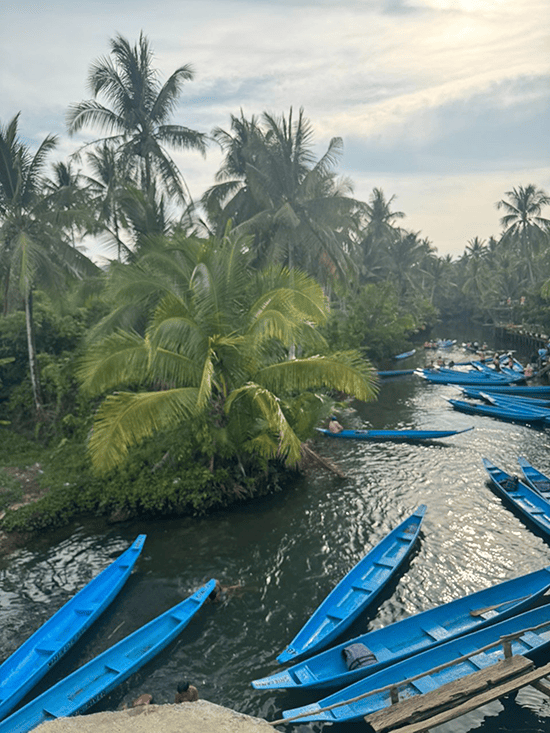
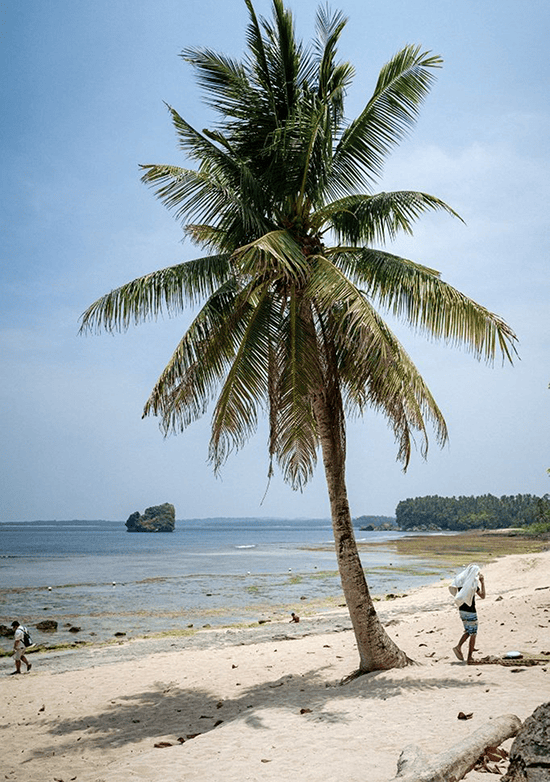
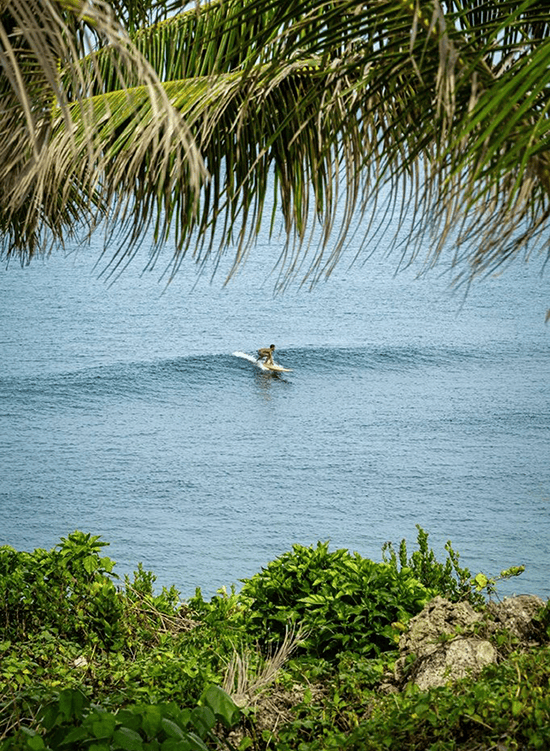
I’d heard of the Siargao Curse, but it had never earned a spot in my getaway revelries, not even when I made it there a few weeks ago. Driving along the Coconut Road, I saw a relentless blur of green palms and dusty roads and thought, with a little skepticism, that I had seen versions of this before, in Boracay in the 1990s, in El Nido, in Sumilon. I did not yet understand how easily an island could insinuate itself into a person’s life.
Then I started thinking about the people I know who had gone to Siargao and stayed.
Carlo Tanseco was living in Makati, preparing for his first art exhibit, when he moved to Siargao around the time of the pandemic in 2020. He paints there now and has taken up physical activities such as going to the gym and playing padel. When I asked him what made him stay, he shrugged, “Simplified living, no traffic stress, and I find myself smiling for no reason at all. I like myself that way.”
A place can yield a new enterprise or a new relationship, but Carlo found something far more elusive: a version of himself he prefers.
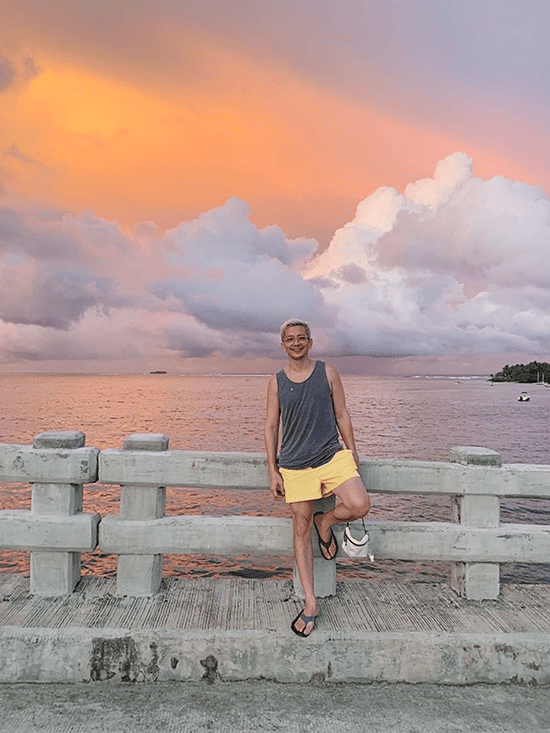
Chunchi Soler also moved from Makati to Siargao in 2020. He had been running several businesses in Manila. In Siargao, he operates the boutique resort MuniMuni Villas and the café, restaurant, and social hub Neverland. Remotely, he continues to run businesses in Manila while making time for his own daily physical routines. What made him stay in Siargao when he could have left? “When I asked people before, they said it was the vibe. And now, I say it’s the vibe. You can’t explain it,” Chunchi said.
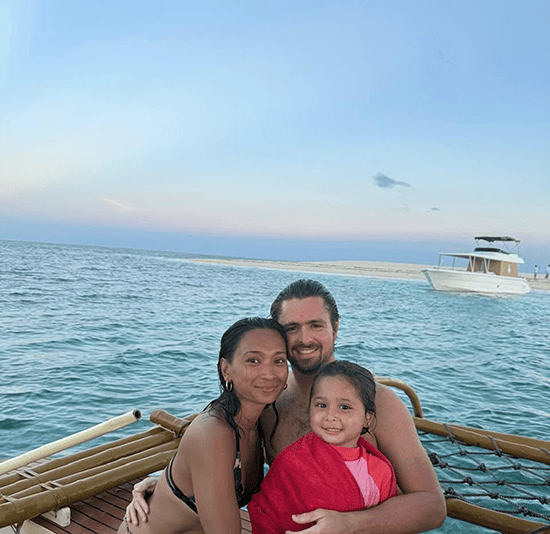
Ricardo Miranda de Sousa came to the island through a more deliberate path. Before Siargao, he spent nearly seven years in Peru as managing partner of a corporate communications firm, followed by three and a half years commuting between Manila and Siargao while building Roots, his high-concept dining project, with his partners. This year, he moved to Siargao full-time to handle the corporate side of Kaos, the gastronomic platform behind Roots.
“Everything,” he said of what kept him there. “The community, the waves, the warmth of the locals, the biodiversity. Siargao, its people, and its landscapes are captivating.” As for what he left behind, he offered no romantic hesitation. “Traffic! I don’t miss it one bit.”
But then Ricardo laughed and got serious. “We left behind good friendships, my wife’s family, who live in Manila and have been the best support system, consistent power, and the convenience of being able to find anything you might need. It’s a trade-off,” he said.

Julia Pacleb moved to Siargao in late 2018, when she had just left her real estate job at Rockwell and was waiting to find out whether she would be accepted into a master’s program in sports psychology in Cologne. She had visited Siargao before moving there. “I didn’t even want to go,” she said, adding that she told her friends it was overrated. “I was incredibly wrong.”
Today, she has a fresh pasta bar in General Luna called Pastamigos with her partner, Bastien, with a second branch in Sta. Fe in the works. She has an Airbnb with a small art studio attached to it, does social media and marketing for Harana Surf Resort and Paraluman Parlour, and takes on other branding and social media projects.
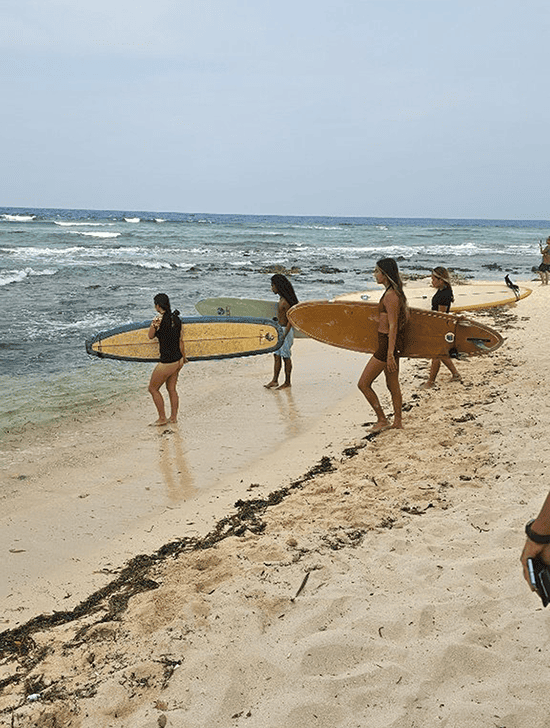
Julia’s explanation for staying reaches deeper than any list of attractions. “I think in Manila I felt very boxed in. And when I finally moved here, I felt a strong sense of freedom that led me to rediscovering myself and gaining newfound purposes.”
Siargao was where she began her art journey. It was the island’s community, the friends who became family, and the way it puts life into perspective that encouraged her to take chances. Had she entered that master’s program in Cologne, she says, “it would be a completely different life.” Instead, she cultivated a passion for creating things, first through art and now through food.
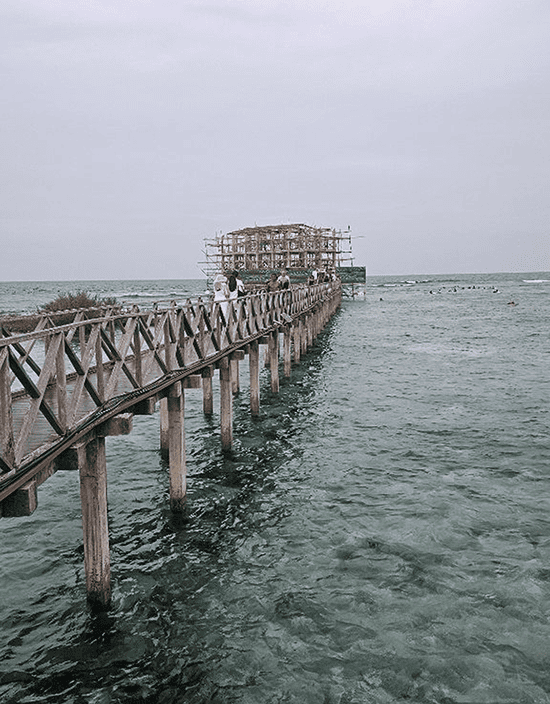
Rimbaud had Harar. Hemingway had Cuba. Van Gogh moved from place to place, and the landscapes he encountered altered what he saw and how he painted it. For each of them, geography became entangled with identity, work, and the life they were making for themselves. I began to wonder whether that was what happens when a place stops being somewhere you have been and becomes somewhere you belong.
Four people I know had made that leap. I had spent years romanticizing the bus ride, the unfamiliar town, the possibility of waking up somewhere with no history attached to me. They had actually gone.
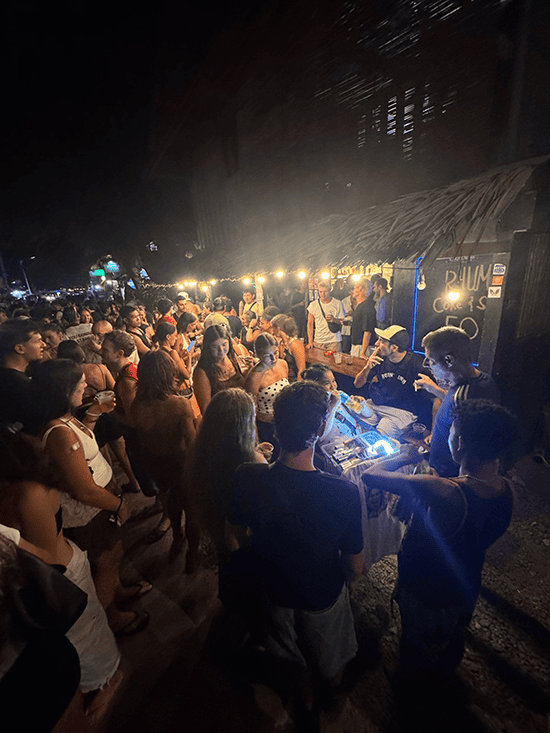
And then there was the water.
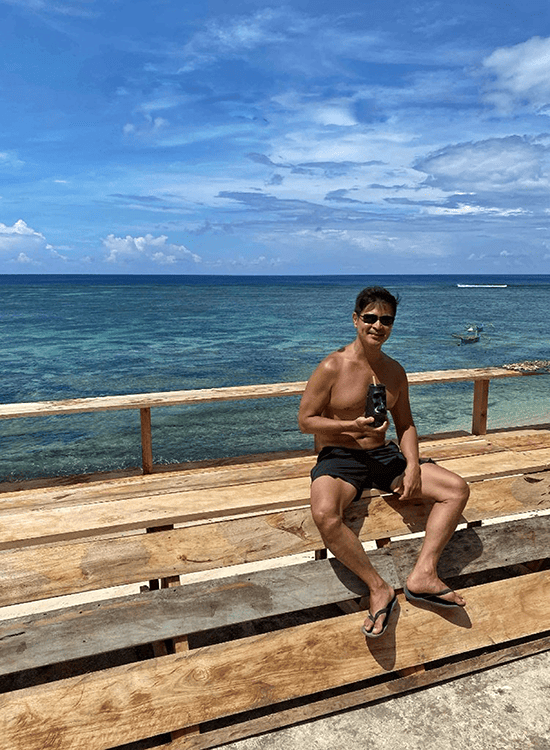
I had gone to Siargao without any grand intention of being claimed by it. I was staying at Siago Beach Resort, and each afternoon I found myself walking toward the beach. One day, I stood in the Philippine Sea and let the water carry me. Hovering between 27 and 29 degrees all year round, it was warm, buoyant, and inviting, like a hug, like a gentle, relaxing bath.
As I floated there, the distinction between swimming and simply being seemed irrelevant. I had been in beautiful water before, in Sumilon, Phuket, El Nido, Cannes, and elsewhere. Siargao’s water felt different because I could imagine how easily a person might build a life around the sensation of being held by it.
Maybe that is where the Siargao Curse begins. You spend enough time somewhere that your body begins to recognize it before your mind has made a decision. You find yourself smiling for no particular reason, taking chances you might once have talked yourself out of, needing less than you thought you needed, and liking the person who emerges when the old routines no longer dictate your days.
Julia told me Siargao made her less afraid of making mistakes and helped her realize that “you can live simply and be completely happy and content.” Carlo told me he likes himself better there. Chunchi says the island’s pull defies explanation. Ricardo moved his family there and says they are “all better for it.”
I still have a Manila address. I still have friends, work, books, stories, parties, and a life I have spent decades constructing. I have no plans to disappear into a bus station and ask for the farthest possible destination.
But I now understand why some people go to Siargao for a visit and end up staying.

WATCH: Is Gen Z too soft? (Generations Ep. 23)
September 30, 2026
WATCH: Do you still believe in marriage? (Generations Ep. 17)
August 19, 2026