

Using our coconut—again
It is easy to visualize a bamboo house. But a house made of coconut?
It was a challenge posed in 1978 by then-First Lady Imelda Marcos to Filipino creatives. National Artist for Architecture Francisco Mañosa rose to the challenge and designed a seven-bedroom house using the coconut—the tree of life—and its trunk, bark, husk and shell.
Previously called the Tahanang Pilipino, the Coconut Palace, nestled at the Cultural Center of the Philippines complex, showcases Filipino creativity and reflects our distinctly Filipino culture.
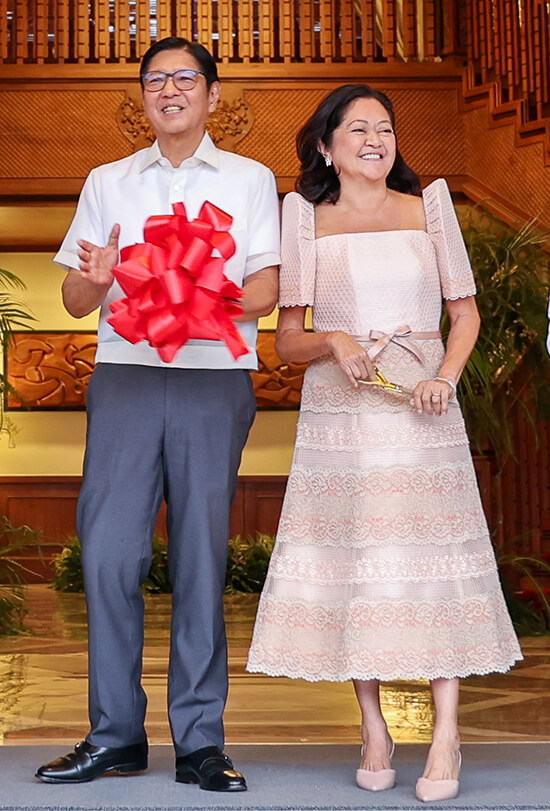
This month—48 years later—President Ferdinand Marcos and First Lady Louise Araneta-Marcos opened a newly-renovated Coconut Palace, back to its old glory after five decades of use and exposure to the elements.
“Liza has once again put her shoulder to the wheel,” said President Marcos who proudly acknowledges his wife’s focused efforts to preserve cultural treasures and historical buildings, rather than build new ones.
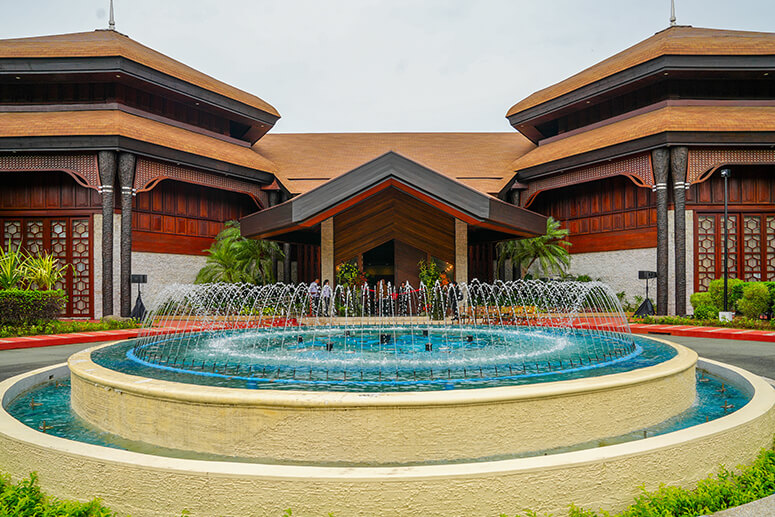

I learned that the Coconut Palace was declared an important cultural property by the National Museum in 2023.
“We need more spaces for the 49th ASEAN Leaders’ Summit in November 2026 and we would be proud to welcome guests this year at the Coconut Palace,” the President declared.
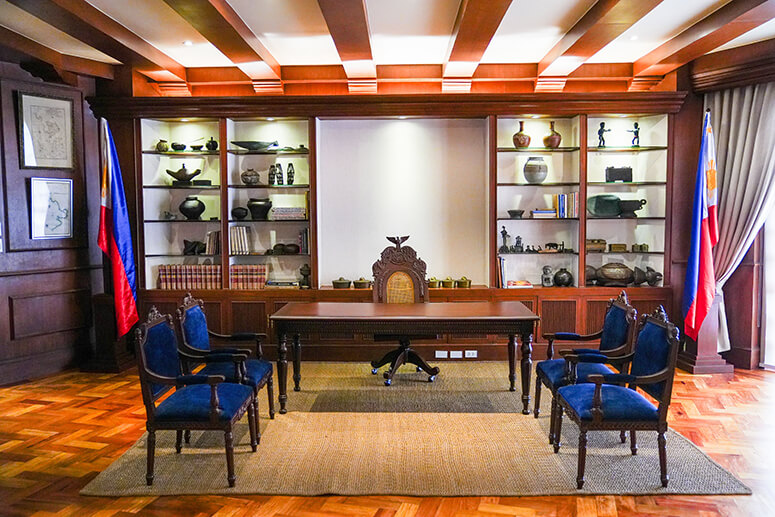
The Coconut Palace was used by former Vice President Jejomar Binay as his office and residence from 2011-2016. It was intended to host Pope John Paul II during his visit in 1981, but he opted to stay at the Papal Nuncio residence. Throughout the past decades, the Coconut Palace was rented out for events. It was a popular venue for weddings. It was used as a film location for television dramas such as Princess Sarah and Tanging Yaman.
Next year, it will be open to the public once more as a site for cultural programs, educational and tourism endeavors.
During its reopening last Aug. 25, I joined the tour for guests and foreign diplomats who were amazed when they saw the dining table with 40,000 pieces of tiny inlaid coconut shells. Their eyes lit up at the sight of the chandelier made of 101 coconut shells.
Some 70 percent of its structure is derived from coconut lumber and shell. With its roof shaped like a salakot, the Coconut Palace is octagon-shaped, to resemble a shaved coconut. Using the principle of cross-ventilation, it has persianas and ventanillas to bring in air to the rooms.
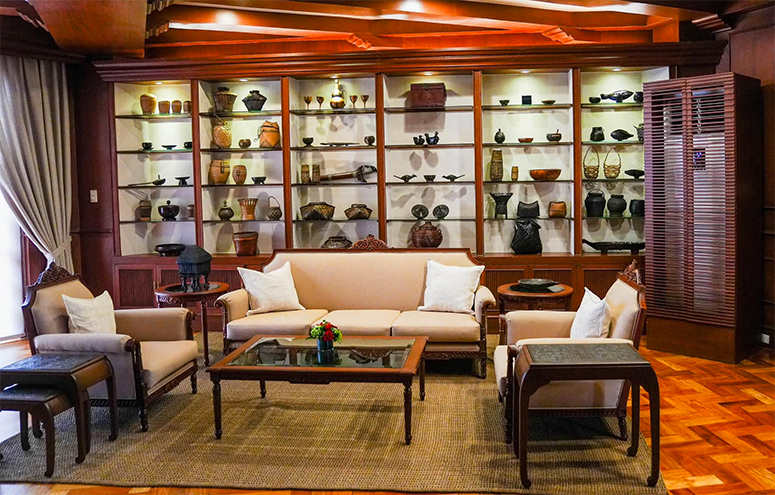
Its seven bedrooms are themed to reflect the distinct culture and creativity of seven Philippine provinces: Zamboanga, Pampanga, Marawi, Bicol, Mountain Province, Iloilo and Ilocos.
US Ambassador Lee Lipton, while touring the Coconut Palace along with other diplomats, lingered at the Ilocos Room and I asked him: Would you like to have an overnight stay here?
“Am I invited?” Ambassador Lipton replied.
Surely, like a typical Filipino home, the Coconut Palace has space for his bodyguards or kasambahay.
