

The prescription we rarely write: Muscle
We routinely measure blood pressure, cholesterol, blood sugar and body weight as we grow older. Perhaps we should pay more attention to something else: our muscles.
Preserving muscle strength may be one of the secrets to healthy aging.
Skeletal muscle is not merely what allows us to lift a suitcase or climb the stairs. It is metabolically active tissue that helps regulate blood sugar, supports our bones and joints, protects us from falls and illness, and helps determine whether we can remain independent in old age.
The encouraging news is that muscle responds to training even in our 70s, 80s and 90s.
We spend much of the first half of life worrying about becoming too heavy. Perhaps in the second half, we should worry a little more about becoming too weak.
We tend to associate muscles with athletes, bodybuilders and young people admiring themselves in gym mirrors. That seriously underestimates their importance.
Skeletal muscle is one of the largest tissues in the human body. More importantly, it is a major metabolic organ. After a meal, skeletal muscle is responsible for the great majority of insulin-mediated glucose disposal. It therefore plays an important role in glucose regulation and insulin sensitivity.

But its importance becomes even more obvious as we grow older.
Muscle gets us out of bed. It allows us to rise from the toilet without assistance. It carries groceries. It helps us climb stairs. It enables us to recover our balance when we stumble. And sometimes muscle determines whether an 85-year-old can continue living independently — or must begin depending on others for everyday activities.
The quiet disappearance
Unfortunately, muscle does not remain unchanged throughout life.
With aging, particularly when combined with inactivity, illness or inadequate nutrition, we gradually lose muscle mass, strength and physical performance. When this becomes clinically significant, we call it sarcopenia.
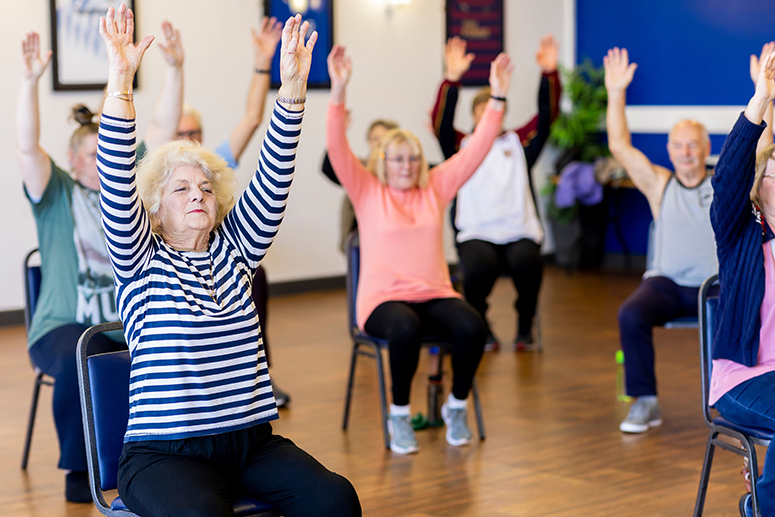
Modern definitions have evolved. Experts now emphasize that muscle strength is particularly important, rather than simply measuring how much muscle a person possesses. Low strength raises suspicion of sarcopenia; reduced muscle quantity or quality helps confirm it, while poor physical performance indicates more severe disease.
That distinction matters. You can look reasonably well-built and still be functionally weak. Conversely, an older person does not need bulging biceps to be functionally strong.
The real questions are wonderfully ordinary.
Can you rise from a chair without pushing yourself up with your arms? Can you carry your groceries? Can you climb a flight of stairs? Can you walk briskly? If you stumble, can your legs react quickly enough to prevent a fall?
Those abilities may tell us more about healthy aging than the bathroom scale.
Thin is not always healthy
For decades, many of us have been conditioned to celebrate weight loss. Sometimes appropriately so. Obesity remains an important risk factor for diabetes, cardiovascular disease and numerous other illnesses. But the equation changes somewhat in later life.
If an older adult loses weight unintentionally—particularly if that weight includes substantial muscle—the shrinking number on the scale is not necessarily good news.
Illness, hospitalization and prolonged bed rest can accelerate this process.
We have all seen it. An elderly patient enters the hospital walking independently. After pneumonia, surgery or a prolonged illness, he returns home several kilograms lighter.
Everyone celebrates that his infection has resolved. But he cannot get out of his chair as easily anymore. What disappeared was not simply fat. Some of his physiological reserve disappeared with it.
“But, Doctor, I walk every day.”
Excellent. Please continue. Walking is one of the best forms of physical activity. It benefits the heart, circulation, lungs, mood and general health. But walking and strength training are not interchangeable.
Walking primarily challenges the cardiovascular system and endurance. To preserve or rebuild muscle strength, muscles must also work against meaningful resistance.
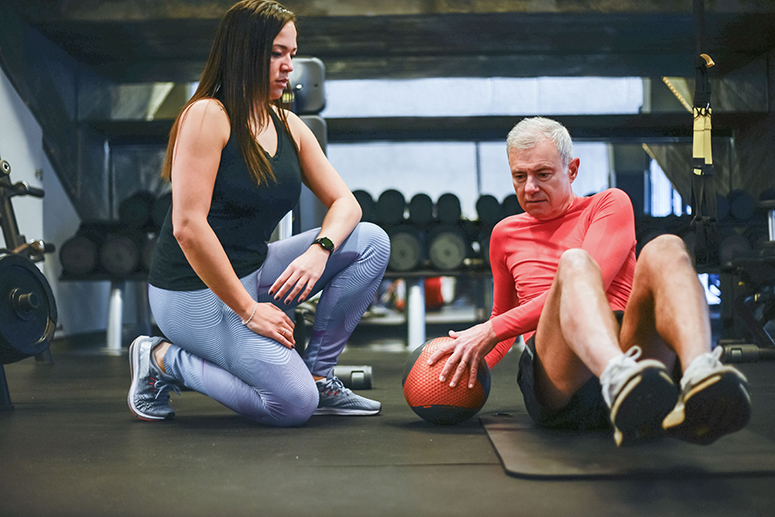
That does not necessarily mean joining a gym or lifting heavy barbells. Resistance can come from machines, dumbbells, elastic bands, one’s own body weight or even carefully performed exercises using a sturdy chair—chair squats, sit-to-stands, wall push-ups, heel raises and resistance-band rows.
Progressively challenging exercises for the major muscle groups can be remarkably effective. The World Health Organization recommends that older adults perform muscle-strengthening activities involving the major muscle groups on at least two days each week. It also recommends multicomponent activity emphasizing balance and strength on three or more days weekly to maintain function and help prevent falls.
Is 80 too old to start?
Absolutely not.
Perhaps the most beautiful message from the science of muscle is that old muscle is still trainable muscle.
A landmark study published in JAMA enrolled frail nursing-home residents whose average age was around 90. After eight weeks of supervised high-intensity resistance training, the participants who completed the program achieved dramatic improvements in strength, along with measurable increases in thigh muscle area and better functional mobility. Some participants were as old as 96.
Think about that. Ninety. It is never useful to promise that everyone will achieve the same results. Illness, frailty and disability differ enormously between individuals.
But the principle is powerful: There is no birthday at which the human body suddenly loses its ability to adapt.
At 60, start. At 70, start. At 80, start. At 90, if medically appropriate, start carefully.
The best time to build your physical reserve may have been decades ago. The second-best time may be now.
Muscle needs something to build with

Exercise provides the stimulus. Nutrition supplies the building material. And the principal building material is protein.
Older adults may actually require more dietary protein per kilogram of body weight than younger adults because aging muscle becomes somewhat less responsive to the anabolic stimulus of protein.
The ESPEN guideline recommends at least 1 gram of protein per kilogram of body weight per day for older people, individualized according to nutritional status, physical activity, illness and tolerance. Several expert groups suggest roughly 1.0 to 1.2 g/kg/day for healthy older adults, with potentially greater needs during illness or recovery.
For a 60-kg older adult, 1.0–1.2 g/kg translates to roughly 60–72 grams of protein daily.That can come from fish, eggs, chicken, lean meat, milk, yogurt, tofu, beans and other nutritious foods. But more protein is not automatically better. People with advanced kidney disease or certain other medical conditions need individualized advice; the PROT-AGE recommendations specifically note severe kidney disease not requiring dialysis as an important exception.
And protein without exercise is only part of the solution. Think of them as partners: Resistance exercise tells the body to build. Protein provides the bricks.
Don’t wait until weakness becomes obvious
We should perhaps begin asking different questions during medical consultations with older adults.
Not only: “What is your blood pressure?” But: “Can you get out of a chair easily?”
Not only: “What is your cholesterol?” But: “Have you become weaker during the past year?”
Not only: “How much do you weigh?” But: “Have you unintentionally lost weight—and strength?”
Simple measures such as grip strength, walking speed and repeated chair stands can provide useful information about physical function. Current sarcopenia guidance places particular emphasis on strength because weakness predicts adverse outcomes.
Your retirement account for the body
I like to think of muscle as a physiological retirement fund.
Throughout adulthood, we make deposits through physical activity, resistance exercise, adequate nutrition and healthy living. Then life inevitably makes withdrawals. An infection. An operation. A week in bed. Cancer treatment. A fracture. An unexpected hospitalization.
The larger our reserve, the better equipped we may be to withstand those withdrawals.
This is why strength training is not vanity after 60. It is preparation. And for many older adults, it is preventive medicine.
Of course, someone who has been sedentary for years—particularly a person with significant heart disease, severe arthritis, balance problems, recent surgery or substantial frailty—should begin appropriately and may benefit from guidance from a physician, physical therapist or qualified exercise professional. But we should not allow excessive caution to become an excuse for permanent inactivity.
The body was designed to move. And muscle must be challenged if we expect it to remain useful.
We spend much of the first half of our lives worrying about becoming too heavy. Perhaps in the second half, we should worry a little more about becoming too weak.
So continue checking your blood pressure. Know your cholesterol. Watch your blood sugar. Maintain a healthy weight. But occasionally stand in front of a sturdy chair, cross your arms if you can do so safely, and ask yourself: Can I still rise strongly?
Because longevity is not merely reaching 80, 90 or 100. It is reaching those years with enough strength to participate in them.
And perhaps that deserves a place on our prescription pad.
