

What martial arts can teach our children about life
At 12 years old, Alfonso Ponciano “Alpo” Soliman Radaza stood on a karate mat in Tokyo, facing an opponent considerably taller and bigger than he was.
Alfonso did not win the trophy that day. But what he told his mother afterward may have been worth considerably more.
“Mom, I feel good. I didn’t get to bring home the trophy, but I won my internal battle.”
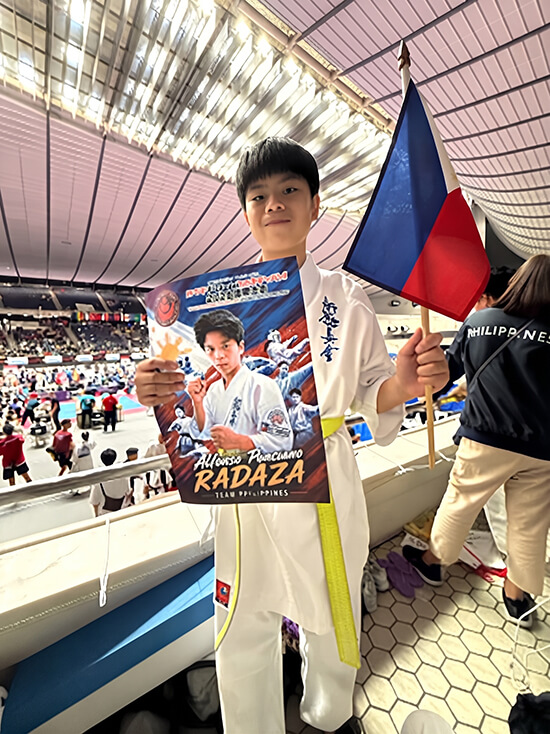
There, in one sentence from a Grade 7 student, lies perhaps the greatest value of martial arts.
The opponent we most need to conquer is sometimes ourselves.

Success is not always standing above somebody else on a podium. Sometimes success is standing taller than the person you used to be.
From struggling child to international competitor
Alfonso’s journey did not begin with the natural athleticism one might expect of an international karate competitor.
He was born prematurely. According to his family, he took longer to reach some developmental milestones and lacked the physical strength of many children his age.
Then came COVID-19.
When Alfonso was six to eight years old—important years for physical, social, and emotional development—much of childhood suddenly migrated indoors and onto screens.
When restrictions eased, his family encouraged him to explore. He tried basketball and football. He pursued his creative interests in singing and video editing. Then, almost accidentally, in the summer of 2024, he discovered karate.
Something clicked.
Under the WKO Shinkyokushinkai Philippines program, Alfonso progressed from white belt through succeeding ranks and eventually became a yellow belt. He competed locally and won three medals.
Then came an opportunity few 12-year-olds experience.
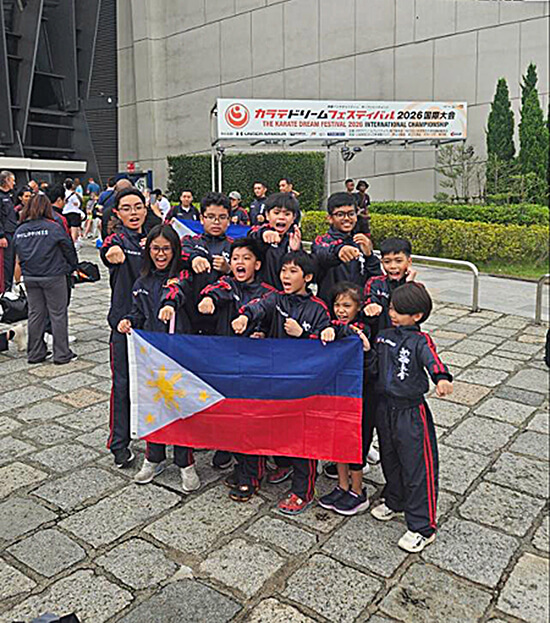
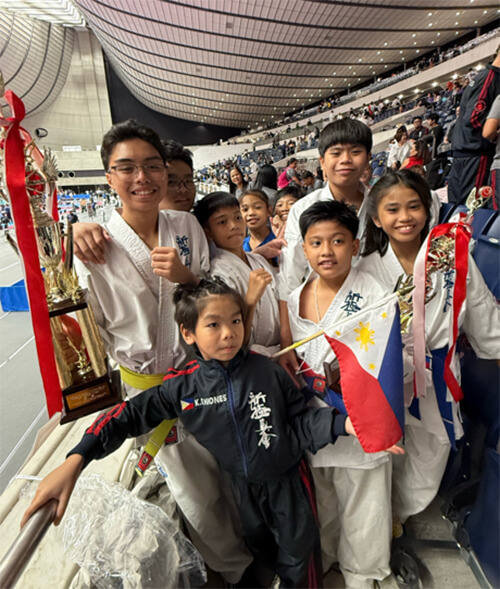
He was selected for Team Philippines to compete in the Karate Dream Festival 2026 International Championship at Tokyo’s Yoyogi National Gymnasium.
The official organizer reported a record 4,127 entries in kata and kumite from 24 countries and regions.
Six months for a few minutes on the mat
What spectators see in competition lasts only minutes.
What they don’t see may be more important.
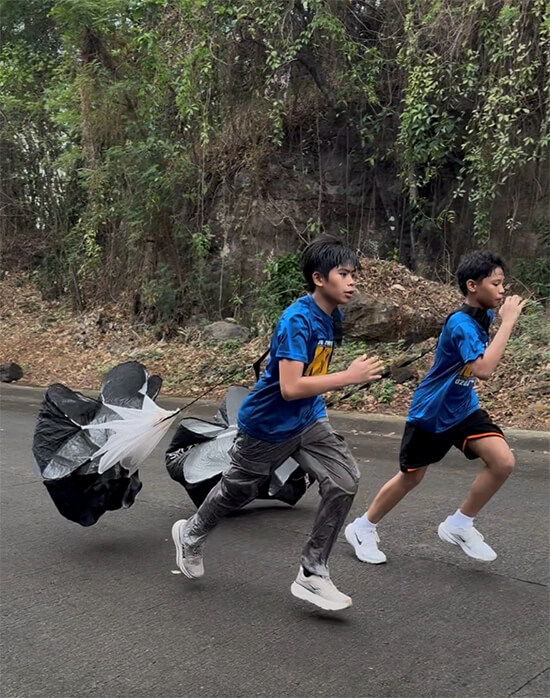
For six months, Alfonso trained relentlessly. His family’s Facebook account describes roadwork, karate drills, swimming and mountain hikes, sometimes in demanding sessions stretching from morning until evening.
That is where martial arts begins to differ from simply learning how to punch and kick.
The child learns that improvement requires repetition. You show up when you’re tired. You repeat the movement when you would rather stop. You accept correction. You learn patience when progress seems slow.
And eventually, you discover that discipline is doing what needs to be done even when nobody is applauding.
For young people growing up in an age of instant gratification, that may be one of the most valuable lessons of all.
What does science tell us?
There is genuine evidence behind some of these observations, although we should not exaggerate it.
A systematic review involving 16 studies and more than 1,600 children found that martial arts programs—including karate, judo, taekwondo and aikido—were associated with improvements in several aspects of physical fitness, including strength, agility, coordination, flexibility, balance and cardiorespiratory fitness.
Those benefits matter at a time when screens increasingly compete with physical activity for our children’s attention.
The psychological story is intriguing as well.
A systematic review and meta-analysis found evidence of positive effects of martial arts training on well-being and some internalizing mental-health outcomes.
A randomized study of 240 children aged seven to 11 also found that an 11-week introductory taekwondo program improved attentional self-regulation and reduced conduct problems compared with regular physical-education classes.
But parents should understand an important qualification—martial arts do not automatically produce disciplined, peaceful children.
A 2026 systematic review found no consistent overall effect of martial arts training on youth aggression. Outcomes differed according to the martial art, teaching approach and training environment. The authors concluded that educational goals and family guidance matter.
That makes intuitive sense. The values are not contained magically in a karate uniform. They are taught.
The sensei matters
A good martial-arts school does not merely teach children how to fight. It teaches them when not to fight. Respect your opponent. Control your temper. Listen to your teacher. Accept defeat. Win without arrogance. Lose without bitterness. Get knocked down and stand again.
For Cat Soliman-Radaza, Alfonso’s mother, one person was pivotal: his sensei, Jane Dee Capili, whom she credits not merely with teaching karate but with molding her students into good people.
That distinction matters.
Parents considering martial arts should look beyond trophies and belt promotions. Observe the instructor. Does the dojo emphasize respect, safety, humility and self-control? Are children corrected without being humiliated? Is competition healthy rather than obsessive?
The best coach develops not merely athletes, but character.
Winning without winning
In Tokyo, Alfonso competed in both kata (the disciplined execution of prescribed karate forms) and kumite (actual sparring).
He did not advance to the final round. And yet his mother noticed something different when her son left the arena. He was peaceful. Calm. Confident.
That is when she asked how he felt.
His answer deserves repeating: “I didn’t get to bring home the trophy, but I won my internal battle.”
At 12, Alfonso had grasped something adults sometimes take decades to understand.
Success is not always standing above somebody else on a podium. Sometimes success is standing taller than the person you used to be.
The premature child who lacked physical strength had become strong enough to represent his country.
The boy whose formative years were interrupted by a pandemic had discovered community and purpose.
And the young karateka who lost his international match walked away not defeated, but grateful.
Beyond the dojo
Not every child should study karate, of course. Some will find themselves in basketball, swimming, football, dance, music, scouting, theater, or another demanding pursuit.
The larger lesson is to help children discover something worthwhile that requires effort, discipline, mentorship, and perseverance.
We understandably invest heavily in their academic education. But children need another curriculum, too.
How do I respond when I lose? Can I control anger? Can I keep going when something becomes difficult? Can I respect someone who defeats me? Can I become excellent without becoming arrogant?
No written examination adequately measures these qualities. Life eventually will.
The purpose of youth sports is not primarily to manufacture champions. It is to help develop young people who know how to handle victory, defeat, difficulty, and themselves.
Alfonso is now preparing for another international challenge, with his family saying he is slated to join Team Philippines at the Asian Shinkyokushinkai championship in Indonesia this November.
Whether he returns with a medal is almost beside the point. He has already brought home something more enduring: discipline, confidence, friendship, humility and resilience.
And perhaps that is the real promise of martial arts for our young people.
We send them into the dojo hoping they will learn how to stand, block, strike and defend themselves.
If they are fortunate enough to have the right teachers, they may emerge having learned something far greater: how to face life’s battles without losing themselves.

WATCH: Save for retirement or enjoy life now? (Generations Ep. 21)
September 16, 2026
WATCH: Pixar Summer Fest adventure at Hong Kong Disneyland
August 10, 2026