

How Metro Manila can stay safe from the Indonesian haze
By the time you read this, Metro Manila's skies may already be clearer. But the haze that recently drifted into the Philippines from forest and land fires in Indonesia should not be dismissed as yesterday's weather. As long as fires continue and winds align, transboundary smoke can return. And what looks like an atmospheric nuisance can become a genuine health hazard—especially for children, older adults, pregnant women, and people with heart or lung disease.
For several days recently, many residents of Metro Manila looked toward the skyline and wondered what had happened.
Buildings seemed to disappear behind a gray curtain. The horizon looked washed out. The air seemed unusually heavy.
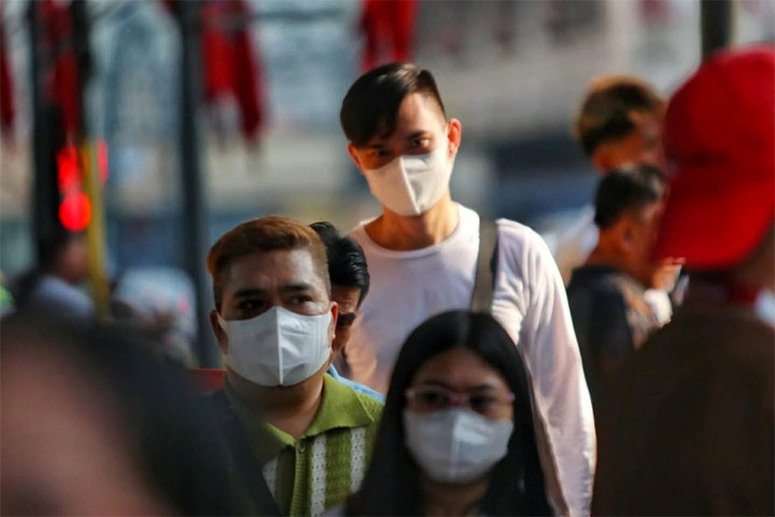
This was not simply Manila's familiar urban pollution.
The Department of Environment and Natural Resources' Environmental Management Bureau said smoke from fires in Kalimantan, Indonesia, had been transported northward by the southwest monsoon, or habagat, affecting parts of the Philippines. On Sept. 2, several monitoring stations in Metro Manila recorded elevated concentrations of PM2.5, with air quality classified as unhealthy for sensitive groups.
CONTINUE READING BELOW

It is an extraordinary reminder of how interconnected our environment has become.
A forest burns hundreds or even thousands of kilometers away. The wind changes. And Filipinos breathe some of the consequences.
Air has no passport. A fire in Kalimantan can eventually become a cough in Quezon City—or additional cardiovascular stress for an elderly patient in Manila.
The danger we cannot see
The greatest health concern in wildfire haze is not simply the smell or the reduction in visibility.
It is PM2.5—fine particulate matter measuring 2.5 micrometers or less in diameter.
These particles are extraordinarily small. The World Health Organization notes that roughly 90% of the particle mass emitted by wildfires consists of PM2.5. Wildfire smoke can also contain ultrafine particles, nitrogen dioxide, sulfur dioxide, polycyclic aromatic hydrocarbons, and other pollutants.
Because PM2.5 is so tiny, it can penetrate deep into the lungs. Exposure has been associated with irritation of the eyes and respiratory tract, coughing, wheezing and worsening asthma. More serious exposure can contribute to shortness of breath, cardiovascular effects, and increased hospital admissions.
As a cardiologist, I would emphasize something that is sometimes overlooked: Haze is not only a lung problem. It can also be a heart problem.
Fine particulate pollution can trigger inflammation, disturb vascular function, and place additional stress on the cardiovascular system. Older people and those with existing cardiovascular or respiratory disease deserve particular protection.
Children are vulnerable because their lungs and other organ systems are still developing. Pregnant women and people with asthma or chronic obstructive pulmonary disease are also at greater risk. The CDC additionally identifies people with heart disease, diabetes, and chronic kidney disease among those who should take special care during wildfire-smoke episodes.
If the sky clears, is it over?
Hopefully, by the time this column appears, Metro Manila's air will be considerably cleaner.
But we should not confuse the end of one episode with the disappearance of the risk.
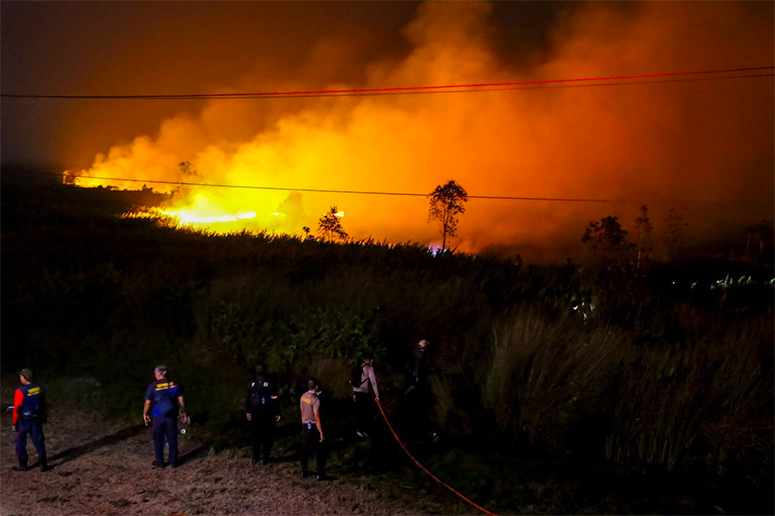
Indonesia's meteorological agency, BMKG, reported at the end of August that much of the country was experiencing the dry season, with significant wildfire activity and increased hotspots in parts of Kalimantan. Its early-September outlook continued to detect high-confidence hotspots concentrated particularly in Kalimantan and warned that relatively dry conditions require continued vigilance.
More importantly, BMKG has projected that the present El Nino could persist into early 2027 and that a positive Indian Ocean Dipole may develop from September through December 2026, potentially aggravating dryness. BMKG expects parts of Indonesia's 2026 dry season to be longer and drier than normal.
That does not mean Metro Manila will remain continuously blanketed in Indonesian smoke. Whether haze reaches us depends on where fires occur, their intensity, rainfall, atmospheric conditions and, critically, wind direction.
But it means recurrence remains possible.
The correct response is therefore neither panic nor complacency. It is preparedness.
What families should do
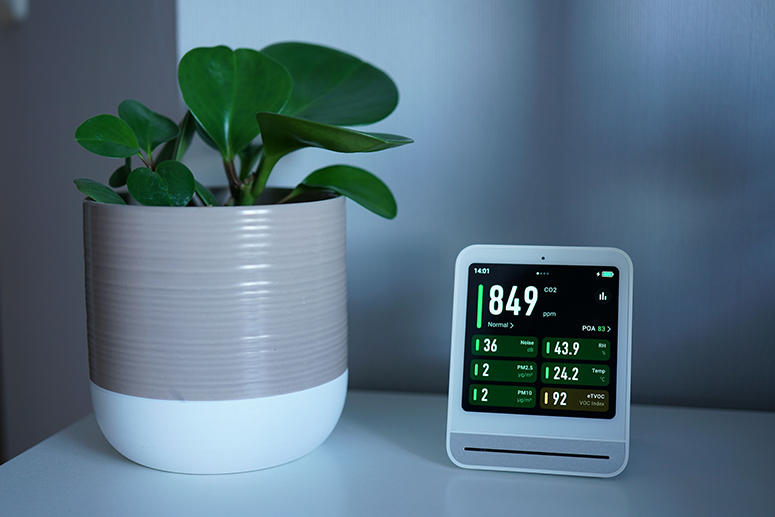
First, follow actual air-quality readings rather than judging the sky alone. Haze may be visible, but harmful fine particles cannot reliably be estimated by sight or smell. Check advisories from DENR-EMB, local governments, and health authorities.
When PM2.5 becomes elevated, reduce unnecessary outdoor exposure—particularly prolonged or strenuous exercise. Exercising harder means breathing more air and therefore potentially inhaling more particles.
Move that morning jog or outdoor workout indoors until conditions improve.
Second, protect the vulnerable first.
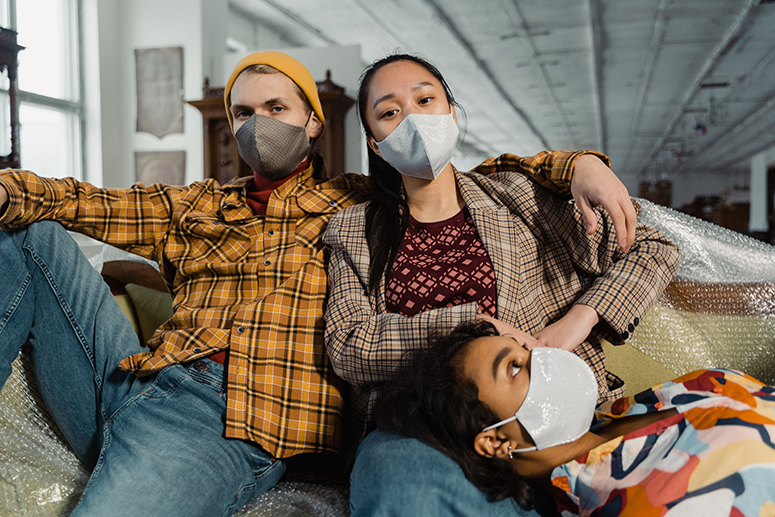
Children, senior citizens, pregnant women, and people with asthma, COPD or cardiovascular disease should be particularly cautious. During the recent episode, Philippine health authorities specifically advised limiting prolonged outdoor activity and using an N95 respirator when exposure cannot be avoided.
Third, if you must spend time outdoors in significant haze, wear a properly fitting N95 or comparable particulate respirator.
A loose surgical mask is not equivalent to a well-fitted particulate respirator for filtering fine smoke particles. The protection of an N95 depends importantly on creating a good seal around the face.
Fourth, turn your home into a refuge from polluted outdoor air.
When outdoor air quality deteriorates substantially, keep windows and doors closed as practical. If your air-conditioning system allows it, use recirculation rather than drawing smoky outside air indoors.
A portable air cleaner equipped with a HEPA filter can reduce airborne particles in a room. For central systems capable of handling them, higher-efficiency filters—such as MERV 13 or better—can also help. Avoid ozone-generating air cleaners or ionizers marketed with extravagant purification claims; ozone itself is a lung irritant.
And while trying to keep smoke outside, do not manufacture pollution inside.
Avoid cigarette smoke, vaping, incense, candles, and unnecessary frying or burning. Vacuuming without appropriate filtration can also stir particles back into the air.
Don’t forget your medicines
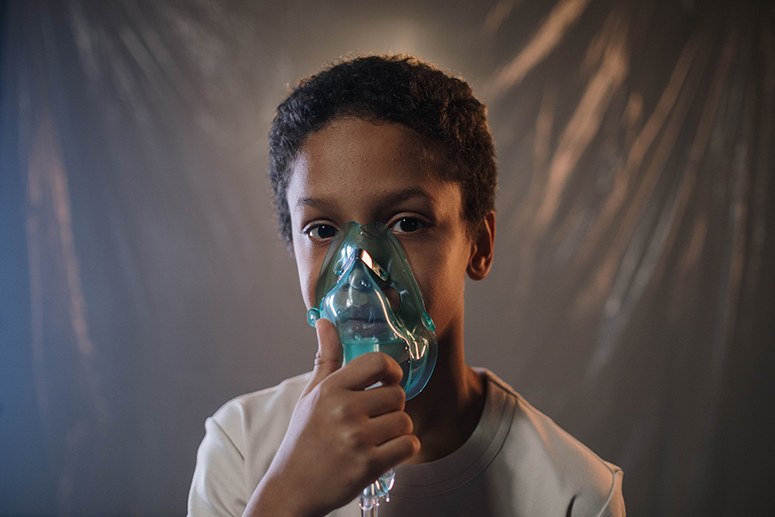
People with asthma and chronic lung disease should make sure their prescribed inhalers and other medications are readily available and used according to their physician's instructions.
Cardiac patients should continue their maintenance medications.
Haze is not an excuse to experiment with supplements, steam inhalation, detox drinks, or supposed "lung cleansers." There is no beverage that washes PM2.5 out of the lungs.
Good hydration and adequate nutrition are sensible. But the most effective intervention is much simpler: Reduce the amount of polluted air you inhale.
Seek medical attention for significant difficulty breathing, persistent wheezing, severe chest tightness or chest pain, faintness, confusion, or other concerning symptoms—particularly in people with underlying heart or lung disease.
Regional solution required
There is also a larger lesson.
Transboundary haze cannot be solved by telling Filipinos to buy N95 masks.
Southeast Asian nations have spent decades confronting land and forest fires and peatland burning. ASEAN has established regional alert levels and mechanisms based on dry conditions, hotspots, smoke plumes, wind direction, transboundary transport, and deteriorating air quality.
Ultimately, prevention at the source is vastly preferable to protection after the smoke has already crossed national borders.
Indonesia must continue strengthening fire prevention, peatland management, rapid suppression, and enforcement against illegal burning. ASEAN cooperation must likewise become increasingly effective as climate variability and warming alter fire risks. Since President Marcos is going to chair the forthcoming ASEAN Summit, I hope he can include that in the agenda.
The Philippines, meanwhile, needs robust air-quality monitoring, rapid public advisories, and preparedness protocols for schools, workplaces, hospitals, and local governments whenever transboundary haze is forecast.
And households should develop their own simple haze plan before the next gray morning arrives.
Know where to check the air quality. Keep a few legitimate N95 respirators available. Know which family members are most vulnerable.
If affordable, designate one room where filtered indoor air can be maintained during severe episodes. And never assume that because the smoke originated in another country, it cannot affect your health.
The recent haze carried a remarkable message across the South China Sea: Air has no passport. Neither does pollution.
A fire in Kalimantan can eventually become a cough in Quezon City, an asthma attack in Makati—or additional cardiovascular stress for an elderly patient in Manila.
The skies may soon clear. We should be grateful when they do.
But until the fires are controlled and the regional dry spell eases, we should keep watching not only the horizon, but the air-quality readings. Because sometimes the greatest danger in the air is precisely what we cannot see.

WATCH: Is OPM still as good as it used to be? (Generations Ep. 20)
September 9, 2026
WATCH: Can we talk about death and grief? (Generations Ep. 25)
October 14, 2026
WATCH: Save for retirement or enjoy life now? (Generations Ep. 21)
September 16, 2026