

Café etiquette 101: When is it acceptable to take up extra tables and chairs?
Cafés have become more than just places to grab coffee—they’re where people work, study, and catch up with friends. It’s not uncommon for customers to pull up an extra chair or use another table to accommodate their needs. But when is that acceptable, and when does it become inconsiderate to others?
The topic recently gained attention on X after a user shared an encounter with a woman she dubbed the "Entitled Character of the Year." According to the original poster, she politely asked if she could use the other table, but the woman refused, saying she needed both. The encounter reportedly happened during peak hours at the café.
"When I politely asked if I could have the other table because people were literally standing around with nowhere to sit, her response was: 'I’m sorry, I’m using my table for my meals!'" the OP wrote. "Next time, fold your laptop, put your food on one table like a civilized human being, and stop acting like paying for a cafe latte that grants you table ownership rights."
"Y’all need to look around and read the room, too. It’s a coffee shop, not a 'squatters' area. Have some basic courtesy: Move your bags off empty chairs, compress your setup, and let other paying customers actually sit down and enjoy their coffee!" she added.
Cafe owners weigh in
Angel Pring, owner of café and bookstore NB Lounge, said that their space's layout and concept naturally accommodate customers who need a little more space, such as those working on laptops, browsing books, or visiting in groups. But it becomes a problem when the café is busy and customers take up more space than they need.
"During peak hours, every table and chair matters," she told PhilSTAR L!fe. "If occupying extra seats means another customer can’t find a place to sit, that’s when we encourage everyone to be a little more mindful. We want everyone to enjoy the space, whether they’re here for coffee, food, or books."
CONTINUE READING BELOW


While it's generally acceptable for customers to use an extra chair for their belongings, Enrico Feria—who works at Nomu Cafe—noted it's best to give up the seat if another customer asks to use it.
In an interview with L!fe, Noon Cafe owner John Nikko Danao pointed out that taking up extra space depends on the situation, particularly how busy the café is. On hectic days, their staff may politely ask solo customers occupying larger tables to move to smaller seating areas to accommodate more guests.
"It's all about asking nicely and respectfully and hoping for the best that the customer is understanding of the situation," he said.
Café etiquette
According to etiquette expert Tracy Que, taking extra chairs and tables is acceptable if they are needed for accessibility or, in a quiet café with plenty of seating, for personal belongings—provided customers give them up once the space gets busier or others need a seat.
For instance, a person with a disability or mobility challenge may need an additional chair for support, to accommodate a mobility aid, or to make their stay more comfortable. In these cases, using extra furniture addresses a legitimate need, not just a personal preference.
"Outside of these circumstances, it's always more considerate to avoid occupying or using the extra table or chairs, particularly when the establishment is busy," she told L!fe.
Etiquette expert Joy Buensalido, author of the social etiquette book Pinoy Manners, stressed that customers should be mindful of the space they occupy, even if a café doesn’t impose time limits on guests.
"Some cafes don’t really mind if some people stay there for hours, but customers or diners should never abuse this relaxed or permissive atmosphere by taking over two tables if they are alone," she said. "It would be okay if the place was not full, but they should be conscious of the influx of people. If they notice there are many customers waiting for a table, basic courtesy should be to give up their extra table, especially if they're not expecting anyone to be with them."
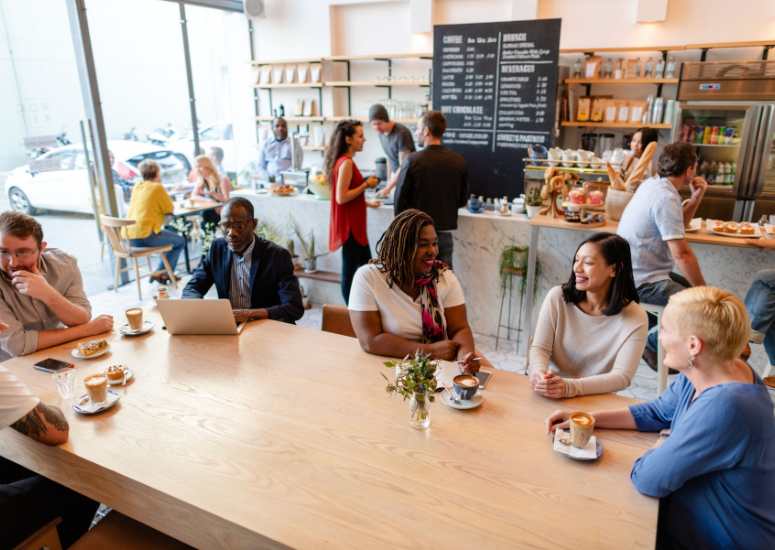
The etiquette experts noted that guests should remember that these are shared spaces. If you're staying at a café for long hours, they both encouraged customers to continue supporting the business.
Que added that customers who might need more space for work, meetings, or personal items should consider visiting during off-peak hours, choosing a venue better suited for extended stays, or reserving a larger table if available.
Beyond taking up extra tables or chairs, she enumerated other habits that may come across as rude in cafés: speaking too loudly, using speakerphone, leaving tables messy, treating staff disrespectfully, and not being mindful of people's personal space while waiting in line.
"These may seem like small things, but together, they shape the experience of everyone sharing the space," she pointed out. "The beauty of etiquette is that it's not about being perfect or following a list of rules. It's about cultivating awareness and asking ourselves, 'How might my actions affect the people around me?'"
"At the end of the day, etiquette isn't about sacrificing our comfort—it's about balancing our needs with consideration for others. When we remain aware of those around us and are willing to adapt, we help create a more welcoming and pleasant environment for all," she continued.

WATCH: Save for retirement or enjoy life now? (Generations Ep. 21)
September 16, 2026