

Despite struggle for an audience, 59-year-old radio advocacy show forges on
Once upon a not-so-distant time, the story goes that the late National Artist for Literature Nick Joaquin was having a pedicure after getting a haircut. His pedicurist, a well-meaning middle-aged lady, one day suddenly asked him in Filipino, “Sir Nick, what will happen to Paula and Tony? Are they really going to Europe and end up together?”
The lady was referring to characters in Joaquin’s A Portrait of the Artist as Filipino, an elegy in three acts. It tells the story of spinsters Candida and Paula, daughters of renowned visual artist Don Lorenzo Marasigan, during the last few months before World War II destroyed Manila.
Joaquin, who was known to guard his privacy by hiding his real identity, apparently asked what the pedicurist was talking about.
She told him she had been following the radio series titled Larawan and she knew he was the playwright because his name was always mentioned in the program.
Acting surprised, Joaquin reportedly almost fell off the barber’s chair. But he was happy about it because finally, even people in the barbershop appreciated his play, which describes the lives of the illustrado before World War II.
CONTINUE READING BELOW

The radio series has been aired many times on DZRH Radyo Balintataw over the decades, starting in the 1990s until today. Joaquin himself told this amusing anecdote to the program’s producer and host, Cecile Guidote-Alvarez.
She is also known as the founding executive director of the Philippine Educational Theater Association (PETA), which celebrated its 59th anniversary on April 7 this year.
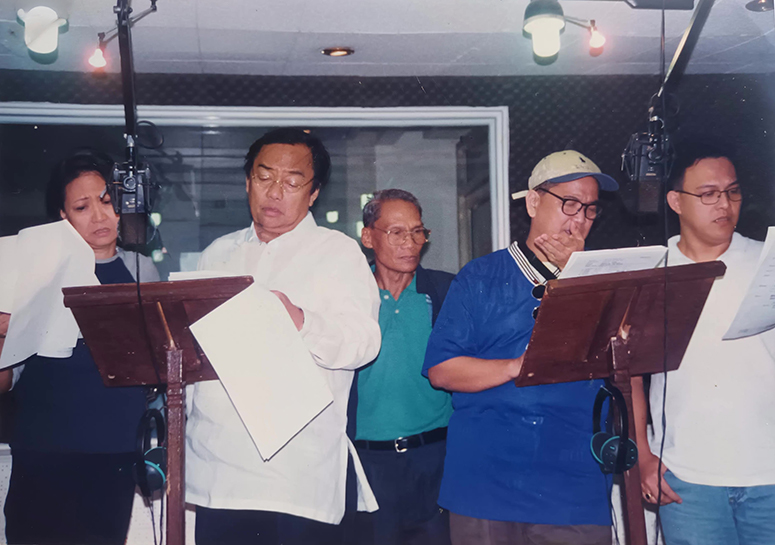
In the radio version of Larawan, Guidote-Alvarez and Lily Gamboa-O’Boyle played Candida and Paula, respectively.
“We recorded it decades ago. I can’t really remember the exact year, given my age now. But I remember we also had Robert Arevalo in the cast,” the 82-year-old theater pioneer told The Philippine STAR.
The creation of the series started much earlier. Larawan was the first Filipino stage adaptation of Joaquin’s Portrait, directed by Guidote-Alvarez and was originally staged from December 1968 to January 1969 at Rajah Sulayman Theater in Intramuros, Manila, by PETA.
During its early years, Balintataw was televised on Channel 5, showing both live and recorded stage plays.
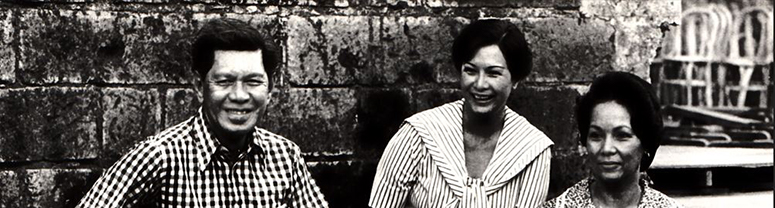
It was launched on Aug. 19, 1967, just four months after Guidote-Alvarez founded PETA. She wanted to create an appropriate platform for PETA’s theater artists, on and off stage, to cross over to television, or just to gain experience in performing before a camera, serving as a bridge between cinema and the stage.
Radyo Balintataw’s first show was Inulang Tipanan, an adaptation of the short play Vengeance is Mine, written and directed by Lupita Aquino. It featured film stars Fred Montilla, Rita Gomez, Mary Walter, Tommy Abuel, Armida Siguion-Reyna, and Chingbee Kalaw. The second production was Mansanas Para Kay Lita, an adaptation of Bert Florentino’s The World is an Apple with couple Robert Arevalo and Barbara Perez playing the lead characters.
Aquino was the regular TV director. From being stage directors in PETA, among those who were tapped to help in Balintataw were Joey Gosiengfiao, future National Artist for Film Lino Brocka, Elwood Perez, Felix “Nonon” Padilla (founding artistic director of Tanghalang Pilipino), among others. In the early 1990s when it was aired on PTV 4, world-acclaimed iconoclast auteur Lav Diaz said in several interviews he had his early trainings in writing teleplays, screenplays, using the camera, and other production work in Balintataw.
More than entertainment, soap opera for social change was the main driving force when Guidote-Alvarez conceptualized the Balintataw series in the early years of televised entertainment in the Philippines.
Her dream was to adapt stage plays written by Filipinos and their foreign counterparts for broadcast, be they classical Greek, Shakespeare’s work, or especially contemporary plays.
“When you have an informed citizenry, they themselves will act. I honestly have faith in our people that if they are given the choice and they are given all the data, they will make the enlightened choice,” she said.
During its earlier years, Balintataw’s tri-media approach (TV, radio, comics) in its special soap series titled Sali-Salising Buhay (Interweaving Lives) was featured by CNN International for a documentary produced by photojournalist-filmmaker Barbara Pyle and was introduced by Jane Fonda. Balintataw was featured among the best of “soaps for social change.”
Now airing six days a week at 11 p.m., with a Sunday show at 6 p.m. on DZRH, the series continues to serve an audience, despite the perceived limited reach of AM radio. It has been awarded best drama, best educational, best cultural show, and most gender-friendly program.
It has been a struggle for Guidote-Alvarez, who was diagnosed with cancer twice before getting hospitalized during the first month of the COVID-19 pandemic, eventually losing her husband, the late senator and former environment secretary Heherson “Sonny” Alvarez.
“Even with Sonny no longer around, I believe in the existence of some connectivity. The absence is not really an absence—there is a residual presence and, somehow, that gives me strength and courage. I keep his ashes in a necklace I wear daily,” she said in an interview with I Can Serve Foundation, an advocacy group of breast cancer survivors and volunteers.
Balintataw is one of the reasons she gets up every day. She is celebrating her 83rd birthday on Nov. 13 this year.
She still manages to get involved in issues affecting our environment, the same passion she shares with Heherson.
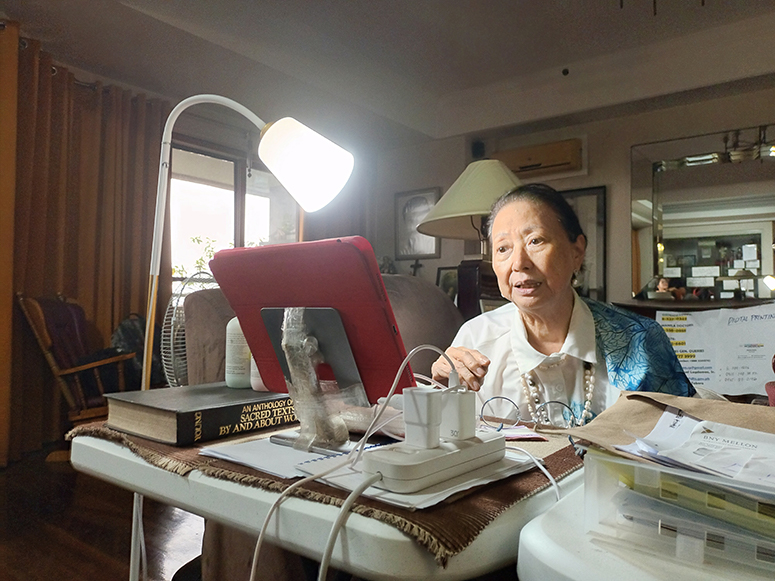
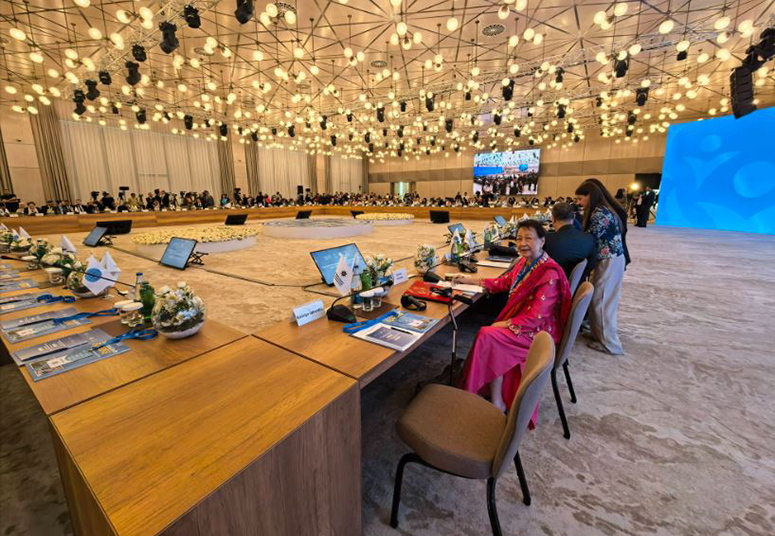
On May 14 at Baku, Azerbaijan, Guidote-Alvarez delivered a speech titled “The Architecture of Dignity: How Culture Shapes the Human Soul,” to delegates from around 110 countries for the Global South NGO Platform (GSNP), an exhibition showcasing the vital role of civil society organizations from the Global South that was hosted by the Azerbaijan government and co-hosted by the United Nations Human Settlements Programme. She was also elected Deputy Secretary General for the Pacific region during the formal inauguration of GSNP.
This was just one of the few, select travels abroad that she featured on Radyo Balintataw.
“I keep my mind active. Education doesn’t end until you are in the grave. Even if you are aging, you have your memory to stay passionate. You have to keep your conviction about things you believe in and those that matter most to you. No surrender,” she said.
Next year, PETA and Radyo Balintataw will turn 60. Both are landmark institutions in the creative industry that she founded when she was only 23.
“Senior years na rin and I am hoping, given my fragile health, to celebrate this milestone with my former students and friends,” she said.

WATCH: Pixar Summer Fest adventure at Hong Kong Disneyland
August 10, 2026
WATCH: Why is it so hard to make friends? (Generations Ep. 26)
October 21, 2026