

Only blunders in the building
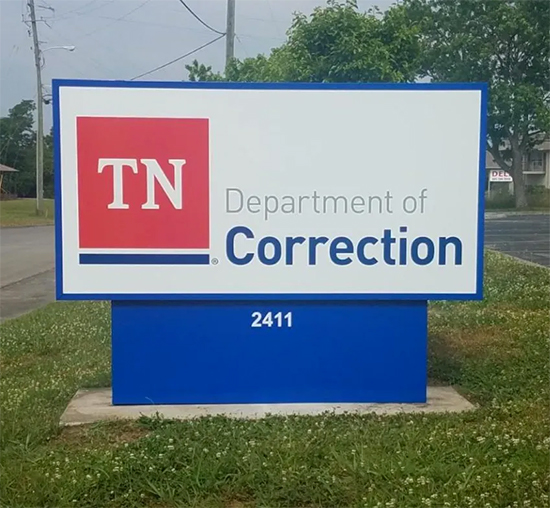
Maybe it’s just me, but there’s something I find oddly fascinating about this whole Christa Pike debacle. She was sent to death row in the US for the torture and murder of a teenager in 1995, but survived a failed execution on Sept. 30. After two doses of pentobarbital, the 50-year-old death row inmate remained alive. As of this writing, she has regained consciousness, been discharged from the hospital, and sent back to her Tennessee prison cell.
There is profound irony in the government’s spending much effort and resources to save an inmate destined to meet the Grim Reaper to ensure that such a person will be perfectly fit to face the gallows again.
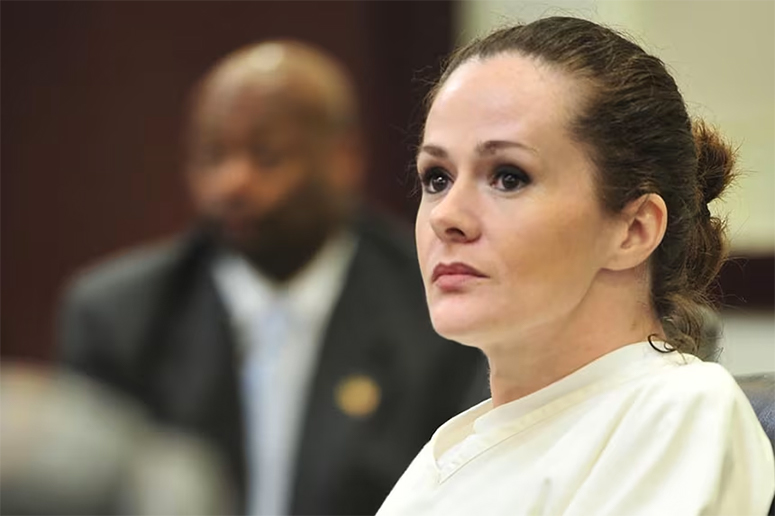
It may sound like a true-crime podcast or a very dark plot point omitted from Only Murders in the Building, but pop culture has been trying to warn us for decades that even in healthy democracies, something as important as a state-sanctioned execution could turn into a costly colossal dud.
We cringed when Eduard Delacroix caught fire on the electric chair in Stephen King’s The Green Mile because sadistic prison guard Percy Wetmore deliberately failed to wet the sponge that should have made the electricity flow more smoothly. John Grisham’s The Chamber was so compelling it even inspired me to write The Dialectics of the Death Penalty, which won me Best Essay in a Supreme Court-sponsored competition many moons ago.
CONTINUE READING BELOW

Yet, in the real world, a whopping 7.2% of lethal injections fail. According to legal scholar Austin Sarat, that makes it statistically the most enthusiastically bungled way to die at the hands of the state. Pike’s botched execution serves as a stellar proof of concept, instantly triggering the resignation of the corrections commissioner, a freeze on Tennessee executions, and a frantically ordered independent review to figure out what went wrong. So far, the overwhelming theory points to human error.

The international implications of failed executions are historically messy. In 1996, when Republic Act No. 8177 authorized the use of lethal injection in the Philippines, its constitutionality was challenged before the Supreme Court on the ground that the possibility of botched executions and mistakes in administering the drugs made it a cruel, degrading, and inhuman punishment. Despite the SC’s conclusion that this wasn’t entirely accurate, the death penalty was eventually abolished twenty years later.
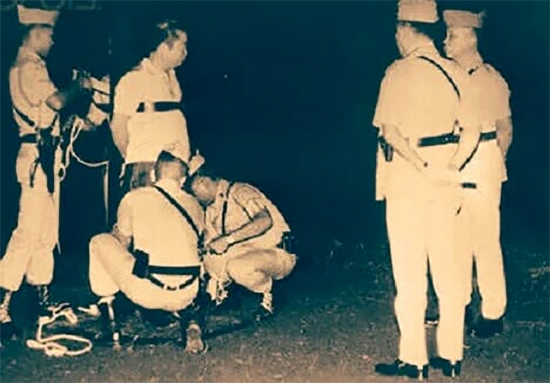
Decades earlier, during martial law, drug kingpin Lim Seng—our very own Walter White of Breaking Bad fame—was sentenced to death by firing squad in a highly publicized execution broadcast on national television.
So, why does a person condemned to die suddenly become unkillable?
For lovers of fiction, it’s like hearing Syrio Forel, the First Sword of Braavos in Game of Thrones, facing the God of Death and saying: “Not today.”
While theologians might hail it as a merciful act of God, a lawyer will tell you a failed execution is usually just a textbook case of force majeure, i.e., a legal act of God where a higher power or faulty equipment spoils the party. When the toxic cocktail turns out impotent, it isn’t magic; it is the modern equivalent of an old, frayed rope snapping during a hanging, a guillotine blade failing to drop, or a sudden power outage flipping the breakers on the electric chair, which is very possible in our jurisdiction.
Sure, the middlemen can always take the fall: The executioner may have failed in rope knotting, forgotten to sharpen the blade, or missed the right switch—the real-world equivalent of a blade not making the cut during a Forged in Fire weapon test, forcing judge Doug Marcaida to refrain from saying “It will KEAL” (Keep Everyone Alive, a defense-focused acronym). Or maybe they simply failed “IV 101” and spent an hour poking around like a blind mosquito trying to find a vein.
Given that this fiasco happened in America, you’d think Tennessee prison officials would have had the wherewithal to scout for a Filipino nurse. After all, modern American medical dramas like The Pitt and St. Denis Medical are finally recognizing that Filipino healthcare workers form a vital part of the US medical workforce. If the death penalty ever returned to the Philippines, there certainly wouldn’t be any shortage of hyper-qualified, over-certified nurses or phlebotomists who can do the “jab” right.
I concluded early in my legal life that if double jeopardy protects an accused person from being tried twice for the same crime, then double execution should protect a condemned prisoner from being killed twice for the same offense.
That view hasn’t changed. If the state straps you down, clears its throat, throws the switch or pushes the plunger, and you somehow walk out of that room with a pulse, you should be set free. After all, the contract has been fulfilled. The state did its absolute best but, like James Ingram sang in Just Once, its best just wasn’t good enough. If the government can’t even manage to enforce its own finality, the least it can do is respect the survival and let the man—or woman—walk.
WATCH: Pixar Summer Fest adventure at Hong Kong Disneyland
August 10, 2026
WATCH: Is OPM still as good as it used to be? (Generations Ep. 20)
September 9, 2026
WATCH: Can you still trust someone who betrayed you? (Generations Ep. 22)
September 23, 2026