

Filmmaker Miguel Luis Calayan on bouldering and finding focus
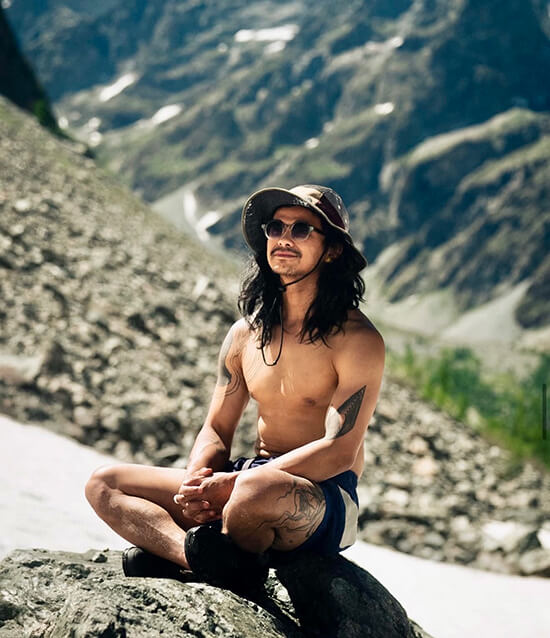
For documentary filmmaker and So... Cards creator Miguel Luis Calayan, life has always been about framing other people’s stories. But when he discovered bouldering in his late 20s, the camera inevitably turned inward.
Known to his YouTube subscribers as the insightful voice behind “Truth & Friction,” Miguel has cultivated a global following by exploring the psychology and culture of climbing. We asked him to share his insights about the sport.
THE PHILIPPINE STAR: As a documentary filmmaker in Manila, California, and Amsterdam, what made you decide to point the lens at yourself and the climbing community through your YouTube channel?
MIGUEL LUIS CALAYAN: I have spent my entire career telling other people’s stories. My reluctance to turn the camera on myself came from feeling that a true documentary filmmaker remains an invisible conduit between stories and individuals. I also battled insecurity, feeling I didn’t have enough life experience to offer anything of value. Ultimately, getting in front of the camera was born of necessity. I took a corporate content job that required filming myself. The work wasn’t personally fulfilling, so I felt the urge to create for myself. Instead of waiting for a subject to interview, I looked at my own life. Climbing had become a major focal point, so it felt natural, inevitable even, to start making these videos.
Why did you rebrand your channel from @mignightsnack to Truth & Friction? What is the ultimate goal for this platform moving forward, and what kinds of stories do you want to tell next?
CONTINUE READING BELOW

For the first year, the channel was just a creative outlet to share with my community. Hitting 10,000 views blew my mind, and now it has amassed over 300,000. I hadn’t taken it seriously, and @mignightsnack was just a silly handle for my accounts. Once the videos gained traction, people at the gym started recognizing me as ‘that guy on YouTube.’ That led to jokes about me becoming a climbing influencer, which I have no interest in. To gradually shift the focus away from me as an individual, I rebranded to Truth & Friction. While I still do everything myself, my ultimate goal is to grow the channel so I can bring in other filmmakers to tell their stories. It will likely stay climbing-centric for now, but I want these videos to resonate with non-climbers. That’s why I emphasize the culture and psychology of climbing rather than just showing cool footage of cool boulders.
You’ve talked about how bouldering intersects with your ADHD, specifically the idea that climbing equals urgency equals dopamine. How does the immediate, puzzle-solving nature of a boulder problem provide a mental focus that helps you cope with ADHD?
While I’m on a waiting list to get tested and haven’t been officially diagnosed, I constantly hear stories from people with ADHD or autism that sound exactly like my own. Struggles with executive function, planning, and focusing on things that aren’t urgent or novel feel very familiar.
Climbing is like skateboarding or Brazilian jiu-jitsu: it demands absolute attention because if you don’t focus, you get hurt. The physical danger overrides the system and instantly pulls me into hyperfocus. Bouldering also encourages hyperfixation; if I want to climb a specific route, I will obsess over minute details like weight distribution and muscle engagement.
Climbing gives me a space where symptoms become less of a hindrance and more of a strength. Every bouldering session is a reprieve from the idea that there’s something wrong with how I’m wired.
How has your approach to failing on the wall translated to how you handle setbacks in daily life?
If you keep pushing yourself, climbing is mostly about failing. If failure ceases to be a factor, it stops being interesting because I’m no longer growing. I got hooked on the constant feedback loop between effort and results. I might fall off the same move repeatedly, but after resting, I come back, and it feels automatic. That growth is one of the clearest signals that I am alive.
In climbing, failure isn’t an indictment of your character; it’s just feedback to act upon. When a climb feels overwhelming, you break it down move by move, securing small wins until it comes together as a successful ascent. That directly applies to real life: setbacks are rarely permanent, and most problems can be broken down into manageable tasks. Climbing is also heavily community-oriented. When I’m stumped, there’s almost always someone ready to share a solution.
What do you find most unique about the Philippine climbing scene?
It’s in the middle of a massive growth spurt. While veterans have been climbing for decades, bouldering has simply exploded recently, with gyms popping up all over Manila. There’s incredible energy and passion; everyone cares deeply about the sport and each other.
The unique brand of Filipino hospitality is definitely at play. Whenever my partner and I visit Baguio, the locals welcome us with open arms. That warm reunion is always a highlight of our trips.
In a way, the Philippine climbing scene is going through puberty. It will have its awkward moments as it figures things out, but it’s currently at its most malleable phase. It’s crucial for those with influence to embody a healthy culture right now. We have a rare opportunity to foster a deep love for the environment, a heart for community, and an ambition focused on the collective experience rather than just individual glory.
When did you first discover bouldering, and what made it resonate with you compared to other sports or fitness routines?
To the uninitiated, climbing looks odd: just latching onto colored blobs and moving in convoluted sequences to reach the top. But the true beauty is in the middle. The wonder of climbing lies in play: exploring, experimenting, and solving endless puzzles with your body.
Initially, the constant feeling of progress hooked me. I got sucked into chasing new grades, but eventually, that slows down. You learn to appreciate how every joint, muscle, and tendon works in harmony just to keep you on the wall.
I was nearly 30 when I started, so I had already accepted that I’d never be a world-class climber. That realization gave me the liberty to go at my own pace and simply enjoy the process. My best advice for adults wanting to try it is exactly that: there’s no need to hurry toward arbitrary goals because there is so much to enjoy along the way.

WATCH: Is OPM still as good as it used to be? (Generations Ep. 20)
September 9, 2026
WATCH: Pixar Summer Fest adventure at Hong Kong Disneyland
August 10, 2026