

What Undas can teach us about planning for the end
Every November, we go home to our dead. We repaint the nitso, light candles, offer flowers and prayers, and bring enough food to feed half the barangay.
Cousins we have not seen in years suddenly appear beside us at the cemetery. Old stories are retold. Laughter mixes with tears.
Few cultures honor their departed as faithfully as we Filipinos do. Yet here lies a curious paradox. We can talk for hours about Lolo’s favorite dish or Tita’s last birthday party. But we rarely talk about the one thing that matters most when our own life nears its end: how we want to be cared for.
Bring it up at the dinner table and someone will surely say, “Huwag mo ngang pag-usapan ‘yan, baka magkatotoo. (Don’t talk about that, it might come true.)”
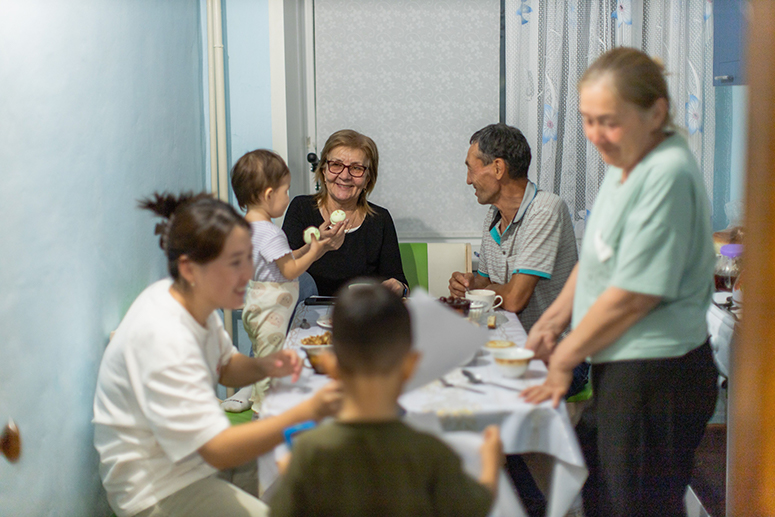
So we keep silent. And that silence often costs our families dearly.
CONTINUE READING BELOW

When nobody knows what lola wanted
In my years as a cardiologist, I have stood in many hospital corridors with families facing the hardest decision of their lives.
The scene is painfully familiar. Lola, 84, has suffered a massive stroke or a cardiac arrest. She is on a mechanical ventilator. Her kidneys are failing. The medical team gently explains that recovery is unlikely, and that more aggressive measures may only prolong her suffering.
Then comes the question: “What would she have wanted?”

Nobody knows.
The eldest son wants everything done. The daughter who cared for Lola every day believes she would never want to live attached to machines. The child who just flew in from abroad, weighed down by guilt for being away, insists on “giving her every chance.” Somebody brings up the hospital bill. Somebody else is offended that money is even mentioned.
I have seen siblings stop speaking to each other for years after such moments. I have seen children carry guilt long after the funeral, still wondering if they decided right.
The tragedy is that Lola probably had an answer. No one simply asked her while she could still speak.
What is an advance directive?

An advance directive is simply a statement of your wishes about medical care, made while you can still decide, for a time when you no longer can.
It may answer questions like these: Would you want CPR (cardiopulmonary resuscitation) if your heart stops? Would you want to be placed on a breathing machine (mechanical ventilator), and for how long? Would you accept dialysis or tube feeding if recovery is unlikely? Would you rather spend your last days at home or in the hospital? Who should speak for you if you cannot speak for yourself?
That last question may be the most important. Naming one trusted person as your health-care proxy spares the family from deciding by committee.
In the Philippines, we still have no law that specifically governs living wills. Bills have been filed in Congress over the years, but none has been enacted. Still, many hospitals already respect written instructions, “Do Not Resuscitate” orders, and the clearly expressed wishes of patients, especially when the family stands united behind them.
A signed document helps. A conversation everyone remembers helps even more.
Is this ‘giving up’?

Many Filipino families fear that declining aggressive treatment is the same as abandoning a loved one, or worse, going against the will of God. It is not.
Spiritual advisers tell us that we are not morally obliged to use every medical intervention available. They add that discontinuing procedures that are “burdensome, dangerous, extraordinary, or disproportionate to the expected outcome” can be legitimate. This is not euthanasia. It is the humble acceptance of our human limits.
What must never be withdrawn is ordinary care: comfort, cleanliness, relief of pain, and loving presence. Palliative care is not the absence of medicine. It is medicine at its most compassionate.
We spend hours cleaning the tombs of our loved ones. Perhaps we can spend one evening telling our families how we wish to be cared for when our own time comes.
Having walked quite close to my own mortality a few years ago, I have come to see that preparing for death is not a lack of faith. It is an act of trust. We surrender to God what we cannot control, and take responsibility for what we can.
Starting the conversation
Undas, or All Saints’ and All Souls’ Day, offers a natural opening. We are already surrounded by memories of those who went before us. A few gentle ways to begin:
- Use a story. “Remember how hard it was for all of us when Lolo was in the ICU? I don’t want you to go through that for me.”
- Start with yourself. Share your own wishes first. It makes it easier for your parents to share theirs.
- Choose one spokesperson. Agree as a family on who will speak for each parent if needed.
- Write it down. A simple signed letter, kept where the family can find it, is a good start.
- Tell your doctor. Ask that your wishes be noted in your medical records.
- Revisit it. Wishes change with age and illness. Talk again every few years.
The bottom line
We cannot choose the day we leave this world. But we can spare those we love from guessing in the dark.
The greatest gift we leave our children may not be land, money, or a well-kept mausoleum. It may be the peace of knowing they honored our wishes.
So this Undas, after the candles are lit and the prayers are said, sit down with your family. Talk about life. Talk about death. Talk about what truly matters.
Our dead have already taught us that life is short. Let us not waste the lesson.

WATCH: How to experience Bangkok and Kanchanaburi in one trip
October 21, 2026
WATCH: Is Gen Z too soft? (Generations Ep. 23)
September 30, 2026
WATCH: Can we talk about death and grief? (Generations Ep. 25)
October 14, 2026