

Creating is a constant thing for Filipina storyteller Miki Labarda
At the 92nd Academy Awards, during his Best Director acceptance speech for Parasite, director Bong Joon Ho quoted Martin Scorsese, saying, “The most personal is the most creative.” This received a roaring standing ovation from the crowd.
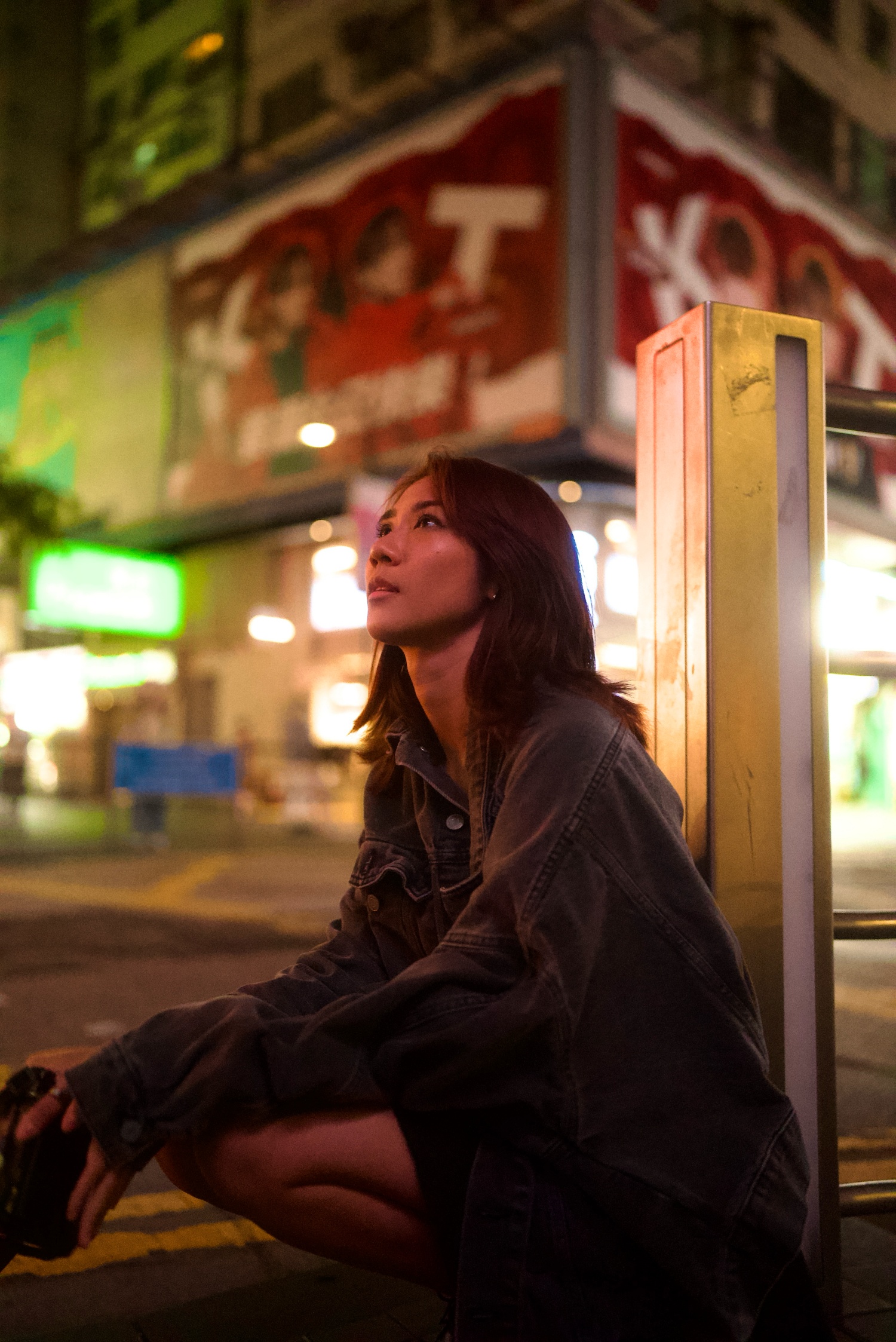
For 29-year-old Filipina storyteller Miki Labarda, the personal is what moves her, time and time again, to pick up a camera and hit record. What she considers the truth—her experiences as a woman living and feeling through Metro Manila—needs to be told the best way she knows how: through storytelling that demands your attention, her cinematic color grading, and the cadence of her voiceovers that feels like you’re listening to a friend’s late-night voice text. She makes ordinary life feel like it was meant to be seen.
Her audience would describe Miki’s storytelling as “inspiring”—that they’ve been spurred to pick up a camera or book a flight to see a place they’d always wanted to visit. For Miki, it’s one of the ways she can express herself freely. What she’s proven is that gentleness is a commodity in the attention economy. In a feed engineered for speed and provocation, she is the pause. The one percent of your scroll that doesn't ask anything of you, that just sits with you while she narrates the feeling of being called a "Legazpi girlie," for example, or laments over a common term that strong independent women are usually called. The themes she talks about range from the personal to the maybe-commonplace, but with self-reflection that’s entirely her own. Diaristic, almost. The visual landscape that accompanies these soliloquies is some of the most breath-catching images you’d seen of the Philippines or Southeast Asia.
With a following of almost 90K on Instagram now and a Sony Philippines ambassadorship, Miki started recording solo living diaries on her iPhone 13 in the middle of the pandemic. “I was bored at home and saw a lot of people posting their living alone diaries, so I also did it.” Spurred by the songs she loves most and the need to document these seemingly endless yet mundane moments at home, she posted on the internet as a kind of witnessing. “It seems like a small thing, but I was super picky with the songs that I use, the flow, or the pacing. And then suddenly the next week, I had a million views on a video where I was eating Army Navy on my desk. And then I became an ‘accidental creator,’ I think, just because of that video. Tapos tuloy-tuloy na from there. So silly.”
Though the sudden traction was a little overwhelming, prompting her to add seven underscores to her username—"To hide," as Miki recalls—she wasn’t pressured to keep up with the algorithm. “To a point, I don't really care about the algorithm. I just want to make sure whatever I put out there is something na gusto ko talaga, ayaw ko siyang pilitin just for a platform.” And perhaps this is what surprises a lot of people about Miki’s success. In an algorithm-driven feed where performance and hooks are rewarded, Miki turned a mirror to the internet and beckoned the audience to look inward. That’s rarer. People, as it turns out, gravitate to the truth told by normal people—like Miki in her room alone back then, or now, strolling the streets of Manila, observing and telling stories—and are more enchanted by the quiet contrast provided by Miki’s visuals. A language that says, You can simply listen and take a digital rest here.
CONTINUE READING BELOW

When you scroll through Miki’s feed, one word usually comes up: cinematic. Cinematic videos have been around the internet since 2015, pioneered by creators like Casey Neistat through the simplest category of YouTube videos: the daily vlog. Cinematic videography uses high-end filmmaking techniques like color grading and more complex visual framing, among others. Today, this kind of storytelling’s been adopted by thousands of creators, immediately skyrocketing through the short-form space because of its aesthetic appeal, watchability, and digestibility—all markers of the algorithm. Tick off all these, and you’re sure to go viral; the internet’s version of a roaring standing ovation.
For Miki, storytelling isn’t encumbered by such metrics. She works inside that genre but isn’t beholden to it. Her real template, if she has one at all, is her journals. “I guess there’s no template other than my own voice and what my own taste tells me. I tell people to always stand by their own taste. Because you can follow the same format, trends, and everything, but it’s cool to do something that’s actually you.” What she has done, quietly and with a little stubbornness, is refuse to leave that version of herself behind when she picks up the camera.
This resolve to communicate what she’s feeling stems from her difficult childhood, when she was not heard by the people who were supposed to listen. “As a kid, I was always told I felt too much, but I guess that's my superpower now because I know I can feel too much, and so then I have so many stories to tell.” This gift is not lost to the brands she works with, Miki recollects, as this specific voice of hers is warranted by her collaborators; its own kind of vindication for a girl who was once made to feel that her sensitivity was a problem.
“My younger self would be surprised by all of this. That we’re now telling the stories that have always been inside our diaries, and we’re telling it the way we want to tell it to the world.”
Brands aren’t the only ones picking up Miki’s magic. Hundreds of aspiring travel or cinematic content creators are starting to create their own versions of what a "Miki video" is— a malumanay narration, smooth visual cuts, color grading that’s atmospherically reminiscent of a Sofia Coppola movie, and a personal story behind the visuals. Of these “copies,” she’s unbothered. “I just make a deliberate choice to detach,” she says, because the point is that her videos gave other people permission to do or be. “I get a lot of messages from people telling me they’ve finally opened up about stuff they haven’t told their friends or family yet, via video, because they watched my videos where I was vulnerable. Those are what matter to me.”
What Miki has proven is that gentleness is a commodity in the attention economy. In a feed engineered for speed and provocation, she is the pause.
If her videos have become a template, she’s made peace with that, as it’s evidence that her voice unlocked something that was just sitting there untold. She also recognizes that at the end of the day, people have complex relationships and feelings for certain places. “Like, people have their own relationship with Intramuros, their own memories of Taft, kasi dun din sila nag-college. I guess I see it in a positive way that they’re also encouraged to tell their own stories about these places through my videos.”
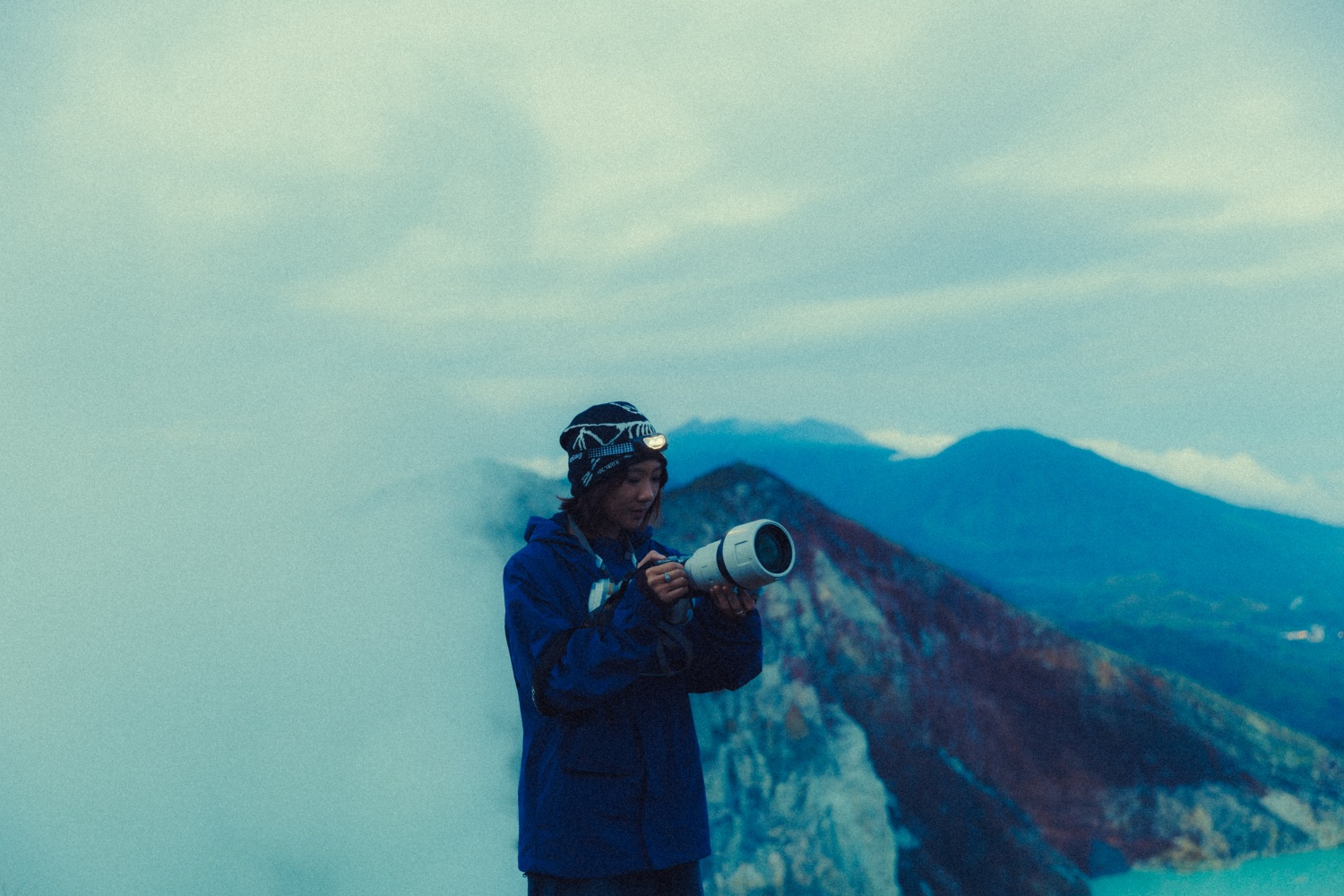
Among all the stories she has told, there’s one she hasn’t explored yet, and it lives at the edge of the water: stories of our people’s relationship to the sea. She says of the project-in-progress, “As a country that's surrounded by water and has over 7,000 islands, I want to know how our relationship with the ocean affects us emotionally. How does it calm us? How does it become our safe place? And then how does it also become the thing that we grieve?”
These are questions on top of Miki’s mind right now. And if her body of work is any indication of how she’ll tell it, we’d know that it will be told from a specific place of reflection that only she could tap into, where the feeling lives.
Her form of storytelling is far from a social media strategy and more than just a short-form trend. It’s who she literally is. The personal is the thing that can’t be copied and templated, can’t be optimized and reduced to vanity metrics. Sure, others may replicate the framing and emulate the pacing of her voice-overs, but they can’t tell the stories that only she alone could intimate from the prosaic moments, a roaring standing ovation be damned.

WATCH: LGBTQIA+ people with unlikely professions
June 28, 2026