

Mix tapes and memories: A childhood offline
A few days before Christmas, my cousin Chrissie messaged our family group chat. She and her girlfriend Tin were planning a game for our Christmas Eve celebration and she wanted each of us to bring a little gift—something that reminded us of our childhood.
The game turned out to be the string-pull game, where strings are tied to gifts and you get to keep the one you pull. Chrissie and Tin’s version had an added layer: every time a present was opened, the giver had to explain the story behind it.
A lot of the gifts were edible—Ovalteenies, Haw Flakes, M&Ms, Flat Tops, lychee jelly, rice crackers—the sight of which flooded us with memories.
I grew up in a world without the internet — and I feel lucky that I did.
Chrissie tore open the gift her sister Fifi brought. Inside were issues of Archie comics. “They remind me of my parents’ love. When I see Archie comics, I feel safe,” Fifi said and we responded with a chorus of “Awws...”
I had pulled Tin’s gift and the things inside the bag brought me back to the many years I spent at St. Theresa’s College: a small binder (a stand-in for the now hard-to-find Trapper Keeper), a sewing kit identical to the one I used for home economics projects, and a quarter-pad of paper that reminded me of all those surprise quizzes.
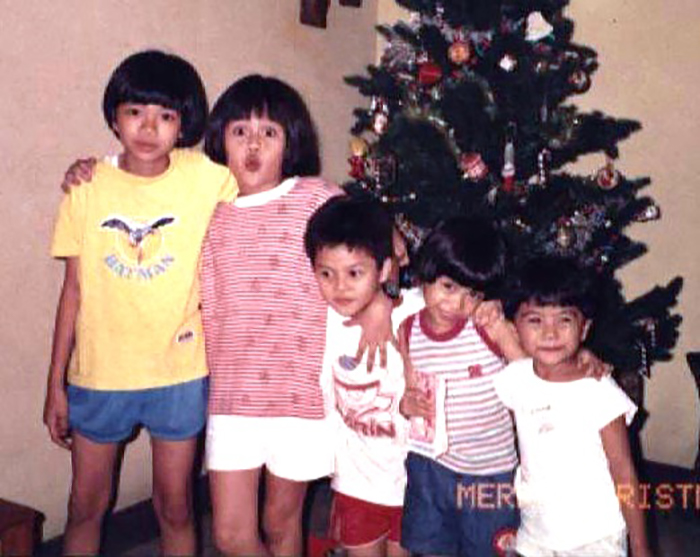
The gift I brought was a plush bag charm shaped like a cassette tape. I had stumbled upon it while shopping at SM and knew instantly that it was the perfect find.
Cassette tapes
CONTINUE READING BELOW

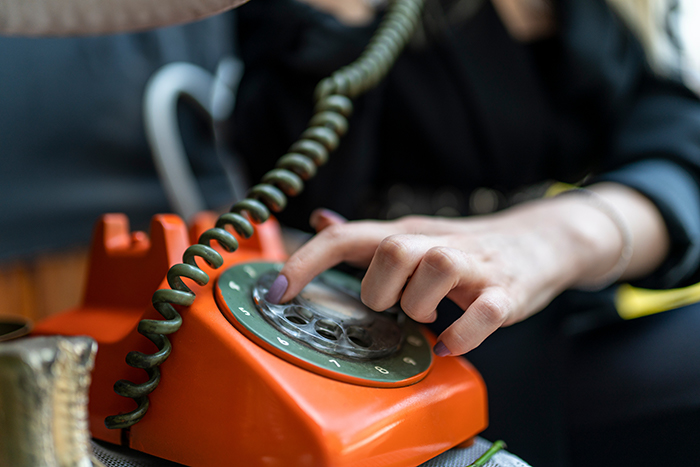
I grew up in the ‘80s and ‘90s and cassette tapes were a big part of my childhood. Back then, listening to a song we loved wasn’t as simple as opening Spotify and hitting the play button. We either had to wait for a DJ to play it on the radio—sometimes nudging fate by calling the station again and again, our fingers punished by the rotary dial until we finally got through—or, if we were lucky to own the cassette tape, we had to rewind or fast forward to the exact moment the song starts so we could play it.
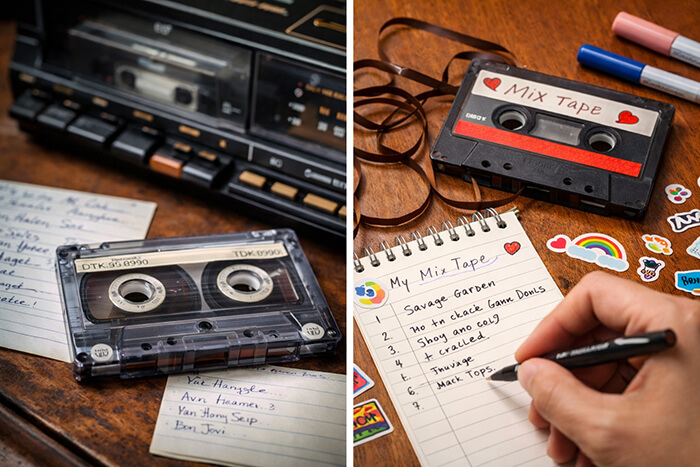
Those of us who didn’t have enough money to buy the album—or didn’t want to waste our allowance on an artist who only had one song we loved—settled for staying glued to the radio, fingers hovering over the record button, ready to capture the song the moment it came on. Then you hoped against hope that the DJ wouldn’t talk over the ending and ruin the recording.
This was how we made mix tapes, too—we recorded songs from the radio or from other cassette tapes, curating a collection of our favorites. And if you had a crush? A mix tape was a labor of love, and the perfect way to bare your soul, letting the music say what you couldn’t. Bonus points if you designed an album cover and handwrote the track list.
If you wanted to sing along or play your favorite songs on guitar, you couldn’t just look up the lyrics or chords online. We had to buy little magazines called song hits. Sometimes, we tried to transcribe the songs ourselves—which could be a really challenging task depending on the song. My brother Powie spent hours trying to write down the lyrics to Savage Garden’s I Want You. And then he did it all over again with Bone Thugs-N-Harmony’s The Crossroads—and it took even longer. Of course, our lyrics weren’t always accurate, which often led to hilarity.
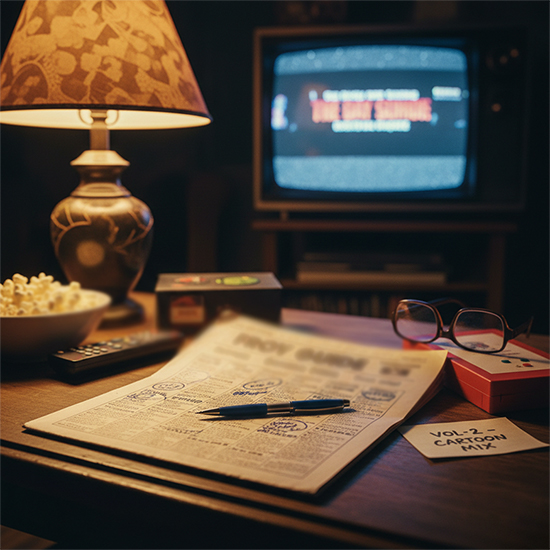
Watching our favorite TV shows took the same amount of dedication. I remember poring over the TV guide, marking which shows I wanted to catch. We had to make sure we were in front of the television the moment it started, otherwise, we were out of luck, unless someone we knew had taped it for us. Streaming wasn’t a concept yet—you just watched whatever was playing on TV, flipping through the channels until you found something good, or headed out to the video rental store so you could choose something you actually wanted to see. My family was big on renting movies—for a time, my uncle even ran a movie rental shop—and I got to enjoy the transition from Betamax to VHS to laser disc to VCD to DVD. I also spent entire summers glued to MTV, just waiting for my favorite music videos to come on.
We didn’t buy movie tickets for specific showings. You couldn’t go online and check the schedules so you could time your arrival. We would just show up at the cinema and walk in—it didn’t matter if the movie was already halfway through. More often than not, we’d watch the ending before the beginning. We couldn’t reserve seats either, we just grabbed whatever was available. And they didn’t clear out the cinemas between showings—we could watch the same movie all day if we wanted. There was also such a thing as SRO—standing room only. Yes, people used to watch movies while standing in packed theaters. I’ve also watched movies while sitting on the cinema steps. Gross, I know, especially back then, when the floors were always strangely sticky.
Phone calls and letters
It was a much simpler time. We spent hours on the phone talking to friends about nothing and everything. My telebabad ways got me into so much trouble with my grandma, who also used our landline for the family business. When PLDT finally introduced call waiting, I thanked the heavens.
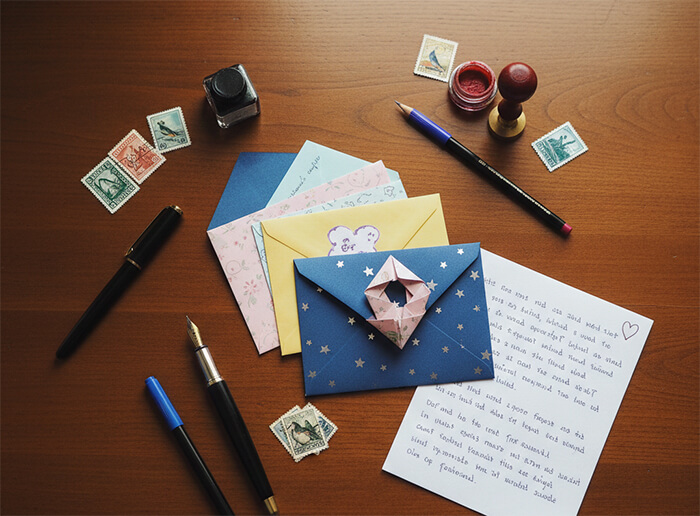
We wrote letters, using the best pieces from our stationery collections on our favorite people. We folded the notes in creative ways or stuffed them in pretty envelopes, handed them over (or snail-mailed them) and then waited for them to write back. Waiting—we were so good at waiting.
We took photos with film cameras, limited by the number of exposures in our film roll, and not knowing exactly what we captured until we had the photos developed.
Hanging out with our friends meant giving them our full attention—easy to do when we had no phones in our hands. We would call one another on our landlines and say, “Okay, see you at Glorietta at 3.” And if you were late, your poor friend had to stand exactly where you said you’d meet because you couldn’t just text them and say, “Hey, on my way, just go around first and I’ll call you when I get there.” (Sorry, Jason.)
When SMS became a thing, telcos charged us one peso per text so we had to make it count. My first SMS-capable phone was a terrible one — it deleted the message every time it failed to send. Back then, networks were so unreliable we had to resort to waving our phones in the air in an attempt to boost our signal. It didn’t always work and that meant I often had to type the same message over and over and over again until I was finally able to send it. I was so relieved when I finally got my Nokia 5110—the first of what would be many Nokias in my life. I spent so much money buying all sorts of covers for it and having it kitted out with lights and a personalized logo and ringtone.
The internet entered our lives slowly—in the form of 28.8 kbps modems that made plenty of noise and prepaid internet cards that ran out when you were in the middle of the most interesting chats on ICQ, IRC, AIM, YM. Back then, we enjoyed going online—it was a whole new world and it was thrilling and exciting—but we still lived most of our lives away from our computers. We weren’t perpetually stuck to our screens, our hands weren’t always wrapped around our phones. I kinda miss those days.
Embracing analog
I feel lucky to have experienced the world without the internet and the world with it.
I love the conveniences technology has afforded us, but I also wonder what this age of instant gratification is doing to us as humans. What price are we paying for having everything at our fingertips?
Perhaps this is why nostalgia has become such a global trend. Even Gen Z and Gen Alpha seem to be craving experiences they had not been around for. People are drawn to the familiar, the tactile, the slower, and the analog—little reminders of simpler times. In fact, some forecasts suggest that 2026 will be the year of embracing all things analog.
I know teens and 20-year-olds who take pictures with film cameras and play records on turntables. On TikTok, an antidote to doomscrolling has emerged: the analog bag, which is stuffed with things to reach for instead of your phone—crossword puzzles, books, crafting supplies.
In Japan, both children and adults are going crazy over cute stickers called 3D Bonbon Drop. The Kodak Charmera, a tiny digital keychain camera that mimics the low-fi photography experience with its retro filters, became a big obsession in different parts of the world, including the Philippines, with scalpers reselling them for a much higher price than SRP. Strawberry Shortcake and Rainbow Brite have both made a comeback. Even cassette tapes have returned.
They’re portals to the past, gentle pauses in a world that now moves too fast.

WATCH: Pixar Summer Fest adventure at Hong Kong Disneyland
August 10, 2026