

When creativity refuses to be disciplined
As a senior law student, my day is spent reading cases, crafting arguments, and making every word accountable. But by night, notebooks betray me. Half-finished stories, clumsy essays and ideas that demand life creep in, insisting that creativity cannot be disciplined, even in a world built on precision. Eventually, I find myself craving art more than certainty.
There’s a particular kind of ache that shows up when you’ve learned to value precision above all else. It looks like neat margins, footnotes, and an almost forensic respect for commas. For those of us who practice certain professions like law, where order is sacred and ambiguity is a liability, creativity can feel like a contraband impulse: loud, unnecessary, and dangerous. And yet it never quite goes away.
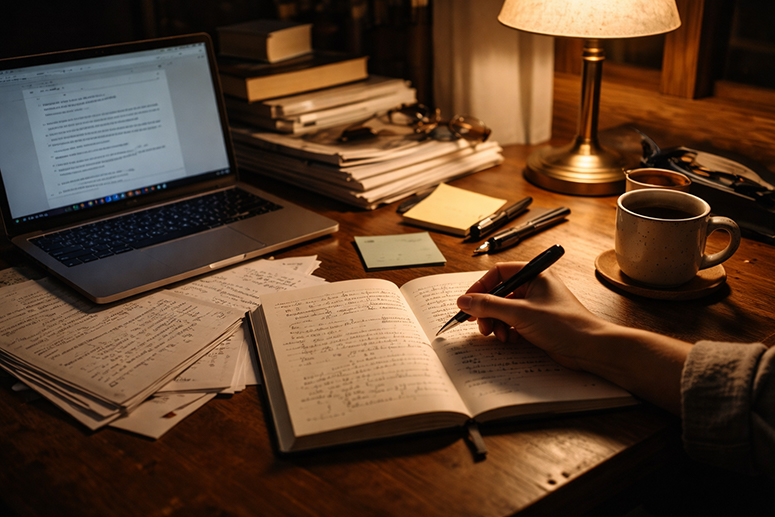
I learned this in the quiet between deadlines. Just as folk songs thrive in the spaces where workday conversations fall silent, the urge to create something beautiful settles in the gaps we try to tidy away. It waits where our neat lists end. It breathes where our measured opinions loosen. It doesn’t announce itself with fireworks; it slips inside pockets of spare time and mutters, “Remember me?” Then, one day, you find a story that will not leave you alone.
Call it stubbornness, call it an inheritance of imagination; whatever the name, the feeling is both soft and merciless. That’s the paradox I want to keep: brutality and tenderness are not opposites so much as a pair of hands that take turns holding you. To write is to practice both at once. You must be ruthless with sentences that betray you, and generous to the ones that survive. You must excavate grief without weaponizing it and allow beauty that hurts.
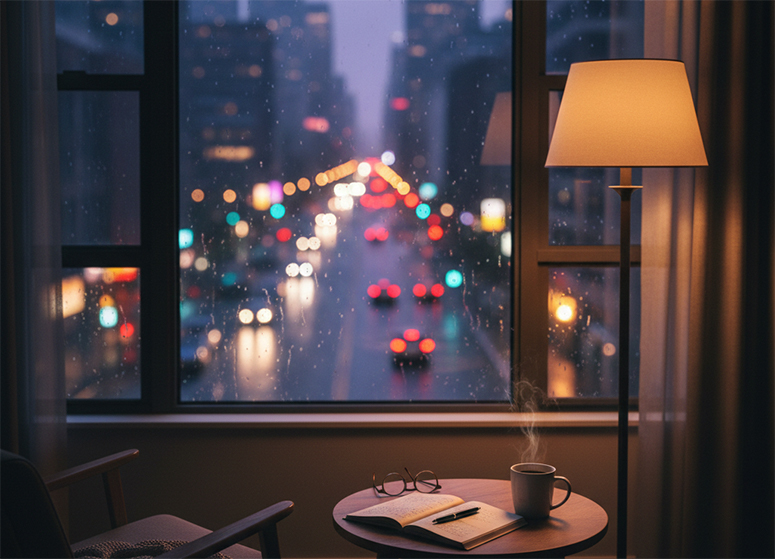
During the pandemic, the world flattened into long afternoons and sudden absences. Loss became a texture of the day: an empty chair, a voice message you kept replaying—the kind that planted a lump in your throat before you even realized it, a little more each listen—or the way each jeepney stop felt like a small altar of memory. Grief does strange things to craft. For me, it was a pressure that rearranged language, a simplicity that demanded honesty, an impatience for artifice.
The novel I began as a short story wasn’t an escape; it started as a whim one summer, after a string of books left me unsatisfied, and it slowly became a place where I confronted my own grief for lost lives, lost romances, and lost chances. It was a map of what I didn’t know how to say: love, dying, and what we hold on to when the future resembles a ledger with more debts than entries.
CONTINUE READING BELOW

That map required both tenderness and brutality. I learned to be tender to the parts that remembered joy: small, stubborn lights, a friend’s late-night message, the smell of coffee when the city is still soft… and brutal to the parts that needed pruning: clichés, comfort, the instinct to make pain pretty. There’s a discipline here that looks suspiciously like the one law school teaches: to interrogate claims, to follow an argument until its seams show. The difference is the aim. Law asks you to close a case. Art insists you leave a question visible on the page.
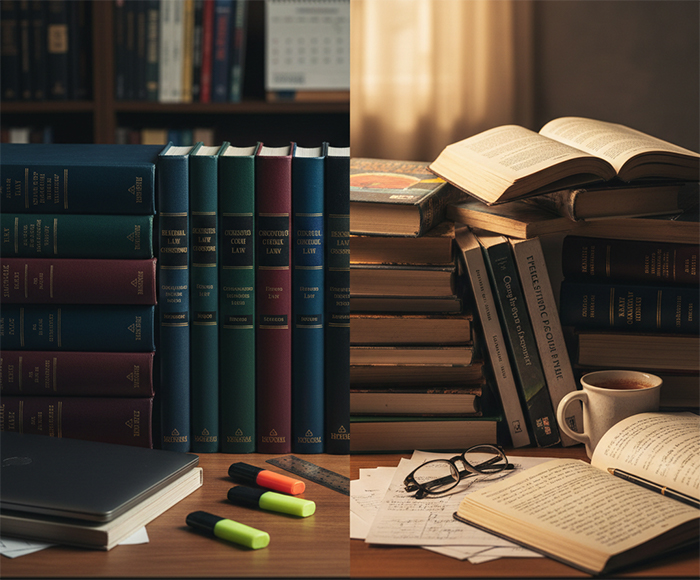
Maybe that’s why so many of us who walk conventional roads never quite stop making. The profession can be a shelter and a cage. It provides a language for world-building, logic, evidence and structure, and those are not small gifts. They teach you how to carry contradiction. Staying in law did not mean I stopped being an artist; it only meant I learned to carry both languages at once: the terse and the lyrical, the brief and the bruise.
Young and not-so-young people often tell me they worry about “turning pro” in the wrong direction, picking a career that is secure but dull, trading the heart for a salary. But survival is not always betrayal. Sometimes survival is creative: the margin notes you write in the middle of a reviewer, the half-poem stuck to the inside of a notebook. Small acts of beauty are not lesser—they are how tenderness survives the brutal facts of life.
There’s humility in that survival. When you accept that art will be imperfect, you also acknowledge that it will be persistent. It returns in the most ordinary gestures: a late-night text thread where you and a friend trade fragments until something resembling a story takes shape; an afternoon where you read a paragraph aloud and feel a small, clear gratitude; the way grief loosens its borders and lets you recognize joy where you once only saw tasks.
If you live by schedules, precision, and deadlines, know that the artist in you is not waiting for permission.
I don’t claim any grand theory about art’s redemptive powers. Beauty does not always heal. Sometimes it complicates grief, presenting a better sentence and a sharper wound. To be honest, my earliest drafts were selfish pens, a place to put my pain and expect an audience to alchemize it into meaning. Revision taught me humility. It taught me to move from performance to witness: to let the page hold what it must without expecting it to fix me.
There is a tenderness that is brutal precisely because it opens us up. It softens us just enough to notice what hurts, and in that softness, the harder questions rise to the surface: Who am I beneath the roles I play? What work do I owe to the people I love? Can beauty be honest, small, and unfinished? These questions do not resolve neatly, and maybe they shouldn’t. The work of living with them, of making sentences that contain uncertainty, might be the only thing worth doing.
If you live by schedules, precision, and deadlines, know that the artist in you is not waiting for permission. She keeps surviving in scraps and margins and restless evenings. She will not always be loud, but she will be persistent. Let her be tender to you and cruel when you need to be saved from yourself. Learn to sit with both the ache and the delight of creating.
If there’s one honest sentence to leave on the page: Tenderness does not erase pain. It is a practice—rigorous, stubborn, occasionally cruel—whose only answer is to return, again and again, to the work.

WATCH: Discovering Vietnam in three days
June 9, 2026
WATCH: How to experience Bangkok and Kanchanaburi in one trip
October 21, 2026
WATCH: Pixar Summer Fest adventure at Hong Kong Disneyland
August 10, 2026