

Patis Tesoro: ‘I was like Valley of the Dolls’
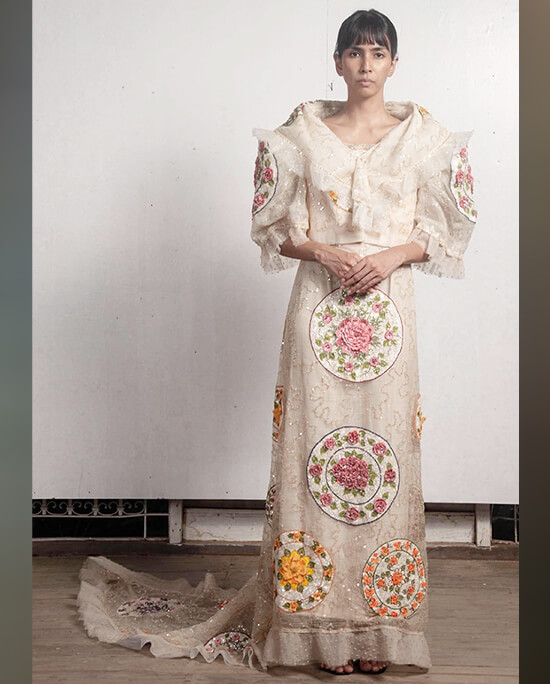
Patis Pamintuan Tesoro does not know what makes a National Artist, but she knows that her life-long attempt to revive the Philippine piña is important enough to engage the whole nation. “Craft is always based on community,” she says. “I started during the Ramos administration because I saw it dying, but I didn’t realize how long it would take. It isn’t just the weaving, but also the plant, the farmers.”
Have things changed since the conferment? She sighs, interrupted by an assistant showing her a proposed combination of a camisa and patadyong for an upcoming fashion show.
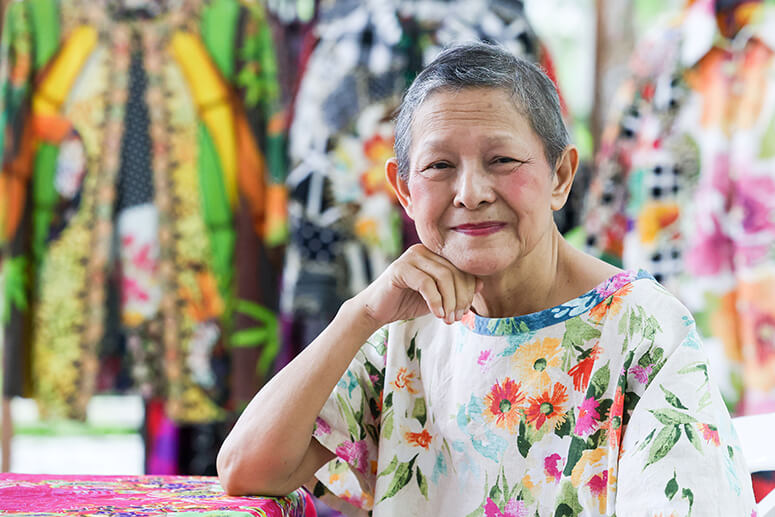
“Well, I am grateful first of all, and I’m happy I’m still alive to accept it. I hope, with what I did, the revival of piña, I’ve been able to influence,” says Patis, walking me through her atelier abuzz with a diverse crew of cutters, sewers, patternmakers and embroiderers. “But it’s also chaotic, everybody wants to greet you, which is fabulous, but at my age and my health, it’s very tiring.”
Patis undergoes dialysis three times a week for renal failure caused by diabetes. Yet there is color in her cheeks, agility in her movements, and sharpness in her thoughts. She speaks of her condition matter-of-factly, even though it has forced a major lifestyle overhaul, restricting her diet to vegetables.
She lets me follow her around. Even among her staff, she seems at ease, going through every stage with meticulous care, handling the fabrics, turning them inside out, taking a step back to see how an ensemble looks from afar. No one takes notes, no one stutters, no one replies to her questions with a blank stare.
CONTINUE READING BELOW

We let the day’s work intrude on our conversation as she walks me through her routine. I ask if this is how she always goes about her tasks.
“Are you kidding me?” she cries. “I was like Valley of the Dolls! I used to take Valium every day because of stress, and then I would party at night.”
What changed for the 75-year-old? How did she wean herself from the drugs, parties and rock-and-roll lifestyle that once led to a critical Valium overdose? “I just got tired,” she says. “Then I’m diabetic. It’s just your body that says no more.”
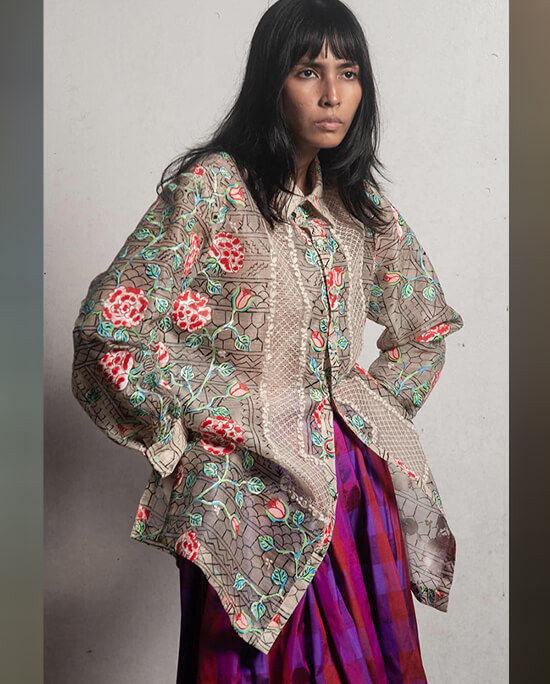
Don’t get me wrong. Patis isn’t at all stepping back. “If it’s pangit, it’s pangit,” she says. “I still personally see everything. Now I can handle stress. I have a good staff, some here for decades.”
No wonder her team seems to get her right away, even when her instructions are as simple as “Make it happier” or “Ayoko niyan.” She introduces me to a young embroiderer who skipped college to keep working with her.
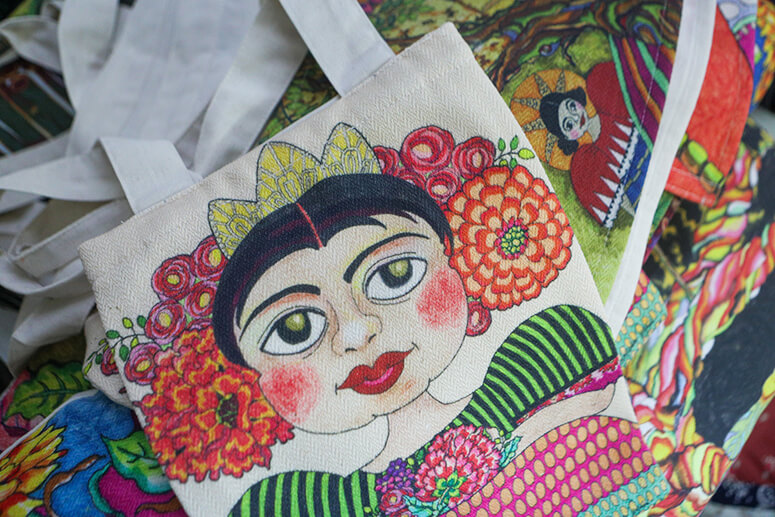
“Sometimes, our education system just makes money, but you graduate and then what?” Patis says. “She’s already earning what she would have gone to college for because she has the skills.”
After finishing high school at Assumption Iloilo, Patis went to Detroit, Michigan, to study secondary school education at Marygrove College. “But my mother died, walang pera,” Patis shrugs. “So I came home. I tried to go to UP, but our schools focus on visual arts. Eh, I wanted textile art, so wala. I only finished high school.”
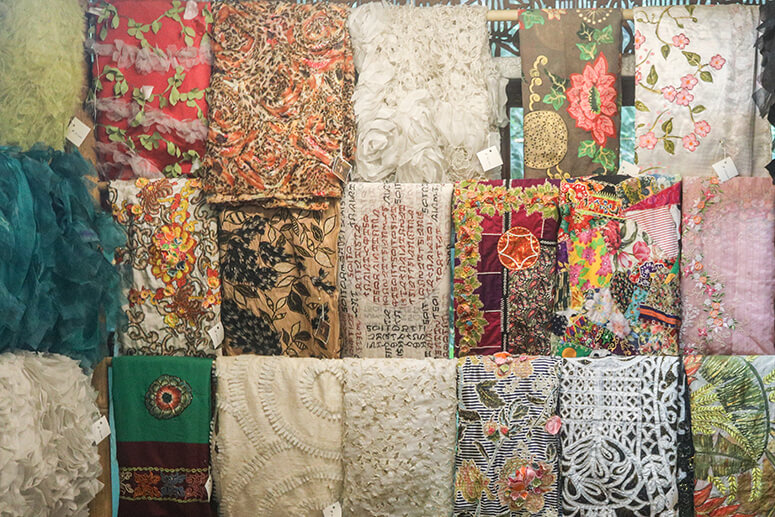
Her life was shaped by a remarkable convergence of family, circumstance, and inclination long before she ever laid eyes on a bolt of piña. Her mother was Nena Fabella, a dressmaker and former model for Ramon Valera, the first fashion designer ever declared a National Artist. Patis is only the third. Her mother-in-law was Salud Tesoro, the matriarch who built the iconic handicraft empire. Even as a grade-schooler in the 1950s, Patis excelled in embroidery, an art she describes as “already a gone thing even then.” Long before she made the revival of piña her life’s work, the threads of her own history were already intertwined with traditional textiles.
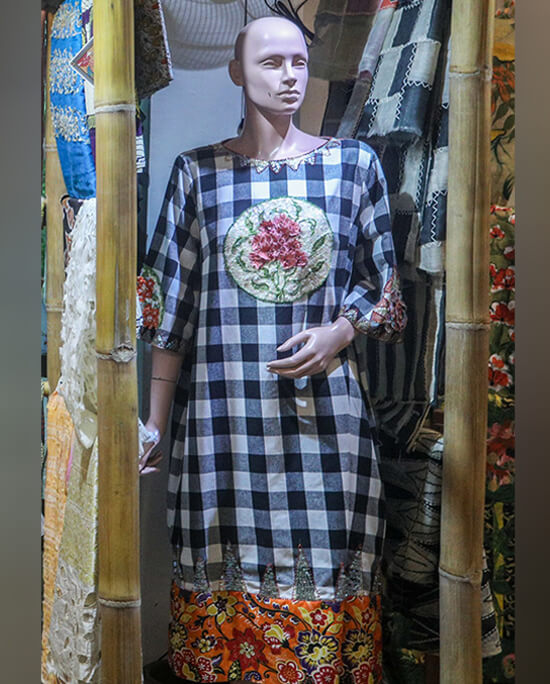
“I designed my own wedding gown, fully caladoed, pattern, everything,” she says. “But my husband Tito wanted to get married right away. He didn’t want to wait, ayan, I had to go to Pitoy.”
The 18-year-old who had designed her own gown became a Pitoy Moreno bride instead. The gown she never got to wear eventually found its way into Imelda Marcos’s wardrobe, while Patis would spend the next five decades working to preserve the heritage that had shaped her own life. What began in childhood as an aptitude for embroidery would grow into a lifelong commitment to keeping Philippine craftsmanship alive.
The slow growth of her five-decade career has made Patis deeply skeptical of the modern rush toward fame. “You get 500, 1,000 viewers, you’re already an influencer, which is false. Public opinion is very shallow,” she says. “It’s better to build it up slowly.” She turned down offers to work in Saudi Arabia and China, choosing to devote her energies to the artisan traditions of her own country. “I like the Philippines,” she says. “I’ve always been a nationalist. My work has always been tied to my identity as a Filipino.”
Today, her work remains a commitment to Filipino craft and the communities that sustain it, even as she navigates the demands of her medical routine. Missing a single dialysis session causes her body to puff up with nausea, a brutal reality she faces three times a week. Yet her hands keep moving, upcycling discarded retasos and mapping out a future piña museum.
Patis has no plans of slowing down. To the next generation of Filipino creatives, she offers some advice. “Hone your craft,” she says. “Know your history. Find out why you like to do whatever you like to do.”
