

The elegant serenity of JC Buendia
Excited to see the collection of JC Buendia last Oct. 3 at The Peninsula Manila, we made a surprise visit to the dressing room right before the show, expecting the usual chaos of models, stylists, hairdressers, creative and production crew that usually characterizes the backstage of fashion shows, but lo and behold, the atmosphere was one of calm, with the serenity emanating from JC himself.
That’s so typical of him, to be poised and composed even during the most challenging moments, the same qualities that can be said of the 45-piece collection that he presented as the featured designer of the Red Charity Gala, the annual fashion show for a cause that kicks off Manila’s holiday party season. Tessa Prieto and Kaye Tinga who founded the benefit since 2009 and Ben Chan, key supporter and lead sponsor through his brand Bench, welcomed guests who were comprised of the country’s fashion, business, arts and culture communities.
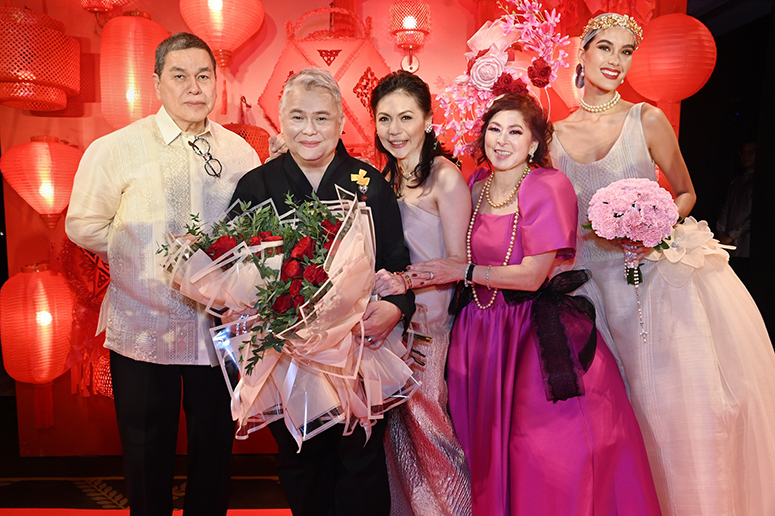
As tradition dictates, Tessa and Kaye were wearing specially designed gowns by the featured designer—Kaye in a nude strapless column and Tessa in a fuchsia terno—the former understated and the latter on the vibrant side but both impeccably glamorous and very JC, a preview of the show to come.
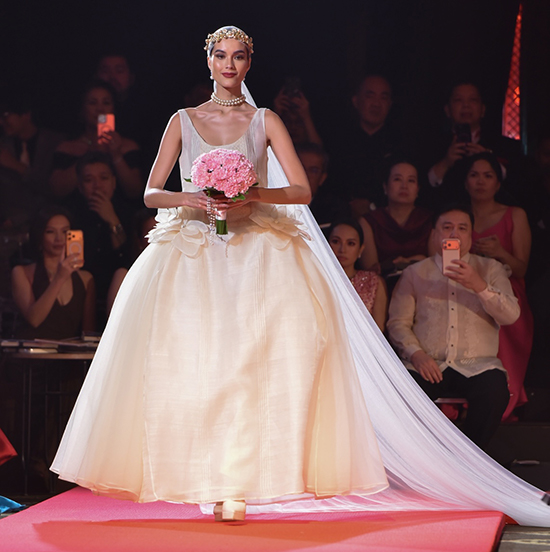
Just like last year, the venue was at the ballroom, arranged salon style which is the most ideal to appreciate clothes up close. Scenographer Gino Gonzales brought a bit of Shanghai, a bit of Hoi-an into the space with multi-shaped red lanterns adorning opposite sides of the hall in an otherwise sleek layout of a red carpeted U-shaped ramp.
CONTINUE READING BELOW

It was the perfect backdrop for the effortless elegance of JC’s creations that referenced Asian staples like the Chinese cheongsam, the Vietnamese ao dai and the Japanese kimono via muses Tina Chow, the Eurasian supermodel and influential fashion icon of the ’70s to ’80s whom Karl Lagerfeld credited for inventing the concept of minimal chic; Hollywood stars Grace Kelly and Audrey Hepburn; and the Truman Capote Swans Babe Paley and Lee Radziwill.
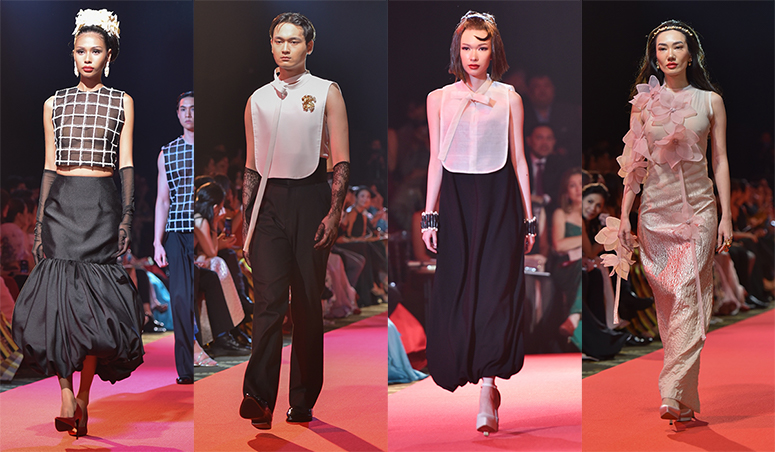
The mix is given a contemporary, relaxed feel with the designer’s light touch and twist on the classics. The barong is innovated into a long tunic or dress, with slits for relaxed Filipiniana with an Oriental wink. The tuxedo shirt is deconstructed into a sexy, long-bowed bib in cotton piqué, matched with high-waist slim trousers for men and a strapless column for women.
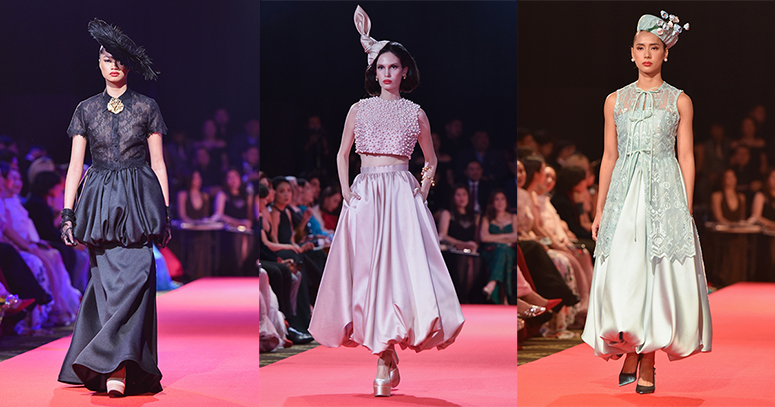
An ao dai turns into a maxi opera coat in silk gazar but there’s a touch of the wild side—worn topless over a sheer silk skirt revealing the hot pants underneath, together with spiky stilettos for a hint of danger. With a pearl brooch clasping the coat together, and a pillbox hat of black feathers, the wearer manages to still look demure. Another opera coat is made roomier and softer as a mini-length kimono wrap around matched with lace skirt. The same kimono overlap figures in a slim men’s suit made witty with ladybug brooches creeping over it.
The trends on the international runway like bra tops and nude dressing can be seen but are never vulgar in JC’s signature aesthetic with comfort as top priority but always in good taste. Slim silhouettes are cut to allow freedom of movement with slits that sometimes form decorative panels like on a man’s floor length coat modeled by Santino Rosales, son of actor Jericho.
Y2K cropped tops are balanced with high-fashion silhouettes like a fitted pencil that suddenly balloons midway. Mathew Blazy, the celebrated designer of the moment for Chanel’s revitalization, is given a nod with a tweed-looking plaid fabric that turns out to be tulle, a fabric sourced in Tokyo, to make it more ideal for the tropics. It’s used as sleeveless tops and mini-skirts matched with opera length pearls. The stiff cheongsams are also made lighter with chiffon and you can channel your royal dreams comfortably with capes of the lightest organza.
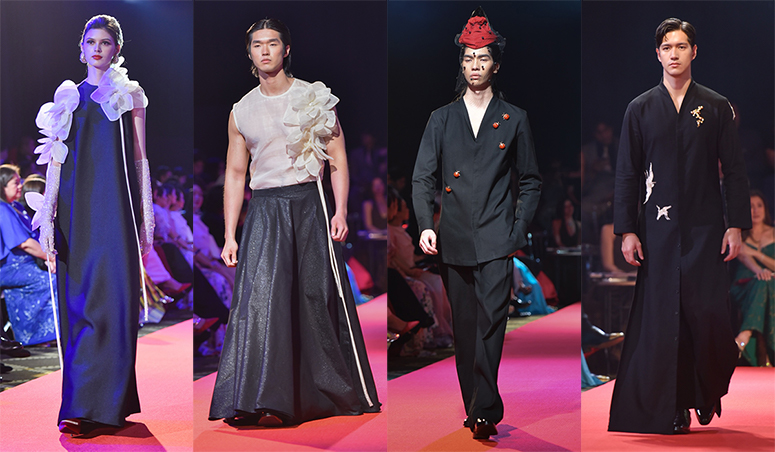
Decoration, like beading, is strategically employed, sometimes to add weight to a fabric or to highlight embroidery. They form delightful a ha moments, adding unexpected glitter when they border a sleeve, are scattered over a flowing A-line crepe dress or used to punctuate gowns and coats as silver herons that fly from hips to shoulders. A fully beaded gown is made less garish with panels of crepe on the front and back. Couture details like painstakingly sewn fringes suddenly peep of a coat’s hemline.
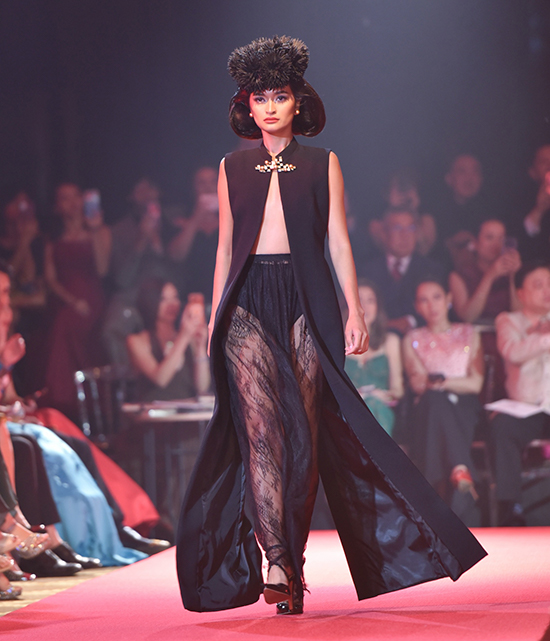
Hair and makeup by Henri Calayag and Eric Maningat have a clean, ladylike look of Hepburn and Kelly, a perfect canvas for the East-West fashion. Stylist Noel Manapat subverts some of the deceptively prim and proper looks with accessories that play on context and proportions through whimsical hats by Herbert Custodio, jewelry by Arnel Papa and shoes by Doreen Odvina. Gloves channel Hollywood but are not as stuffy in tulle. Pearl jewelry by Jewelmer make everything look precious and add a bit of irony to the tongue-in-cheek details.
This hybridity is mirrored by the soundtrack, a mix of JC’s favorites like Ryuichi Sakamoto’s soundtrack for Merry Christmas Mr. Lawrence and New Order’s Blue Monday—a combination of the soothing, neo-classical and new age with synth-pop and alternative dance.
So very JC, indeed, in this profoundly personal collection that he worked on when he just recovered from cancer and was grieving over the death of his mother. His journey was reflected in the show’s finale directed by Dexter Santos as the models took their bow carrying handmade Philippine lanterns that brought light into the hall, an apt metaphor for how art and beauty bring healing, enlightenment and joy during the darkest times.

WATCH: Is Gen Z too soft? (Generations Ep. 23)
September 30, 2026
WATCH: Save for retirement or enjoy life now? (Generations Ep. 21)
September 16, 2026