

Sole searching?
Little by little, fashion has been stripping it all away.
Exactly when we first decided that bare feet and rough terrain were no longer a match made in heaven is difficult to pinpoint, largely because footwear was made from organic materials that rarely survive in the archaeological record. However, research examining changes in ancient foot anatomy suggests that habitual footwear may have been in use as far back as 50,000 years ago. The oldest known leather shoe discovered so far was found in an Armenian cave and dates back approximately 5,500 years.
We have, in other words, had quite a long time to perfect the shoe.
And Chanel has decided to get rid of it.
Well, most of it.
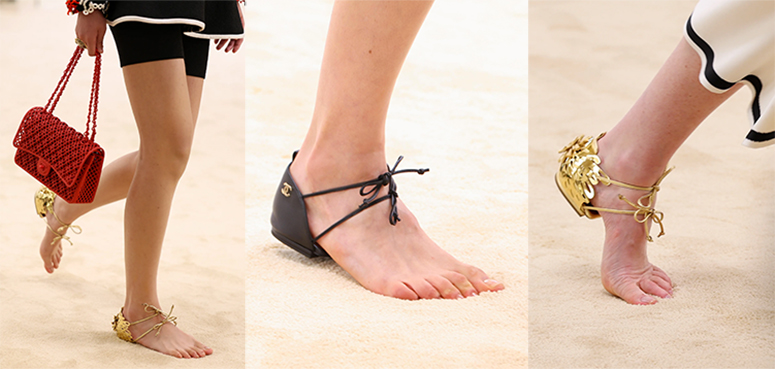

For Chanel’s Resort 2027 collection, Matthieu Blazy sent models down the runway in Biarritz wearing gilded heels that consisted of a leather heel cap and delicate ties around the foot. No toe box. No upper. Most importantly, no sole. Vogue’s Sarah Mower described them simply as sandals that were “actually only heels,” leaving the rest of the foot… naked.
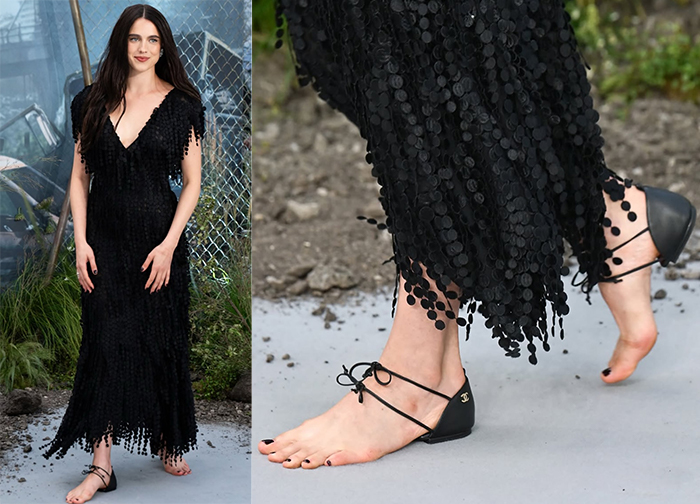
Four months later, Margaret Qualley took them off the runway and onto the concrete at the London premiere of The Dog Stars. Her toes were exposed. Her soles were exposed. Her heel, thankfully, was impeccably dressed.
And while I say all this with concern for the structural integrity of Qualley’s feet, I have to admit they looked… okay on Margaret Qualley.
Which is how fashion gets you.
Put a sole-less shoe on Margaret Qualley, add Chanel and a fringed black dress, and suddenly we’re all wondering whether soles have been holding us back.
The great Un-Shoeing
Chanel didn’t wake up one morning and declare war on footwear. Look down, and you’ll notice fashion has been slowly exposing the foot for years.
First, we split the toes. Maison Margiela slowly nudging the Tabi from fashion oddity to cult classic was step one. Then we stopped hiding the toes altogether.
Nevertheless, long before Alaïa convinced everyone to display their pedicures through fishnet, fashion was already quite fascinated by the idea of a shoe you could barely see.
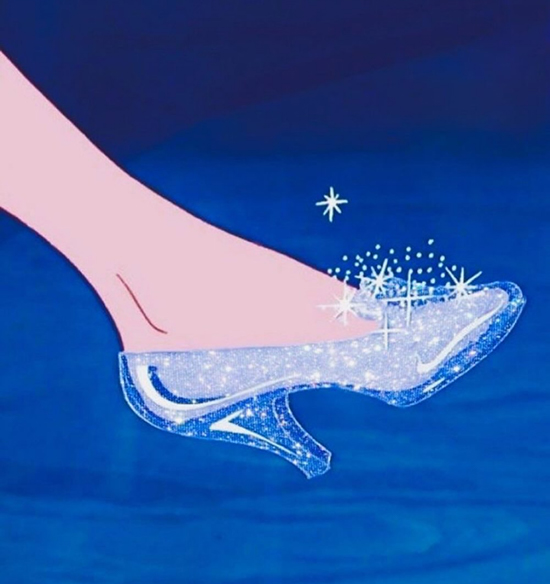
Perhaps the most famous example isn’t technically fashion history at all, but fairy-tale history. Cinderella’s slipper has been carrying an unreasonable amount of cultural weight for centuries.
Various iterations of the lost-slipper fairy tale date back much further, revealing a fascination that has endured across time, geography and generations. One early version can be traced to the ninth-century Chinese tale of Ye Xian, whose magical footwear was elaborately embroidered. But the glass slipper most of us recognize arrived with French writer Charles Perrault’s 1697 Cendrillon ou La Petite Pantoufle de Verre: Cinderella, or The Little Glass Slipper.
And yes, he really did mean glass.
There is something interesting about the fantasy of it. Cinderella’s shoe is valuable precisely because it barely appears to be there, exposing the foot while somehow elevating that very exposure into something glamorous.
Designers eventually began to actualize that illusion, transforming the fantasy of the barely-there shoe into something real and attainable for the modern consumer.
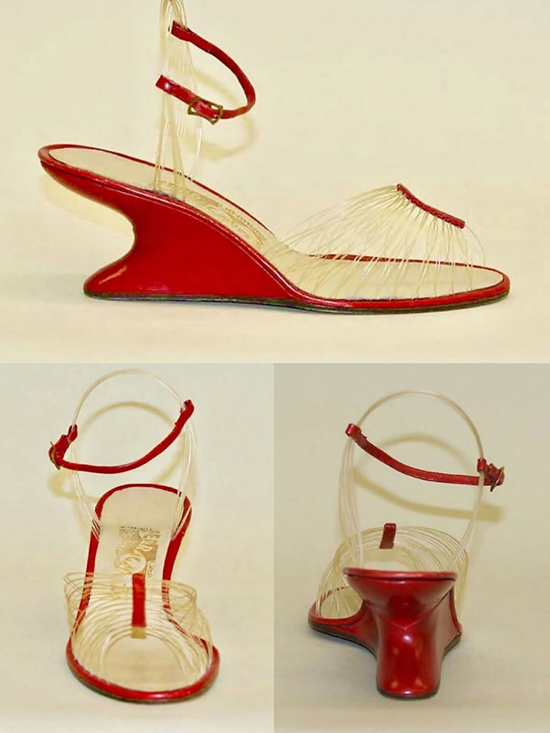
In 1947, Salvatore Ferragamo created his aptly named Invisible Sandal, using transparent nylon monofilament threaded through the sole to form the upper. Rather than hiding the foot beneath leather or fabric, the construction made much of the shoe seem to vanish. The Metropolitan Museum of Art describes the design as part of a move to “dematerialize” the shoe.
The sole was still very much present, though. This distinction is about to become important.
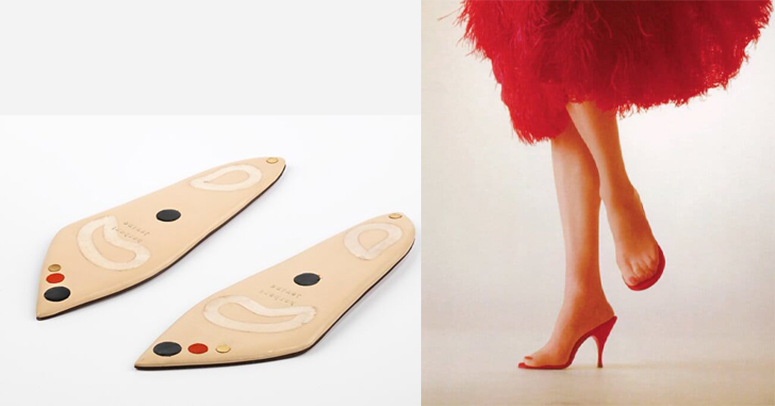
Less than a decade later, American designer Beth Levine pushed the experiment further with her topless shoe, made between 1955 and 1960. The design did away with almost the entire upper, leaving essentially a decorative sole that was attached to the foot using adhesive pads.
Somewhere in the 1950s, someone was already gluing shoes to feet in the name of fashion. Many described Levine’s design as the “absurdist culmination” of her experiments with increasingly flesh-baring footwear. Which sounds remarkably close to the conversations we are having now.
Except Levine kept the sole.
Now we have lost the sole.
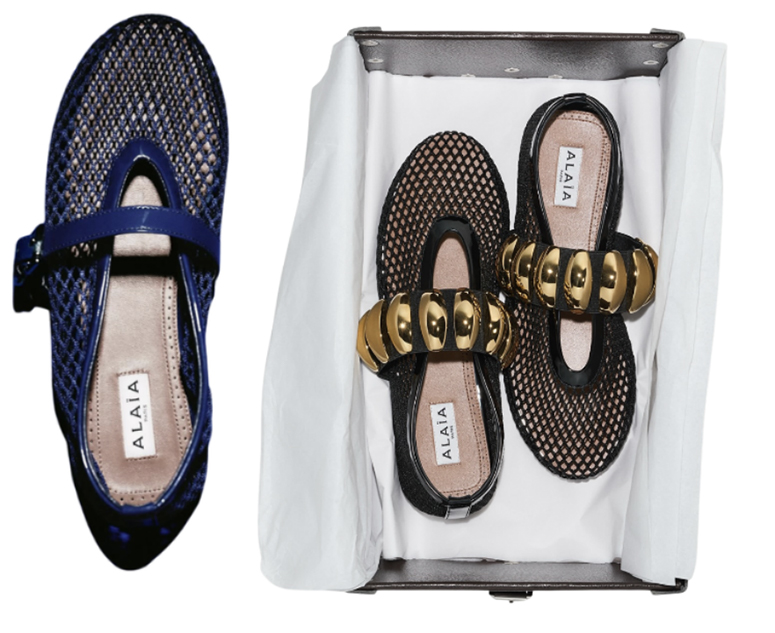
By 2019, The Row was already experimenting with sheer mesh flats. Then Alaïa’s fishnet ballet flat arrived and turned what could reasonably be described as expensive netting for your feet into one of fashion’s most recognizable shoes.
Jennifer Lawrence became one of the trend’s most fervent supporters, repeatedly pairing mesh flats with otherwise simple outfits. Dua Lipa, Anne Hathaway, Sofia Richie Grainge, and later Margot Robbie followed.
Seeing the shape of someone’s toes through their shoes wasn’t an unfortunate side effect. It was… the point?
Footwear began as protection: a barrier between skin and stone, heat, dirt and whatever else happened to be underfoot. Thousands of years of shoemaking later, fashion began dismantling that barrier piece by piece. Designers experimented with materials beyond leather, replacing solid uppers with mesh, transparent fabrics and increasingly delicate constructions. Straps became thinner, strings were twisted into intricate designs, and eventually even the shape of the foot itself became part of the appeal. Toes separated. Uppers dissolved into netting. The shoe stopped concealing the foot and started framing it.
It all makes the current obsession with barely-there shoes feel less like a sudden lapse in judgment and more like the inevitable conclusion of a very long game of subtraction.
The less shoe there is, the more foot we see.
And Chanel, naturally, took that logic one step further. Once you have spent decades making the shoe disappear, there is really only one thing left to remove.
And so, Chanel finally asked:
Do we even need the sole?
Perhaps not.
