

‘Wuthering Heights’ isn’t your typical V-Day date movie
Emily Brontë wrote only one novel, and it wasn’t anything like her sister Charlotte’s creation, Jane Eyre. As one reviewer at the time put it, 1847’s Wuthering Heights was “wild, confused, disjointed, and improbable; and the people who make up the drama, which is tragic enough in its consequences, are savages ruder than those who lived before the days of Homer.”
From this springs its enduring power. With Wuthering Heights, goth fiction was born.
For the umpteenth filming of Brontë’s Wuthering Heights, director Emerald Fennell ditches the flash-forward ghosts that strangle Heathcliff's memory years after the events in the West Yorkshire moors and focuses on the simmering and unstable romance between he (towering Jacob Elordi) and Catherine (Margot Robbie).
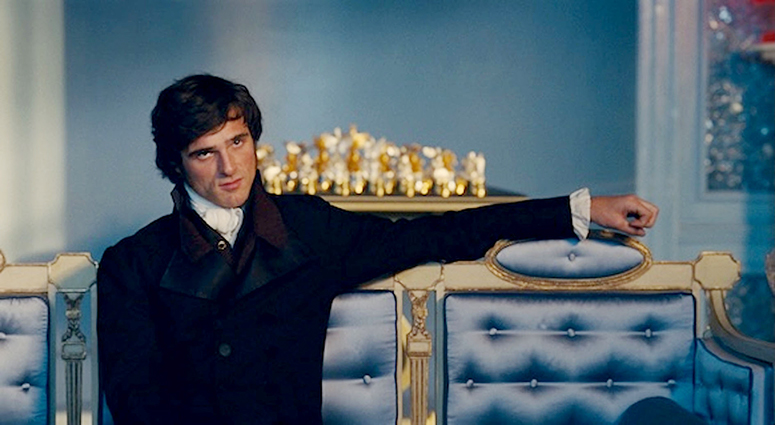
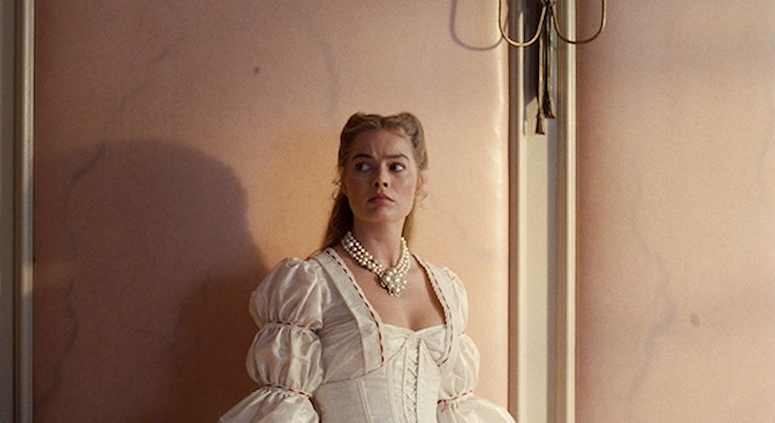
It's a smart move to do away with ghosts and the clutching decay that hangs over Brontë’s novel. It certainly plays better for Valentine's Day to have two of the hottest-looking actors paired off in heaving bodices and open silk shirts.

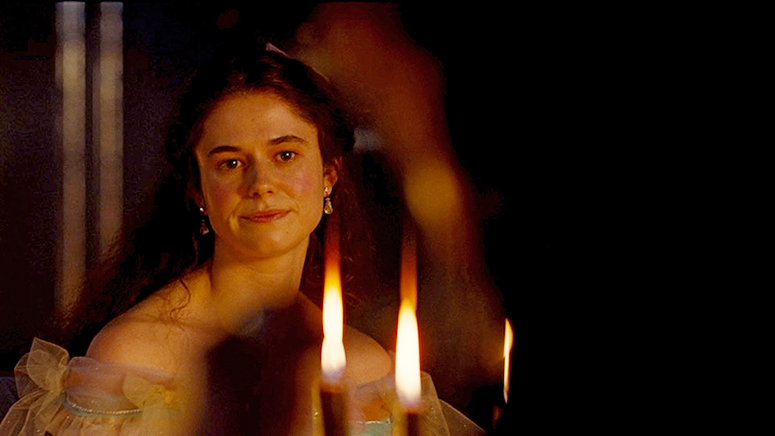
That doesn’t mean Fennell doesn’t add her own twist to things. The writer/director of Promising Young Woman and Saltburn stamps her particular vision on the withering estate and its surroundings. You’d expect the creator of those aforementioned films to be focused on class culture and, particularly, a woman’s agency within the class system, and we get layers of that. The biggest contrast between those two worlds comes with the arrival of the Lintons, Edgar and his ward Isabella (Alison Oliver, also in Saltburn, as well as HBO’s Task, who definitely has a knack for playing characters a little touched in the head). They arrive at Thrushcross Grange, down the hill from nasty, moss-covered Wuthering Heights, and Cathy and her adopted childhood friend Heathcliff have now grown into adults who perpetually torment one another. He jokes about taking a wife elsewhere, stirring Cathy’s jealousy, while she teases him about paying a visit to single Mr. Linton, who made his fortune in velvet.
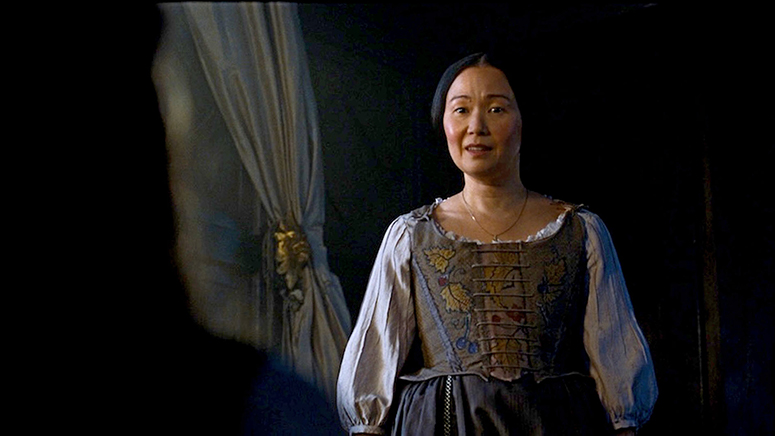
Alongside them is longtime nanny Nelly (Hong Chau), casting a baleful eye on their roustabout affections for one another. The sexual tension could be cut with a knife. Cathy’s interest is piqued when she espies a couple of house help getting very kinky with a horse bridle in a barn, and Heathcliff arrives to climb atop her and stifle her shocked cries.
Soon come the long, lovestruck looks between them. Cathy can’t stop feeling aroused by her passions, and Heathcliff makes with the melancholic eyes, vowing to never leave her side.
This is classic romance stuff, but in Brontë’s novel, it’s complicated. Fennell herself admits Wuthering Heights isn’t a conventional love story. For 200 years, “critics have challenged its validity as a love story,” the director said. “It is too shocking, too cruel, too narratively strange to slip neatly into the world of romance, but it is a love story nonetheless.” Her inspirations came from Pressburger/Powell’s tortured fantasies, Coppola’s Dracula, Cronenberg’s Crash, Baz Luhrmann’s lurid Romeo + Juliet, Sofia Coppola’s Southern Gothic The Beguiled.
The strangeness literally hangs from the walls in Fennell’s surrealistic set design: mountains of emptied bottles littering Wuthering Heights’ sunken rooms, or flesh-like walls suggesting the entombing nature of marriage and Thrushcross Grange. All of this plays into the weirdness percolating through Brontë’s novel, but it’s done with modern flash, lacing the love play with an original Charli XCX soundtrack, and surrendering to lurid flourishes.
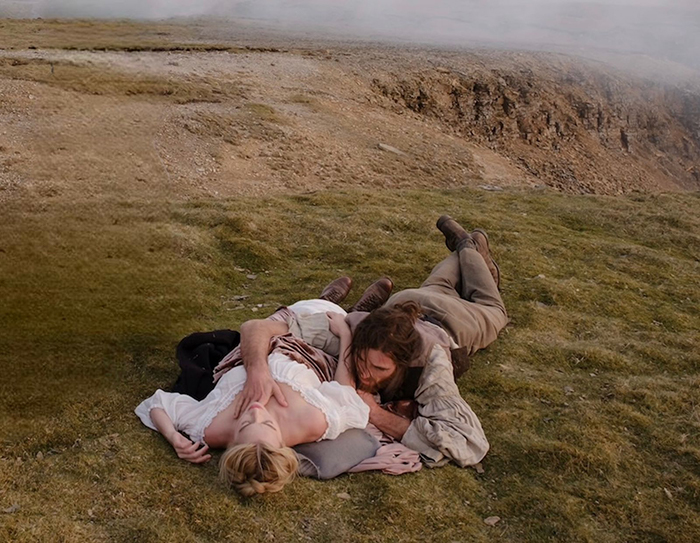
At the center of it all are two hot actors up for a tumble. Robbie and Elordi are, arguably, at peak hotness levels (my wife wittily declared the pairing “Barbenstein”), and they do get their time romping in the hay—and in carriages, in meadows, on dining room tables, and just about everywhere else. This is where all the cheers and squeals of joy came up in the IMAX screening we saw.
One interpretation of Cathy’s character in the novel is that she is somehow a demon, a shape-shifter, meant to haunt the moors and become whatever she needs to in each situation. With Heathcliff, she’s one woman; with Edgar, another. What Fennell lands is the conflicted nature of any woman of that era (or now), called upon to code-switch and take charge of her agency while also being subject to the restless stirrings of nature. Boy, it’s complicated being human.
We see Oliver almost steal the show as Isabella, first stanning Cathy, making her dolls from stolen hair; then being (almost) literally thrown to the dogs by a jealous Cathy when Heathcliff returns to seduce the vulnerable ward. Cruelty abounds, including Chau’s scheming Nelly, who was previously abused as a young nanny by Cathy and now pays her back in spades.
Objectively, you’d have to say that Fennell’s Wuthering Heights is about two hot, horny, bratty, destructive a-holes and all the damage they cause around them. Human nature does lay waste at times. But that seems to be what drew the director to take on this classic, which remains, nearly two centuries later, “too narratively strange to slip neatly into the world of romance,” but “is a love story nonetheless.”

WATCH: Is OPM still as good as it used to be? (Generations Ep. 20)
September 9, 2026
WATCH: Discovering Vietnam in three days
June 9, 2026
WATCH: Do you still believe in marriage? (Generations Ep. 17)
August 19, 2026