

The first-ever queer barbershop in the Philippines shifts ordinary narratives
In the Philippines, something as mundane as a haircut can become deeply political, especially for queer people. Haircuts are more than mere errands or chores—they’re the starting point for many queer people to express themselves and claim space in a world that already marginalizes them.
The problem is, in traditional barbershops, there are often unspoken rules about gender, appearance, and masculinity, leaving many LGBTQ+ Filipinos feeling out of place, misunderstood, or even unwelcome. Barbierro Barbershop wants to change this experience by creating a grooming space that provides customers the freedom to exist and express themselves openly.
Barbierro was co-founded by Paul Sumayao, who, after a long career in fashion and marketing, decided to do something to give back to the queer community. “I’ve always been into queer studies,” he shared. “It was easy for me to navigate something that could give back to queer people.”
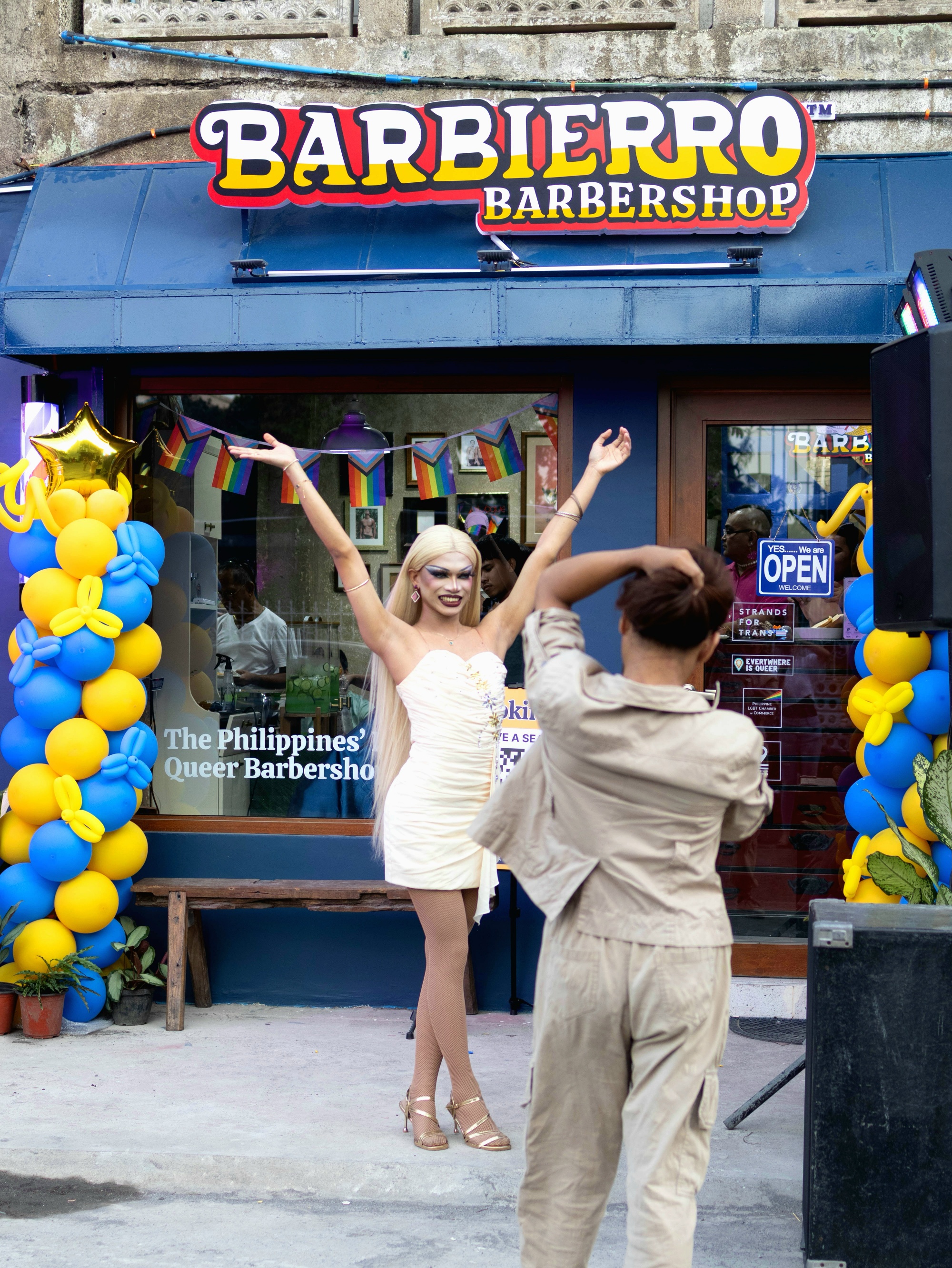
His inspiration in creating Barbierro was grounded in real-world experience. He remembered getting haircuts in local barbershops and was later tasked to take his two brothers to local barbers himself. “I was asking myself, ‘Why do I feel uncomfortable in the local barberyas?’ This was in Camarines Sur. Syempre pa-bakla-bakla ako, and I felt like napapahiya ako on two layers: first, as the panganay, napapahiya ako when the barbers would look at me and parang nag-uusap sila without saying anything. On the second layer, napapahiya ako as a queer person.”
This feeling of humiliation propelled him to probe into why there were no grooming spaces specifically for queer people. At the same time, he also saw the viral Internet trend that poked fun at queer femininity. “If you remember ‘yung trend na, ‘Sabi ko na nga ba, Barbie,’” he said, “I thought, ‘Bakit ba ginagawang kahihiyan when you choose something as feminine as Barbie?’”
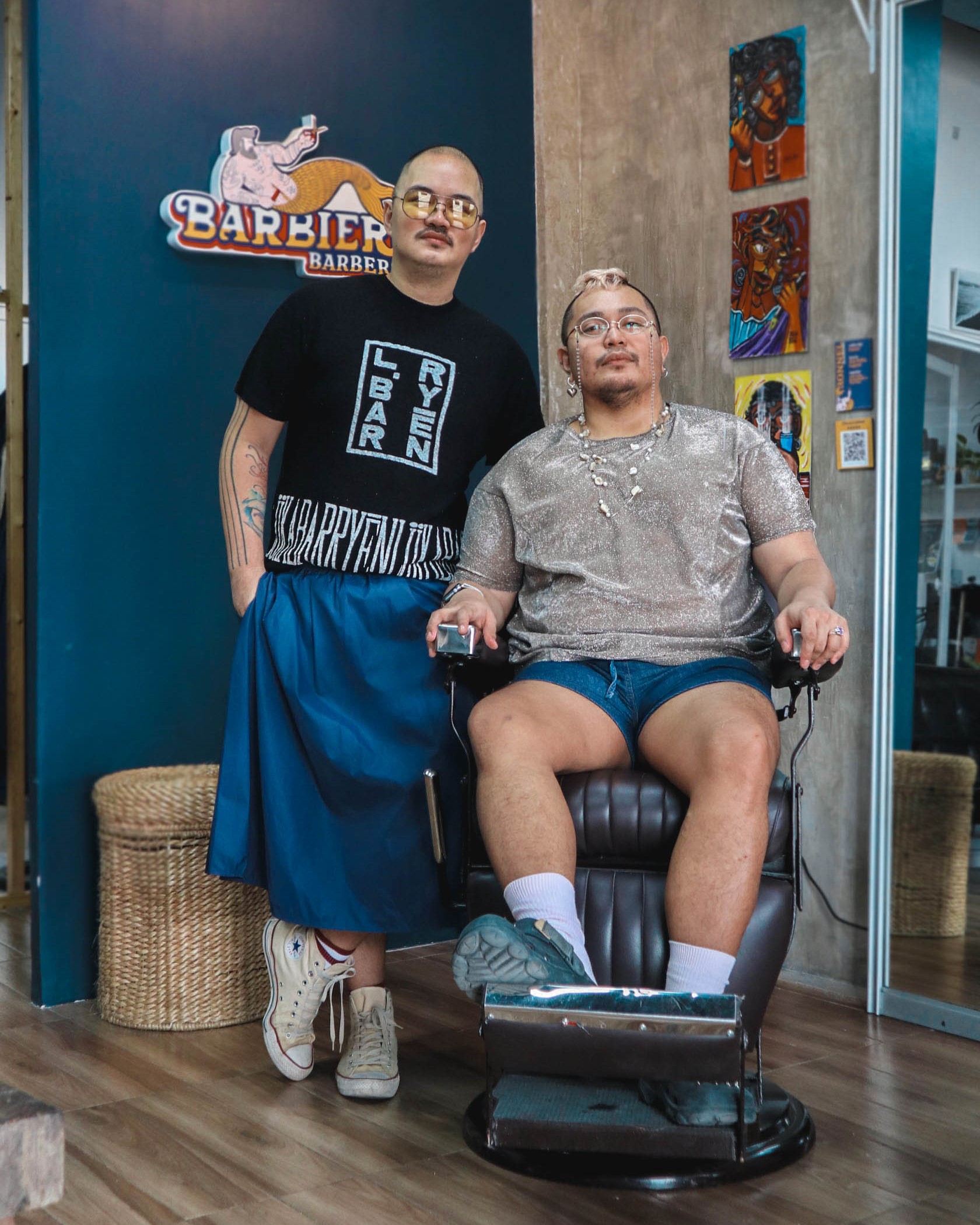

This led to him incorporating the word into his brand, creating the name “Barbierro.” During the 2022 elections, while he volunteered to campaign and go house to house, he found the place where the first branch of the barbershop would be built. “That’s how it came to be,” he said. “The rest is herstory.” And so it is: Barbierro now thrives with three branches in Manila, Laguna, and Camarines Sur.
But the founding of Barbierro wasn’t without challenges. Sumayao was faced with the difficulty of getting the right barbers and team members who could understand his vision for the business. “There were a couple of years na palit kami nang palit ng barbero, because basically, ‘di nila nagegets ‘yung pinaglalaban ng Barbierro,” he shared. “Ayaw nilang maggupit ng babae kasi daw nakakabawas ng pagkalalaki nila. We had to navigate systemic nuances and issues, like how some barbers wouldn’t get it that we have gender-neutral pricing. Dapat daw, ‘pag babae, ganito ‘yung presyo. This lasted from 2022 to around 2023 and 2024. But after that, we got a good combination of people (who) understood our advocacy.”
Today, Barbierro insists on existing beyond being a grooming space.
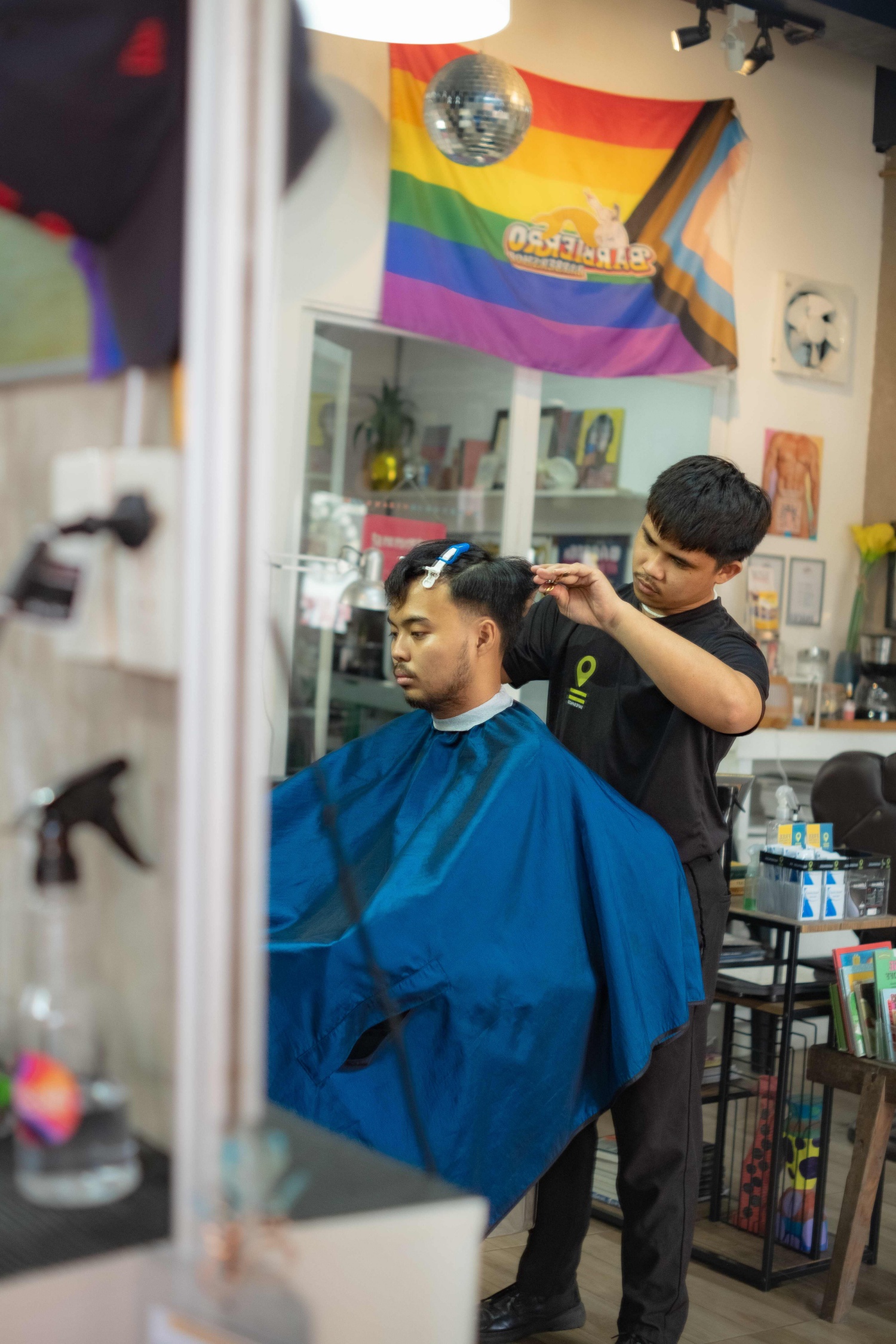
It’s noticeable that their social media doesn’t just market their services. Instead, Barbierro’s page houses content advocating for further equality for the LGBT community. They don’t shy away from making statements on politics, whether it’s about corruption or the fuel crisis. Sumayao shared: “I always feel like if you have a platform, you should use it. If you have the capacity to influence younger people, how they think and process information or deal with relationships, you have to use it.”
Whether it’s in the digital realm or in their physical space, Barbierro knows the importance of the space they occupy. Sumayao delves into the importance of a haircut for queer people, saying, “For people, a haircut isn’t just an errand. The fact that you’re doing it in a space that welcomes you is life-changing. When you go here, it’s always a statement: You chose this place because you feel safe here.”
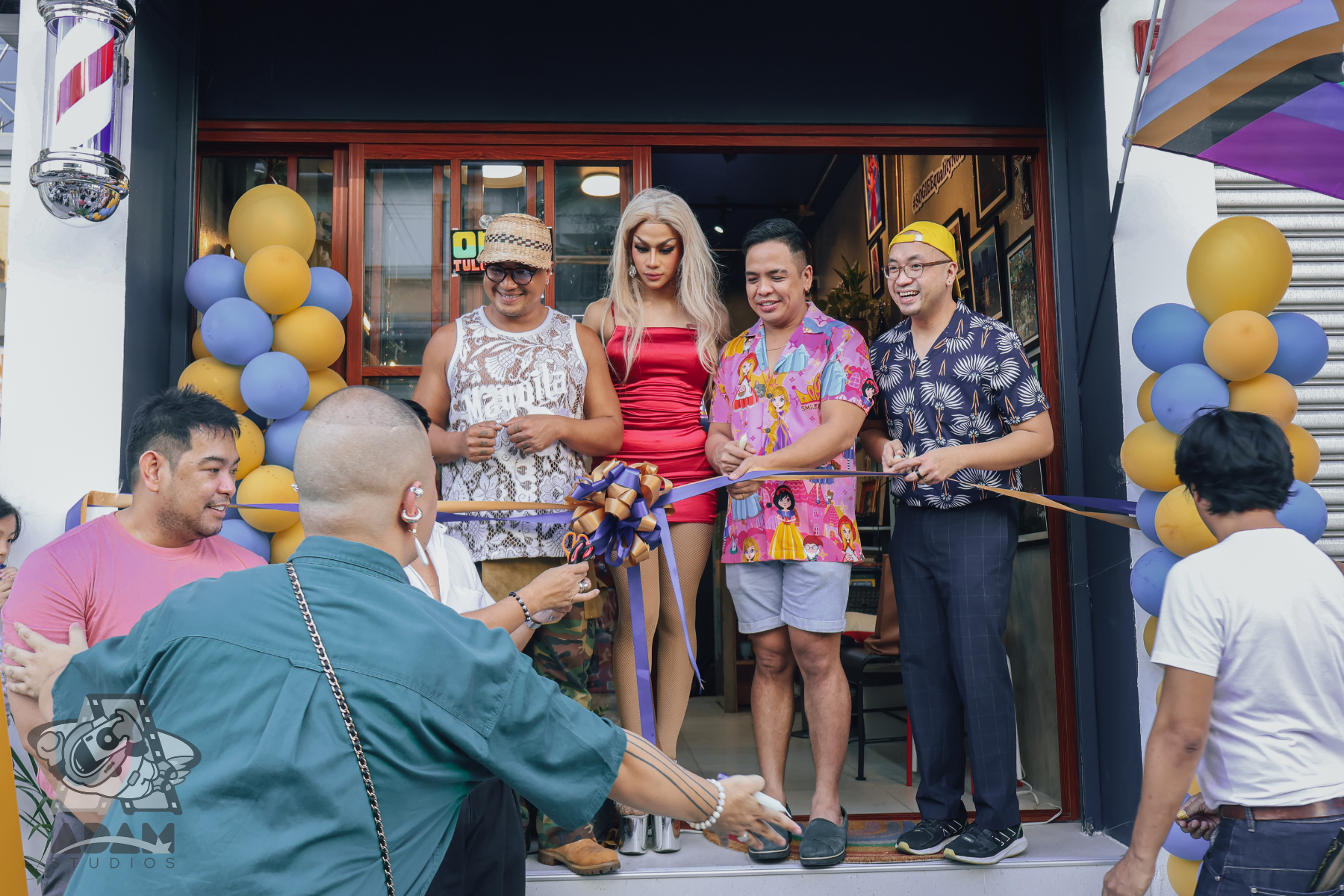
At its heart, Barbierro’s vision is simple: They want to create futures where queer people no longer have to question whether or not they truly belong. Sumayao even extends this kind of welcoming space for children, envisioning grooming spaces where macho masculinity isn’t at its very center. By choosing to create ripples of change through creating affirming spaces, there’s no denying that Barbierro’s work is significant. It challenges who gets to be in the public spaces we find ourselves occupying.
They also hope to reach another unlikely goal: to become irrelevant. “We don’t want to be the first and only queer barbershop in the Philippines,” he said. “We actually want to have a lot of barbershops now. You want to be irrelevant in the future because finally, the Philippines is a nice and safe space.”
We can dream of that future. For now, Barbierro is one of the spaces that offers an alternative in a country that still marginalizes queer existence. In Barbierro, a simple haircut is part of the process of reclaiming visibility, dignity, and belonging in everyday life.
***
Follow Barbierro Barbershop on Instagram.

WATCH: Discovering Vietnam in three days
June 9, 2026
WATCH: Is OPM still as good as it used to be? (Generations Ep. 20)
September 9, 2026