

Traditional Chinese medicine is more than just needles, herbs and ancient wisdom
The scent of Chinese herbs was the first thing I noticed when I walked into the LongLive TCM Clinic in Makati. It was earthy, unfamiliar yet strangely comforting, and immediately transported me somewhere far removed from the usual antiseptic smell of a doctor’s clinic.
I had wanted to try Traditional Chinese Medicine, or TCM, for some time, preferably in a modern, urban setting. And I have to confess that part of my curiosity came from watching a Chinese drama. In The Best Thing, handsome actor Zhang Linghe plays a young TCM doctor who takes pulses, prescribes herbal remedies and somehow makes an ancient medical practice look so appealing. This is what happens when you watch too many C-dramas. Eventually, you want to try the food, visit the cities, and apparently have someone take your pulse.
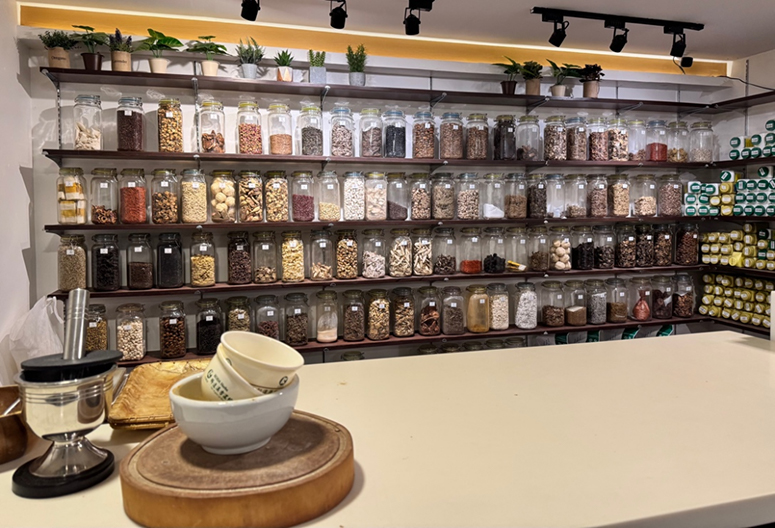
But there was a more serious reason for my curiosity. We are living through a new golden age of wellness. Clinics filled with sophisticated machines promise better sleep, more energy, less stress and healthier aging. We count our steps, monitor our sleep and take supplements, all in the pursuit of not simply living longer but living better. And yet, while wellness may be one of today’s biggest industries, Traditional Chinese Medicine is anything but new. Its roots go back thousands of years. I wanted to see what this ancient approach to health would feel like today.
LongLive TCM was founded by Dr. Nuo-Wei Lee and is run with her brother, Dr. Yuan-Ting Lee, second-generation TCM practitioners from Taiwan. Originally in Binondo, the clinic moved to Makati during the pandemic. Both studied Traditional Chinese Medicine at the Shanghai University of Traditional Chinese Medicine and psychology in Taiwan, and are registered TCM physicians in China and certified practitioners in the Philippines.
CONTINUE READING BELOW

I consulted Dr. Yuan-Ting Lee and told him what was bothering me. I won’t tell you what it was because even columnists are entitled to a little medical privacy. What surprised me was that the conversation didn’t stay there. He asked about my diet, exercise, sleep and other aspects of my health, looking beyond the symptom that had brought me through the door.
“In TCM, we try to understand why a symptom is happening, rather than looking at the symptom alone,” explains sister Dr. Nuo-Wei Lee. “Two patients may have the same complaint but have different underlying patterns. We look at the whole person and tailor the treatment to the individual.”
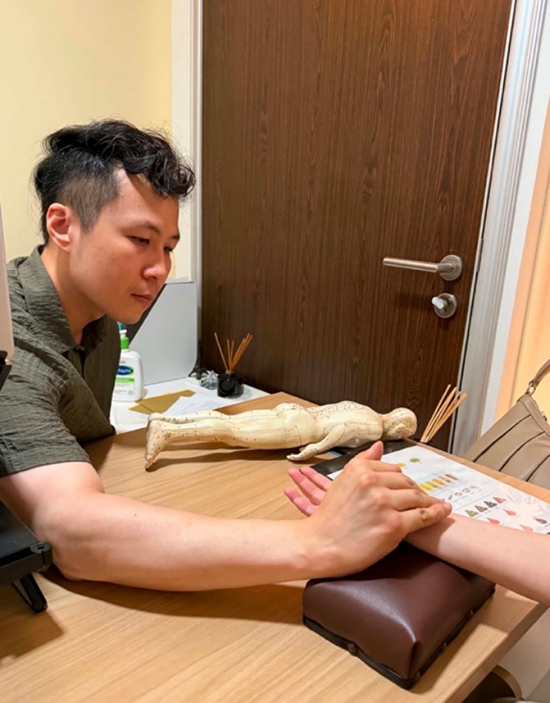
Then came the moment I had been waiting for. He took my pulse. If you watch enough Chinese and Korean period dramas, you know the scene. The physician quietly places a few fingers on the patient’s wrist, stares thoughtfully into the distance and somehow discovers what is wrong. I had always wondered what they were doing. Now it was happening to me. He also looked at my eyes and examined my tongue. Dr. Nuo-Wei explains that the pulse’s rate, depth, strength, and quality, along with the tongue’s color, shape, and coating, provide clues that are considered together with the patient’s symptoms and overall condition.
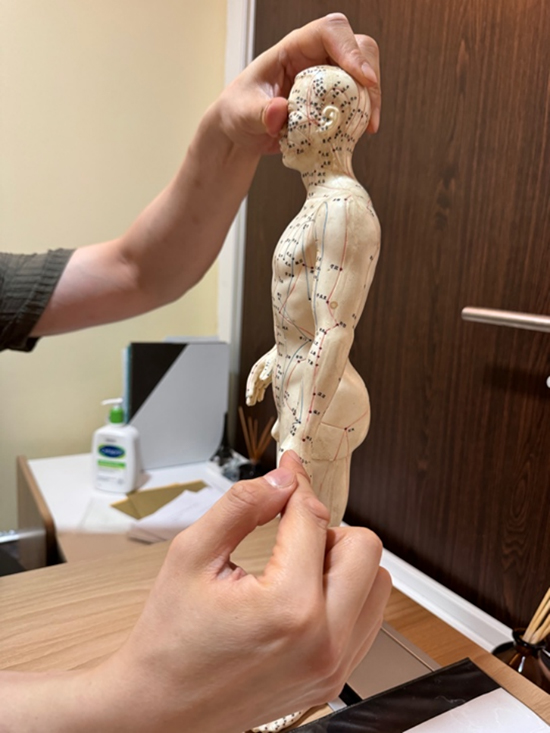
Afterward, Dr. Yuan-Ting recommended acupuncture. Before we began, he showed me a small model of the human body marked with acupuncture points and explained where he planned to put the needles and why. I liked this part. If somebody is going to insert needles into various parts of your anatomy, it is reassuring to know there is a plan.
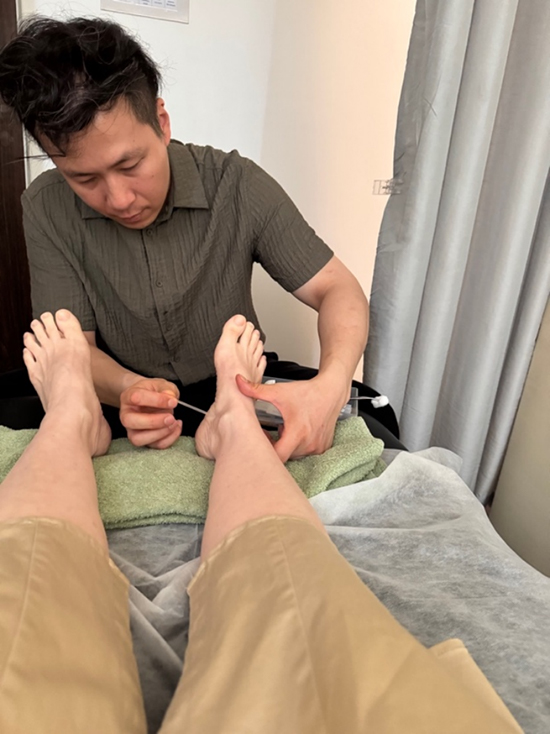
Then I was brought into a small treatment room, and the acupuncture began. Does it hurt? Not really. I wouldn’t call it completely painless because you are aware that something is happening. But the needles are extremely fine, and what I experienced was more sensation than pain. In one arm and one leg, I felt a peculiar heaviness for several minutes. Dr. Nuo-Wei says this heaviness can sometimes occur during acupuncture. In TCM terms, she explains, it can be associated with areas where the flow of qi (life energy) and blood is considered blocked. After 30 minutes, the needles were removed, Dr. Yuan-Ting performed acupressure on particular points related to what we were addressing, and I was given small medicinal patches to wear afterward.
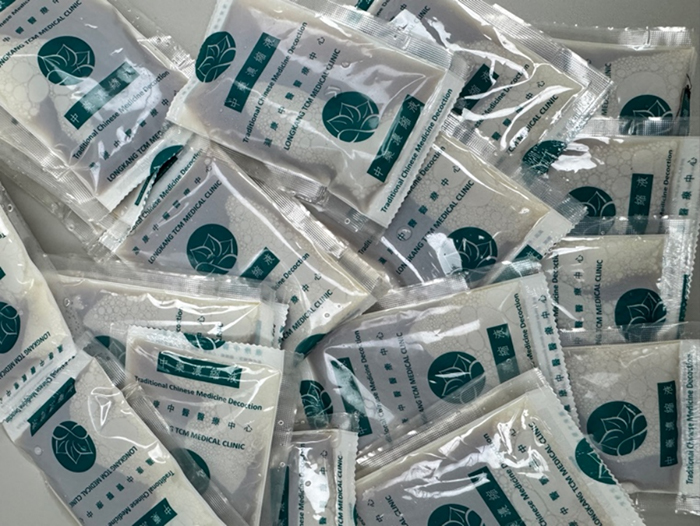
Later, I was prescribed a decoction, a concentrated herbal preparation made by simmering prescribed Chinese herbs in water. With hundreds of herbs used in TCM, these formulas are customized rather than one-size-fits-all. For my acid reflux or GERD, I was given Wen Dan Tang, containing Pinellia tuber, bamboo shavings, immature bitter orange, aged tangerine peel, poria, fresh ginger, jujube and licorice root. It came in individual packets and, surprisingly, didn’t taste bad at all. It had a subtle “woodsy” but fresh taste.
In TCM, acid reflux may be interpreted as stomach qi moving upward rather than descending normally. The decoction is intended not simply to address the acid itself but the underlying TCM pattern associated with the individual’s symptoms and constitution.
What stayed with me most after my TCM experience was this different perspective toward health. From the consultation to the acupuncture to the decoction, the emphasis was not simply on the complaint that brought me there, but on the person attached to it.
“I think TCM is still relevant because many people today deal with stress, lack of sleep and busy lifestyles,” says Dr. Nuo-Wei. “TCM encourages us to pay attention to the body, maintain balance and focus on prevention. It offers a different perspective on health and can be used alongside modern medicine.”
There is something appealing about that idea. And in my case, it worked, and I am better. Modern medicine is indispensable, and complementary therapies shouldn’t replace it. But I have never understood why curiosity about one system of medicine should require rejecting another. There is room to learn from both.
In an age when longevity has become fashionable and wellness clinics increasingly resemble spaceships, there was something unexpectedly refreshing about encountering a practice whose basic tools have existed for centuries: observation, touch, herbs and acupuncture.
I walked into this clinic because I wanted to experience Traditional Chinese Medicine. I walked out with patches on my body, dietary instructions, exercise tips, a different type of liquid remedy, and a newfound respect for very small needles.
***
To arrange an appointment at LongLive TCM, you may call 0917-3199188; or follow them on IG @longlivetcm.

WATCH: LGBTQIA+ people with unlikely professions
June 28, 2026
WATCH: Pixar Summer Fest adventure at Hong Kong Disneyland
August 10, 2026