

The health cost of being online all the time
Not long ago, waiting used to be part of life.
We waited in lines. We waited for appointments. We waited at airports and bus terminals. We waited for friends to arrive. We waited for letters. We waited for telephone calls.
In those moments of waiting, our minds wandered. We observed people. We reflected. We daydreamed.
Today, waiting has almost disappeared.

The moment a pause appears in our day, we reach for our phones.

A few seconds in an elevator. A red light at an intersection. A brief lull during a meeting. Even while walking, eating, or sitting with family, many of us instinctively turn to a glowing screen.
What once felt like a convenience has quietly become a way of life. And increasingly, it is becoming a public health issue.
The average person now spends several hours each day looking at a screen. For many individuals, that number is considerably higher. Smartphones have become our newspapers, televisions, libraries, offices, photo albums, shopping malls, entertainment centers, and social gathering places—all compressed into a device that fits in the palm of the hand.
The benefits are undeniable.
Never in human history has information been more accessible. A student in Manila can access knowledge from the world’s leading universities. A physician can consult medical literature within seconds. Families separated by oceans can communicate instantly through video calls.
Consequences of constant connection
Technology has made our lives easier in countless ways. Yet every powerful tool comes with consequences.
One of the most significant is the gradual erosion of attention.
Many people now report difficulty concentrating on a single task for extended periods. Reading a lengthy article feels more challenging. Completing uninterrupted work becomes increasingly difficult. Conversations compete with notifications. Silence competes with alerts.
Our brains have become accustomed to constant stimulation.
Every swipe offers novelty. Every notification promises something new. Every scroll delivers another image, video, or opinion.

The result is a state of perpetual distraction.
Researchers have begun describing this phenomenon as attention fragmentation—the breaking apart of sustained focus into countless brief moments of engagement.
The consequences extend far beyond productivity.
Attention is not merely a workplace skill. It is the foundation of learning, creativity, reflection, and meaningful human connection. When attention becomes fragmented, life itself can begin to feel fragmented.
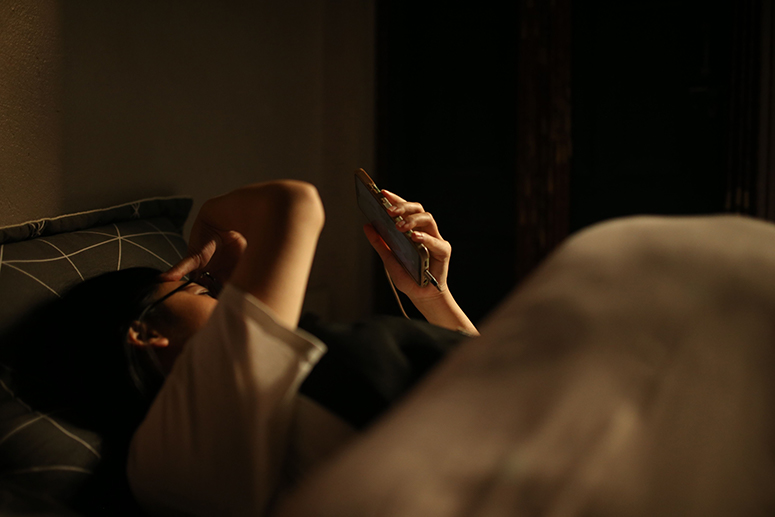
Then there is the issue of sleep.
As a physician, I routinely encounter patients struggling with fatigue, poor concentration, mood changes, and elevated blood pressure. Increasingly, the story includes late-night screen use.
Many people bring their smartphones into bed. They scroll through social media, answer emails, watch videos, or consume news long after they intended to sleep.
Unfortunately, the human brain was not designed for this pattern.
The stimulation provided by digital content keeps the mind alert precisely when it should be winding down. Exposure to bright screens late at night may also interfere with normal sleep rhythms.
The result is familiar to many Filipinos.
Bedtime is delayed. Sleep becomes shorter. Morning arrives too soon.
Over time, chronic sleep deprivation contributes to obesity, hypertension, diabetes, anxiety, depression, impaired immunity, and cardiovascular disease.
Ironically, the devices we use to manage our lives may be quietly undermining our health.
Mental health concerns
Mental health represents another growing concern.
Social media platforms allow us to remain connected with friends, relatives, colleagues, and communities around the world. Yet they also expose us to a constant stream of comparisons.
Someone is always traveling somewhere more beautiful.
Someone appears more successful.
Someone seems happier.
Someone seems wealthier.
Someone appears to be living a better life.
What we often forget is that social media typically displays carefully curated highlights rather than everyday reality. Comparing our ordinary lives to someone else’s edited moments can create unrealistic expectations and persistent dissatisfaction. The result may be anxiety, inadequacy, envy, or emotional exhaustion.
For young people especially, the pressure can be intense. An entire generation is growing up under conditions no previous generation has experienced. Social approval now arrives in the form of likes, shares, comments, and follower counts. Popularity has become quantifiable.
The psychological consequences are still unfolding.

Perhaps the greatest paradox of the digital age, however, is loneliness. Technology has connected billions of people. Yet loneliness is emerging as one of the defining health challenges of our time. Many individuals maintain hundreds or even thousands of online connections while lacking a handful of truly meaningful relationships.
Digital interaction can supplement human connection, but it cannot fully replace it. A video call cannot completely replicate sitting beside someone who understands your struggles. A text message cannot fully substitute for a warm embrace. An emoji cannot entirely replace genuine presence.
Human beings evolved as social creatures. We need eye contact. We need conversation. We need touch. We need shared experiences.
Connection is not simply the exchange of information. Connection is the exchange of humanity.
This does not mean technology is the enemy. Far from it.
The solution is not abandoning smartphones, deleting every social media account, or retreating from modern life.
Technology remains one of humanity’s most powerful achievements. The challenge is learning to use it intentionally rather than allowing it to use us.
Digital sabbaths
Perhaps we need occasional digital Sabbaths—a few hours or even a day when screens are set aside. Perhaps we need to reclaim uninterrupted conversations, leisurely walks, family meals, books, hobbies, prayer, and reflection.
Perhaps we need to remember that our devices are tools, not masters.
The most important moments in life rarely occur on screens. They occur across dinner tables. Beside hospital beds. During conversations with loved ones. While watching a sunset. Holding a grandchild. Sharing a prayer. Listening to a friend.
At the end of our lives, few people will wish they had spent more time refreshing a feed or scrolling through another stream of content.
Most will wish they had spent more time fully present. More attentive. More connected. Not to their devices. But to the people who mattered most.
In an age of constant connection, perhaps the greatest act of wisdom is knowing when to disconnect.
Because sometimes the best way to reconnect with life is to put the phone down and look up.

WATCH: Can you still trust someone who betrayed you? (Generations Ep. 22)
September 23, 2026