

'Rush Hour,' Oreos, bananas, and coconuts
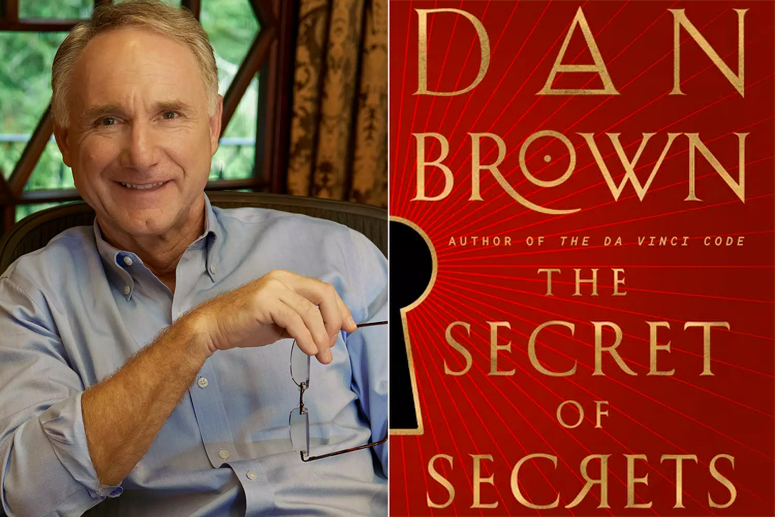
This is what I get for burying my nose in Dan Brown’s latest provocative thought experiment. In The Secret of Secrets, Brown introduces readers to noetic science, a field probing consciousness, intuition, and the hidden dimensions of the human mind. Central to the story is a compelling premise, i.e., things seemingly unrelated are, upon closer inspection, deeply connected.
Centuries earlier, Leonardo da Vinci championed a similar philosophy. He famously advised developing a complete mind by studying the science of art and the art of science, learning how to see, and realizing that “everything connects to everything else.” While the modern English phrasing might not perfectly match his notebooks, the sentiment captures the Renaissance polymath’s legendary interdisciplinary genius.
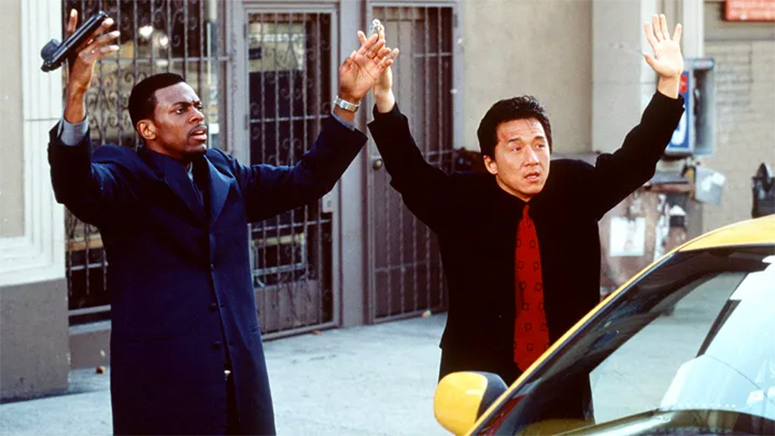
It was in that spirit that I paused mid-snack over an Oreo cereal bowl while mindlessly scrolling past a Rush Hour meme featuring tennis stars Alex Eala and Coco Gauff. For older generations, the joke was a nostalgic nod to Jackie Chan and Chris Tucker’s iconic 1998 buddy-cop film. However, it could be a head-scratcher for younger fans, to whom “rush hour” is just that frustrating time of day when traffic stalls, deliveries arrive cold, and Grab or inDrive rides vanish without a trace.
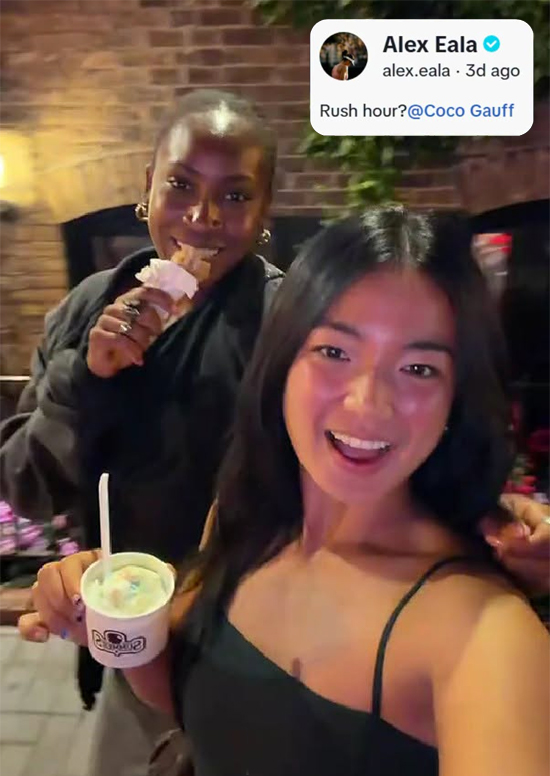
Eala eventually leaned into the humor, posting a TikTok with Gauff captioned, “Rush hour?” Gauff’s reply—calling it a “goated caption”—offered a textbook slice of Gen Z slang for what previous generations simply called “cool” or “neat.”
CONTINUE READING BELOW

Beyond the generational divide, the meme worked because it was innocent, even if some would call it naïve. Rather than undermining either athlete, the joke celebrated their cross-cultural bond amid fierce professional competition. It playfully borrowed a Hollywood formula built on the unlikely chemistry between an African-American detective and an Asian police officer. Decades later, that dynamic still clicks.
Lately, though, that cinematic harmony feels worlds away from the police and border-control videos my wife and I binge-watch. In these clips, suspects caught red-handed frequently play the race card. It is a masterclass in gaslighting, by turning a legitimate investigation into a spectacle of ethnic profiling by repeatedly shrieking, “Why are you doing this to me?”
To be fair, discrimination is real. People suffer genuine bias because of how they look. But invoking race does not, by itself, establish that an inquiry is racially motivated, any more than donning a Harry Potter robe establishes that one is a wizard. Ultimately, allegations of discrimination remain subject to the same inconvenient requirement as any other claim: they must be tested against the facts and supported by evidence.

The distinction matters because skin color tells us remarkably little about a human being. Two people who look alike can harbor entirely different worldviews, while total strangers can share identical tastes, ambitions, and anxieties. Humanity, inconveniently, refuses to be labeled and filed in neat folders.
This brings me back to my bowl of Oreo cereal and the bizarre food metaphors we use to unpack cultural identity. We have “bananas” (yellow on the outside, white on the inside), “coconuts” (brown and white), “Oreos” and “Twinkies.” Somewhere along the way, society decided the best way to discuss sociology was to raid the snack aisle.
While these metaphors are easy to understand—describing individuals whose behavior often leans toward “Western” despite their heritage — they turn toxic when jokes morph into cultural gatekeeping. It is a slippery slope to declaring someone not Black enough, Asian enough, or Filipino enough.
As Dan Brown and Leonardo da Vinci remind us, everything connects to everything else. But connection does not demand sameness. We can mix, match, laugh, and adapt without erasing who we are.
After all, who gets to decide what is inside another person?
Culture is not a sealed container; it leaks, borrows, and mutates. Filipinos seamlessly pivot from Sigabo to Reacher, BTS to SB19, and The Apothecary Diaries to House of the Dragon without needing a passport at the cultural border. Appreciating another culture certainly does not dilute our own. Speaking English at work, Tagalog at home, and Taglish with friends are perfectly normal since identity is far more flexible than labels.
This borderless reality is universal. Hollywood adapts Asian cinema by turning Kurosawa’s Seven Samurai into the Western gunslingers of The Magnificent Seven, transforming the Japanese supernatural dread of Ringu into the American urban legend of The Ring, and reshaping the South Korean time-slip romance Il Mare into the Hollywood drama The Lake House. Anime and Bollywood captivate global audiences; K-pop dominates international charts; and Filipino vocalists go viral covering Western tunes and winning talent shows.
Applying a “food purity test” to pop culture quickly exposes its absurdity. Is Jackie Chan less Chinese for becoming a Hollywood icon? Is Coco Gauff less American for loving a Rush Hour reference? Is Alex Eala less Filipino because she travels the globe, speaks English and Spanish, and trades TikToks with her multinational besties?
Of course not.
That is why the Rush Hour meme hits differently than toxic snack-aisle labels. It merely celebrates two young people from different worlds sharing a cultural punchline. We can address race and fight real discrimination seriously without making every conversation gloomy or treating every joke about differences like an act of war.
The trick, as always, is knowing the difference.
Perhaps the ultimate metaphor isn’t a banana or coconut, but a fruit salad. Pineapples, papaya, and grapes don’t need to fuse into a single flavor to belong in the same bowl. In fact, their individuality adds character to the dish.
As Dan Brown and Leonardo da Vinci remind us, everything connects to everything else. But connection does not demand sameness. We can mix, match, laugh, and adapt without erasing who we are. After all, the world would be a terribly boring place if everyone had to taste like an Oreo.

WATCH: How to experience Bangkok and Kanchanaburi in one trip
October 21, 2026
WATCH: Is OPM still as good as it used to be? (Generations Ep. 20)
September 9, 2026
WATCH: Is Gen Z too soft? (Generations Ep. 23)
September 30, 2026