

The under-the-radar charms of San Juan, Batangas
Our visit to the town of San Juan, Batangas, materialized after a couple of friends recommended it as a day’s stopover after a Quezon food festival we were to attend. Unfortunately, the food festival was canceled for economic reasons related to soaring fuel prices but we decided to go ahead anyway with an overnight visit to San Juan after hearing about its heritage charms. San Juan is a coastal town situated on the southeastern tip of Batangas province, popular for the allure of its many beaches, such as the ever-popular Laiya.
Accompanied by my intrepid 88-year-old mother, as well as my equally adventurous sister, we headed out on a hot summer weekend on the two-and-a-half hour journey to San Juan from Manila. A detailed itinerary had been very kindly prepared by Chiqui Triviño of the San Juan Culture and Arts Council, the only formally organized heritage council in the whole of Batangas. Although mainly a private organization, the SJCAC works closely with different elements of the local government such as the local tourism and the environmental offices. I had chosen to focus on areas near the town center, rather than the beaches, due to our limited time.
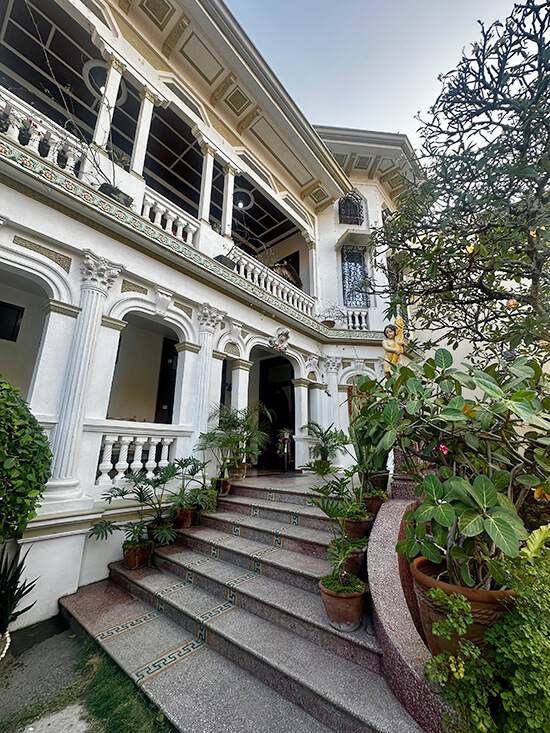
We arrived at the highly recommended El Jardin de Zaida, a peaceful garden resort nestled behind closely guarded high wooden gates. Inside was a well-maintained compound of tastefully designed garden villas around a swimming pool, an antique heritage house reconstructed onsite for events such as weddings, and a small hotel building with about 30 rooms, all set in beautifully landscaped grounds.
After a quick refresh, we set off for the Cafeño Restaurant in the town center, which occupies the lower floor of what is known as the Marasigan ancestral home, for a meet and greet with local artists and the members of the SJCAC. We met a small group of local artists, in the outdoor café area, amid paintings set on easels.
Our next stop was the famous “White House” behind the marketplace. For generations, it was in the Mercado family but is now owned by a local doctor fond of collecting antiques and art pieces. The home, built in 1934, is well-kept and tidy. Most of large receiving areas, including the sala mayor, were set up for dining, as the house is a popular events space. The upstairs area was distinguished by a watchtower accessed through a steep, winding wooden spiral stairs, affording a long view over the town.
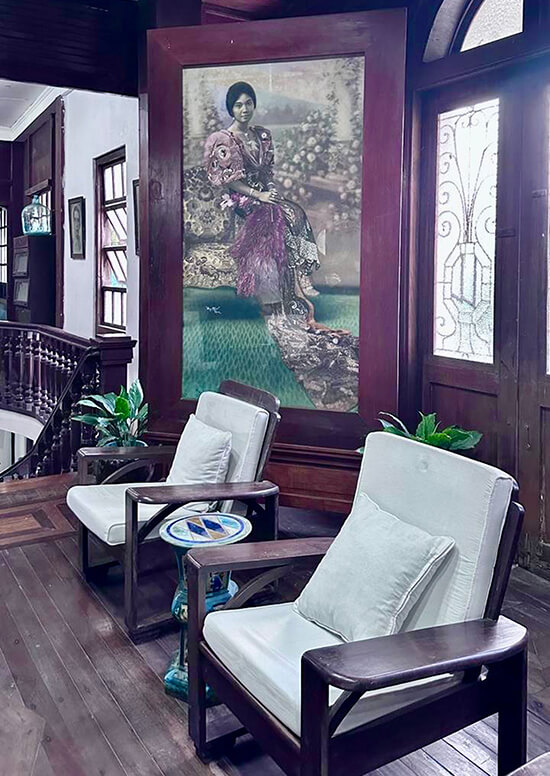
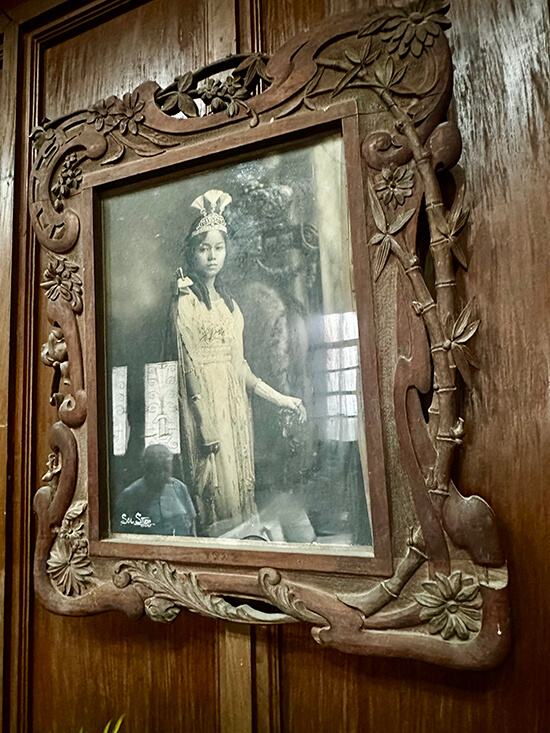
After the White House, we headed to Casa Soledad, also built in the 1930s. The wife of the original owner was related to national hero, Jose Rizal. Now managed by the Lopez-Tioseco branch of the family, the house was recently renamed Casa Soledad after the traditional name given to many of the women in the family. In the ground floor entryway, we lingered over the owners’ framed mementos and newspaper articles about the house. I was surprised to encounter a photo with a familiar face, that of my high school classmate, Ulla Tioseco (who, in line with family tradition, bore the first name “Soledad”), dressed in the distinctive white lace collar worn by the graduates of our high school. The photograph was a poignant memory of Ulla as she sadly passed away about 40 years after our graduation, in 2021, during the pandemic.
CONTINUE READING BELOW

We made our way up to the second floor via an unusual, curved staircase of small proportions, This was a large wood-paneled space which encompassed both living and dining areas. The house is apparently a popular setting for film productions, the most recent one being for the movie Quezon.
It was coming to 6 p.m., so we headed back to Cafeño for a delicious steamin-hot dinner of a Batangas staple, lomi, a soup of fat egg noodles and a thickened broth accompanied by an array of condiments: chives, kikiam, fried fish ball slices, tiny chicharron curls, shredded squid, boiled shrimp and wansoy.
After a restful night at El Jardin de Zaida, we were fetched at 8 a.m. by our guide, Myrna Maralit, and Noel Pasco, head of the local Municipal and Natural Environment Office, familiarly known as MENRO, for a mangrove tour. This turned out to be the unexpected highlight of our visit.
Noel and Myrna brought us to the embarkation point at the edge of the mangrove forest which was just a gap between the trees. Somehow, five of us were able to fit quite snugly into the boat, with Noel and our boatman, Ramil, taking both ends to paddle. The boat ride was perfect as the lack of a noisy banca engine allowed us to glide silently through thick mangroves and ancient trees, some of which were probably more than a hundred years old.
We learned the names of the trees and plants rising out of the water banks: pagatpat, pipisik, dungon, nigi, nipa. Somehow, gliding through the green water underneath an overcast sky, surrounded by ancient tree trunks dripping with lush green leaves, was quite a magical experience. We didn’t see a large variety of birds as it was relatively late in the morning with the sun high up in the sky; though we saw a few purple herons, bursting out of the treetops.
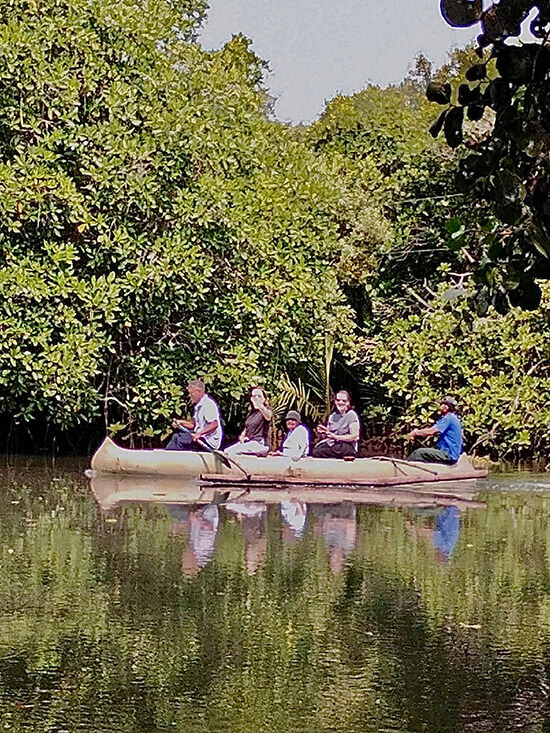
We then reversed course and headed the opposite way, toward the mouth of the mangrove river where it met with the sea. We were now moving against the tide, demanding extra effort from our valiant paddlers. As it was already mid-morning, the sandbar in the sea overlooking Tayabas Bay that we were headed to was almost entirely submerged by the tide. We paused for a moment to take in the expansive view of Quezon province on the opposite side, from Sariaya to Lucena.
Noel told us of how the MENRO was trying to develop environmental tourism in San Juan with the mangrove tour, for one, as well as identifying some hiking paths of varying lengths along mountain trails. He pointed out that one needn’t fly off to visit far-off islands in order to explore mangroves, with this one being so close to the Manila. We all agreed that we would definitely be happy to float among the mangroves again, especially with someone else doing the paddling! We promised Noel that should the hiking trails be developed, that we would return later in the year to try them out.
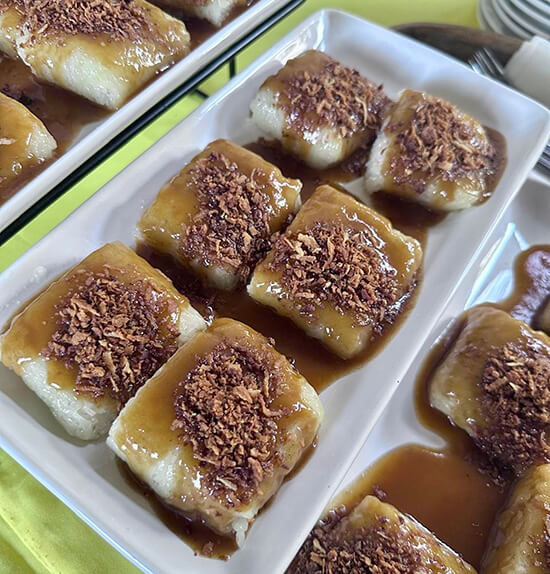
After our mangrove adventure, we dropped by the Pinagbayanan Ruins, which was the founding location of the town of San Juan until frequent flooding forced its transfer to the current town center in 1883. Here stood the atmospheric adobe stone walls of an abandoned church, overgrown with weeds and plants; and nearby a beautifully maintained large, wooden bahay-na-bato, built in vernacular style with humble materials.
We met the house owner, “Nanay” Belen Bautista, who warmly welcomed us into her immaculately kept home. After acquiring the house in the 1980s, she kept all its original features except the sawali ceiling, which can be a fire hazard. She pointed out the original narrow wood slats that made up the flooring, some measuring more than 20 feet in length. She also installed the calados, or decorative grills, atop the walls underneath the eaves, allowing ventilation throughout the house.
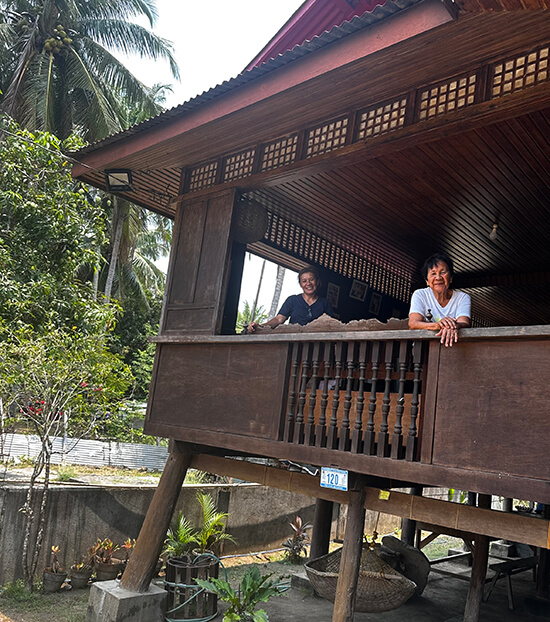
It came as hardly a surprise that Nanay Belen once worked with the National Historical Commission of the Philippines in years past. No wonder she appreciated and endeavored to preserve the original features of the home, and welcomes anyone who wishes to visit. Long retired, Nanay Belen often entertains herself by sitting at her large open window (no screens), with sliding doors, watching the comings and goings of the pupils of the large public school compound across the street.
After a pleasant lunch of barako-spiked adobo, pako salad and achuete rice at the Calle Kanto Cafe, we were encouraged to stop by the Bonete Master Bakery to try their famous bonete bread that came out of their ovens three times a day. Essentially a golf ball-sized lump of dough, the bonete emerged steaming hot from the ovens, one could barely handle it with one’s fingers. It was the most delicious hot lump of bread I have ever tried, and I am still dreaming about it!
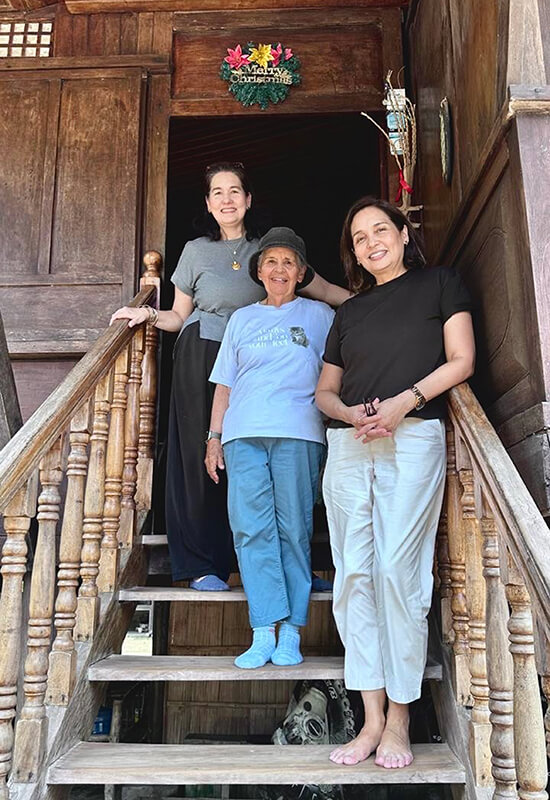
We headed back to Cafeño to meet persons involved in the heritage plans for San Juan. Along with members of the SJCAC, we met the local tourism officer Elsie Sadsad, and a San Juan native, architect Aurora Panopio, who happens to be the dean of the School of Architecture at National University Fairview. Interestingly, Aurora established a heritage resources course at NU-Fairview, in which part of the practicum is for the students to help identify and document San Juan’s tangible and intangible heritage, a process known cultural mapping. The goal they are working toward is a plan to convert the town’s old municipio, erected in 1928 and now unoccupied, into a town museum and cultural center.
We left San Juan that day, having met a dedicated core of residents determined to preserve and improve the heritage offerings of their beloved town. Working together with their local government, private efforts by groups like the SJCAC and local residents such as Nanay Belen Bautista are the lifeblood of heritage preservation in our provincial cities and towns. It was truly heartening to see and hear of their plans and dreams for their hometown of San Juan, Batangas—which we sincerely hope to see progress further in our next visit.

WATCH: Save for retirement or enjoy life now? (Generations Ep. 21)
September 16, 2026
WATCH: Is Philippine cinema still thriving? (Generations Ep. 19)
September 2, 2026
WATCH: Can we talk about death and grief? (Generations Ep. 25)
October 14, 2026
WATCH: Do you still believe in marriage? (Generations Ep. 17)
August 19, 2026