

Etiquette for hospital visitors and dealing with aggravations on the road
Visiting kin or friends confined in the hospital may be a warm gesture or a nuisance, depending on one’s behavior. The patient’s spouse or anyone on caregiving duty also has a say in it, considering that tending to an ailing person has its underlying strains and stresses. A letter sender shares her concern about hospital visitors crossing the line—and the need to set her own rules.
Still another letter sender seeks advice on how to deal with a boyfriend with an inclination to road rage. Is displaying a vile temper when provoked by rude road users a red flag for their relationship?
Visiting the sick—boon or bane?
Q: Are there rules of etiquette on the proper way of visiting ailing relatives or friends in the hospital? My husband was confined twice in the last three months during which period I’ve had to practically live in the hospital as his room companion. Although I appreciated having friends and kin offering to keep me company, there were times when I simply felt overwhelmed and exhausted by having to “entertain” or attend to them while needing to recount the details of my husband’s health crisis. This makes me wonder now: would it be considered rude if I set my own rules next time around for hospital visits?—Alice L.
A: There are reasons why hospitals prescribe visiting hours and restrict the number of visitors in a patient’s room to a maximum of two at a time. Foremost among these is the person’s need for rest and recovery especially after undergoing surgery and other treatment protocols. Patients in recovery are also highly susceptible to infections caused by microbes that visitors may inadvertently bring in. Thus, to answer your question: it is perfectly understandable—even wise—to decline visitors apart from members of your immediate family and maybe a few close relatives.
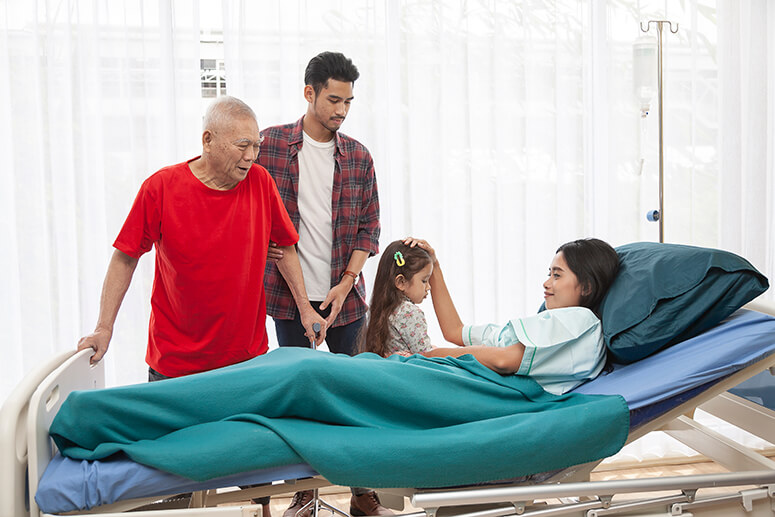
This precaution likewise takes into account the well-being of would-be visitors. Hospitals are breeding grounds of viruses and bacteria—not the best places to spend more than 30 minutes in, especially if you’re not in the peak of health yourself.
However, friends who genuinely want to provide help and support are welcome to do so in several ways. They may volunteer to do errands like buying medicine, toiletries and other necessities or offer to help look after younger members of the family such as children or babies or even domestic pets.

Another way of expressing support is to give monetary contributions to help cover the patient’s medical and hospital expenses. Any amount that you can discreetly hand over to the patient’s spouse—or any family member who has taken on the role of caregiver—would certainly be appreciated. This is in no way an obligation, so do this only if you can afford it or if you are especially close to the couple.
Food gifts are fine, too, if the patient has no dietary restrictions. Otherwise, warm words of comfort and a hug (if you’re close to them) will do. You may tell them to call you for anything they might need—and truly mean it. Lastly, please do not overstay or hang around the hospital room when the doctors and nurses start doing their regular rounds. Grant the patient some privacy when they need to be examined and for them to answer personal questions, which can be as sensitive as “how’s your bowel movement?”
A red flag: Revealing a volatile temper when behind the wheels
Q: What is it about cars and driving that turn men—of nearly all ages—into testosterone-driven monsters once they get behind the wheel? I am especially concerned about how my boyfriend, who is normally a quiet and well-mannered man, is easily provoked by rude motorists and other road users like those ubiquitous motorcycles that sneak up behind, beside, and in front of his car at every opportunity.
What starts out as a fine morning drive is usually marred by a vehicle that cuts into his lane on the highway, or a slow-moving car in front of him. I tell him to try ignoring such nuisances on the road as these are beyond his control but he does have a volatile temper when he is driving. Should I worry that a violent streak lurks underneath his calm exterior? Or am just I being paranoid?—Maricor P.
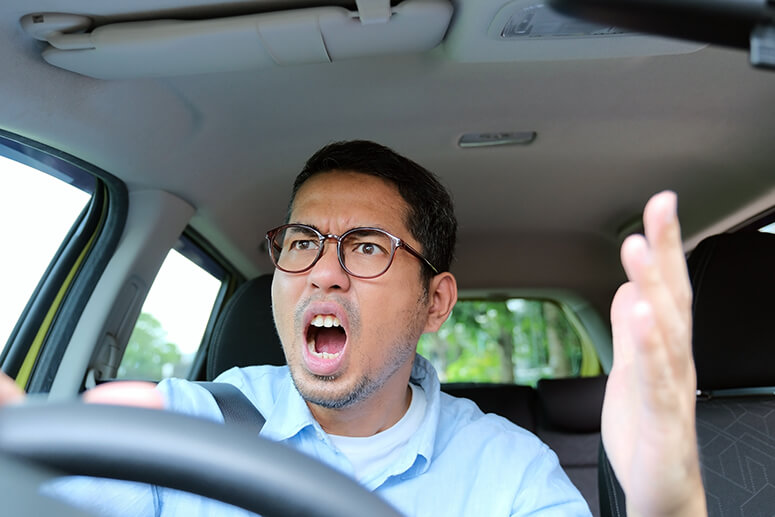
A: It is, indeed, distressing to see how some normally easygoing people can reveal a nasty temper when triggered by road users with bad driving habits. In fact, it has also been said that the way someone deals with annoyances on the road could say more about their personality than their common temperament in other life situations.
If your boyfriend exhibits high irritability or worse, rage, when encountering triggers on the road, it might be prudent to further observe his behavior before leveling up to a long-term relationship. His disposition behind the wheel could be a reflection of how he navigates life’s many challenges as well. God knows there are way too many aggravations on the road given our local traffic situation, but I think a man’s driving behavior is a good indication of how he really is when interacting with people in different environments.
While i’m at it...
I’ve put together a few basic tips to remember about driving not only on the streets of Manila where traffic is almost like a free-for-all, but in any part of the world where you might find yourself in a totally new setting.
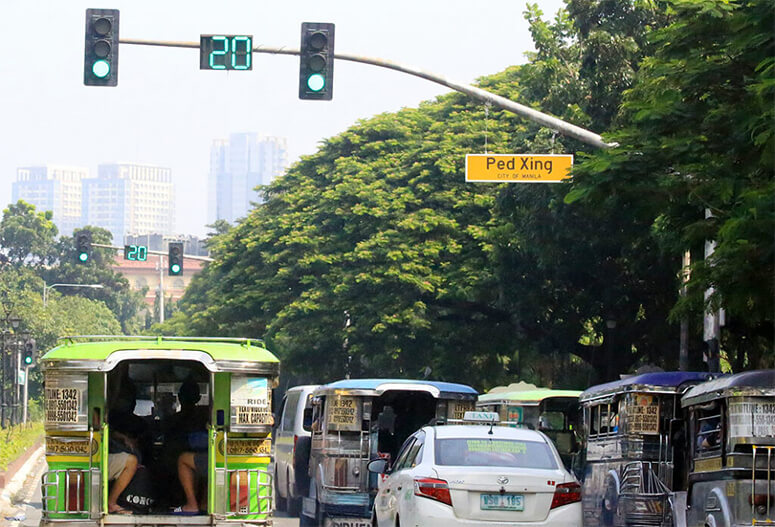
- When in Manila, be sure to follow traffic rules and regulations, always stay alert, and know your route ahead. Be familiar with traffic signs and signals and follow the “right of way” rules.
- Do not drive aggressively. Be cool and don’t feel pressured to compete even when other motorists go beyond speed limits. It is certainly not your duty to let them know they are freaks. Avoid reckless behavior such as tailgating (almost kissing your rear and then cutting into your lane at the first opportunity.) Let them pass and don’t let them spoil your mood. This requires restraint and discipline on your part, but it is always the wiser move because you don’t want to end up in an accident that you will regret later.
- Don’t press your car horn aggressively unless the car in front of you is about to back into your car. Show patience and respect for other road users. There is an exception to this, however. Honk as loudly as you can when you are enjoined to do so during a protest movement.
- Please stop or slow down at pedestrian lanes to give way to people crossing the streets, or are about to and are just waiting for vehicles to stop. Extend this courtesy especially to the elderly, or those with children, even when they’re not on pedestrian crossings. Stay vigilant even when you’re on a highway where pedestrians are not expected to cross. Be patient enough to allow them to cross and wait for them to reach the other side of the road. It’s a small act of kindness that could save their lives.

WATCH: Is OPM still as good as it used to be? (Generations Ep. 20)
September 9, 2026
WATCH: LGBTQIA+ people with unlikely professions
June 28, 2026