

Social realism’s revolving stars
There’s a story—probably apocryphal—that just after Picasso finished painting “Guernica” in Nazi-occupied Paris, SS officers burst into his studio. “Did you do this?” they said, pointing at the 25-foot black-gray-white mural depicting the horrific bombing of a Basque town in 1937. “No,” the artist replied, pointing a figure at the goon squad: “You did.”
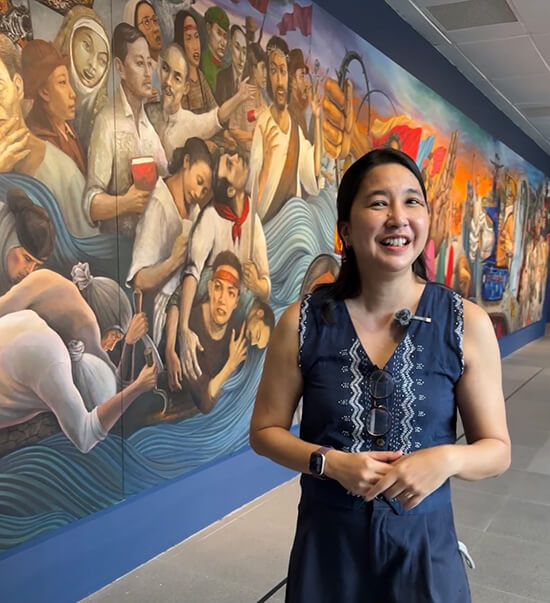
Doesn’t need to be true to be a good story. When I first looked at the mural “Habang Tanaw” by artist collective TalaAnyo, hanging outside Ateneo Gallery’s exhibit “Orion in Sight,” my immediate take was Bosch’s “Garden of Earthly Delights.” Something hellish, splashed across seven panels.
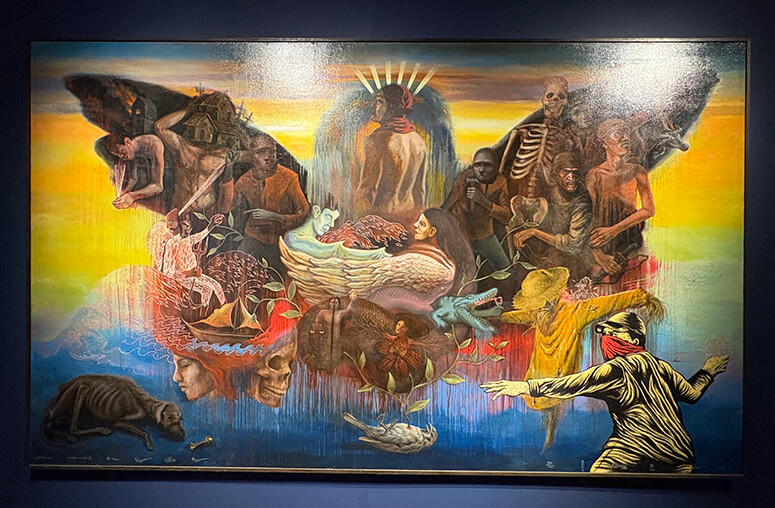
My second take, though, is “Guernica,” especially as show curator Lisa Ito-Tapang walks us through the panels, where a raised-fist resistance gathering at the left (Easter eggs galore) leads to pitched battle at the center; leading to a future (present?) that is also full of anguished conflict, populated by recent bad political actors, both local and international. We, the open-brainpan people, are awash in hydra tentacles, technology warping and controlling our grey matter.
Lisa points out the themes guiding the composition—“New Horizons,” and a “wave” motif highlighting the tides of conflict (“The sea is a point of connection between our ancestors before, but also, at some point, the sea became a point for the entry of colonization”). As nightmarish as it gets, Lisa notes the mural does pose a question: Do we allow ourselves to become drowned in noise and conflict, or see a path forward?
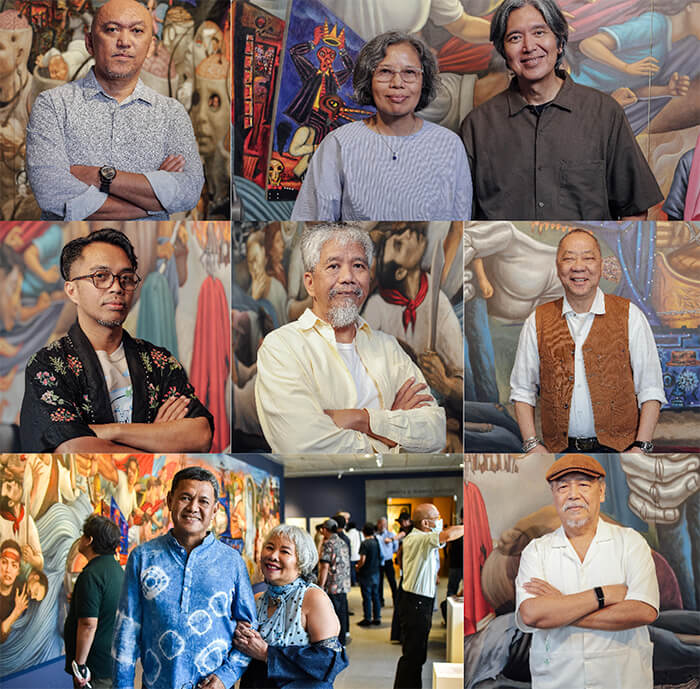
The artists who worked on “Habang Tanaw”—Alfredo Esquillo, founder of Eskinita Art Farm (Tanauan, Batangas); Renato Habulan of Agos Studio; Alfredo Emmanuel Garibay of Linangan Art Residency (Alfonso, Cavite); Charlie Co of Orange Project (Bacolod, Negros Island); Elmer Borlongan and Plet Bolipata of Pasilyo Press (San Antonio, Zambales); Leslie de Chavez of Project Space Pilipinas (Lucban, Quezon); and Mark Justiniani and Joy Mallari of Tungtung Alon Art Foundation (Tanay, Rizal)—feature in an adjoining exhibit through various groupings. The punning TalaAnyo, which can mean “from different constellations,” is possibly the most star-studded social realist collab so far. “Orion in Sight” shows us how the movement emerged from overlapping artist subsets, project by project.
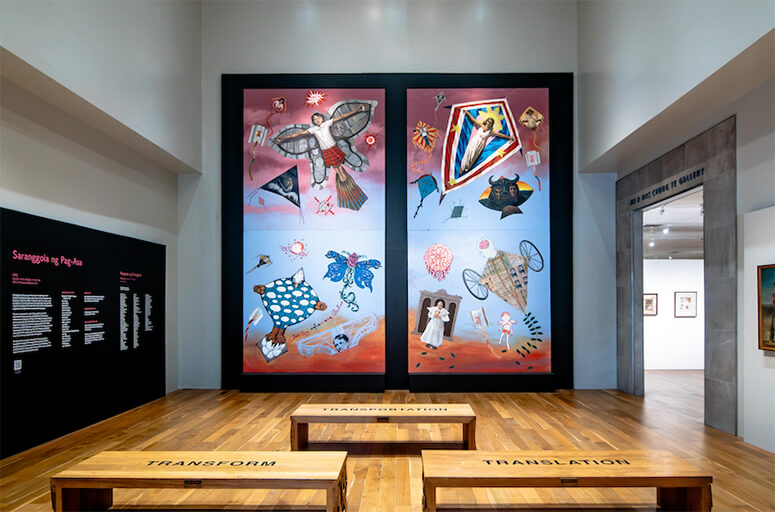
Lisa speaks of Kaisahan, the earliest buds of social realism, highlighted in the “Landas ng Kaisahan” exhibit now at the Ateneo Gallery lobby. Spawned by martial law in 1976, Kaisahan was pulled together by artists asking “questions of national identity.” Among them: Pablo “Adi” Baens Santos, Edgar Talusan Fernandez, Habulan, Antipas “Biboy” Delotavo, Papo de Asis, Albert Jimenez, Jose Cuaresma; and later Al Manrique, Neil Doloricon, Jose Tence Ruiz, Orlando Castillo and Vin Toledo.
CONTINUE READING BELOW

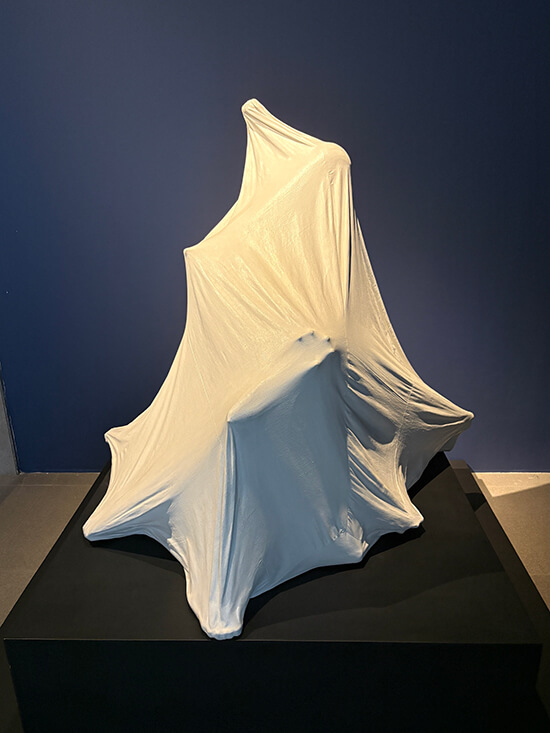
In that spirit, “Orion in Sight” opens with a Fernandez 1976 sculpture, “Kinupot,” its tortured expressive forms punching out at a molded white sheet, dramatizing the “smothered” struggle under martial law. A rare three-dimensional protest work in a landscape of murals, for Fernandez, wrapping is “an image that resurfaces in times of crisis,” such as Duterte’s EJK or during COVID.
Inside, the exhibit brings together selected works from early collectives, including Kaisahan, Tambisan sa Sining, Artista ng Bayan, Pamilya Pintura, Salingpusa, Sanggawa, Sakay and others. The show was also developed with support from writer-researcher Janine Go Dimaranan and a team of TalaAnyo artists, researchers and community organizers.
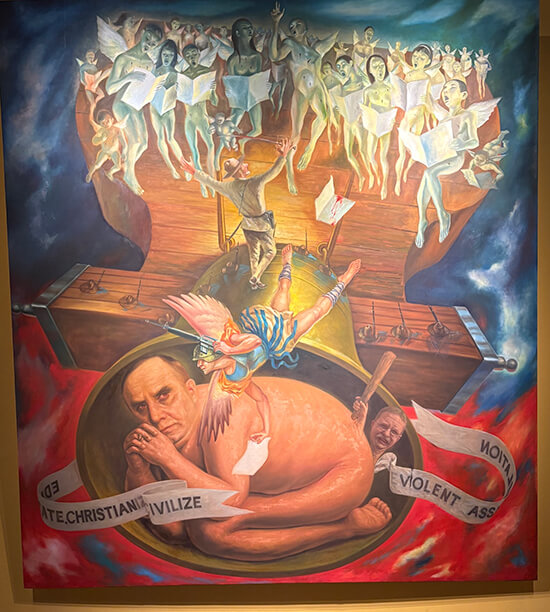
Members of the Antipolo-based Salingpusa would overlap with Sanggawa (meaning “one world”), who split off into Sakay. “During martial law, there would be operations done very quickly, on the go. It got to the point when some of the groups became very good at making large paintings for rallies.” From street protests during martial law to political and religious commentary to post-9/11 Manila, they aimed to combine their individual styles into a unified aesthetic—something fast and furious, but also instantly able to get the message across.
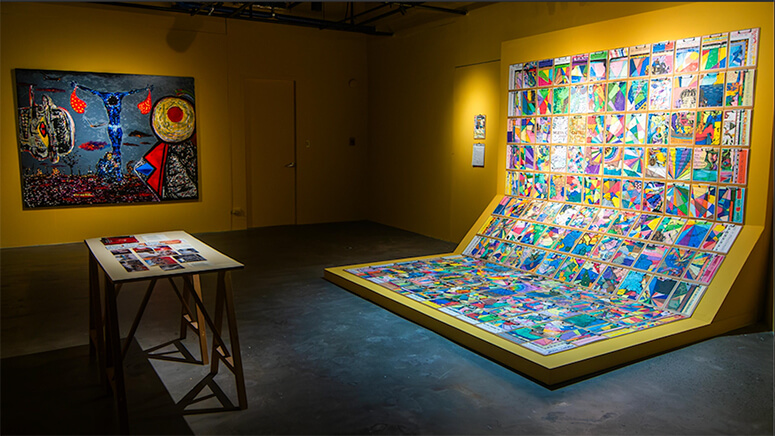
Local community is a big motivator as well. A second part of the room focuses on Charlie Co’s Orange Project and Leslie de Chavez’s Project Space Pilipinas. Started in the mid-2000s, these two provincial-based efforts spur creative expression and activism organically, establishing a space where artists from the region can grow and find a community.
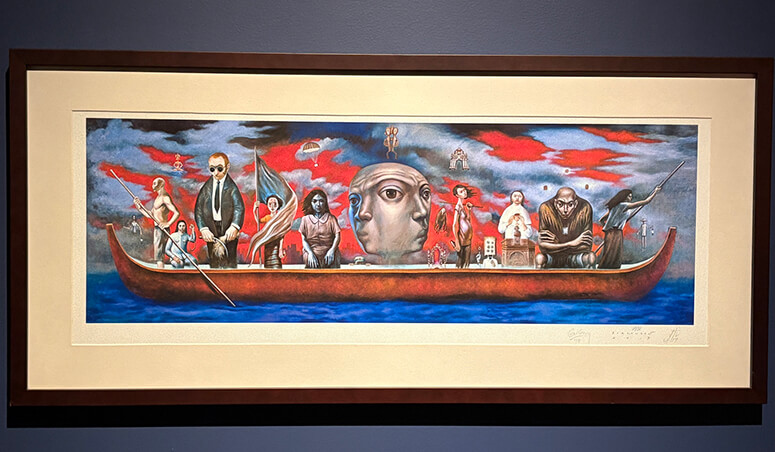
She points to a large canvas collab between Co and Nunelucio Alvarado, “Two Crosses.”
“I think that’s the Orange Project story in a nutshell: this individual collaboration of one artist with another eventually leads to a larger community of people working together,” mentioning Co’s early work with Pamilya Pintura and Black Artists of Asia in the ‘80s as cornerstones of involvement.
Importantly, it springs up apart from Metro Manila’s dominance of dialogue: “I think it’s one example of how you can live independently of what’s happening in Manila. He also contributed to many community efforts during the pandemic, aid for artists who were affected by the lockdown, going out into the streets with their own creative placards during the Trillion Peso March.”
Based in Lucban, de Chavez has always tried to inject community voices into telling the Philippines story. His work here, a patchwork retelling of a 1743 Murillo Velarde Pilipinas map, is a community coloring activity titled “La Bandera.”
In the next room, we see how Garipay’s Linangan Art Residency in Cavite and Esquillo’s Eskinita Art Farm in Batangas emphasize mentoring of young artists, with artist residencies and mural projects all over the Philippines with different batches of mentees. We see the products of Elmer Borlongan and Plet Bolipata’s Pasilyo Press in Zambales—a shift to the immediacy and resonance of block printing as social protest, feeding into the next generation of social realism.
I ask why artists here remain so committed to social realism. It can’t be the money.
“Historically, artists in the Philippines are the first to respond in times of crisis,” notes Lisa. “You have frontliners who show up. They’re sharing a community, channeling what’s creative to create that community. It’s a continuity of solidarity—in art, but also beyond art.”
So what’s next for TalaAnyo?
“The group is new, but its initiatives are not,” she says. “I think there will opportunities for people to work together for social justice where they can contribute. We have national elections upcoming, so many unresolved and lingering problems in communities, provinces where each of them is based. They won’t lack for opportunities to respond.”
* * *
“Orion in Sight: A View of Collective Work” is on view at the Ateneo Art Gallery until Oct. 18, 2026.

WATCH: LGBTQIA+ people with unlikely professions
June 28, 2026
WATCH: How to experience Bangkok and Kanchanaburi in one trip
October 21, 2026
WATCH: Is OPM still as good as it used to be? (Generations Ep. 20)
September 9, 2026