

The online bookstore
When was the last time you walked into a real, physical bookstore, scanned the covers and spines, flipped through the pages of an interesting book, and took it to the counter to check out?
That still happens, of course, especially in bookstores that have smartly embedded themselves in malls to catch the passing traffic, coming to a head in the big bookfairs where overflow crowds have been seen since the pandemic. The oft-touted fear that the printed book is dead in this age of the Internet, when books have been available in electronic format online for decades now, was decidedly overblown.
At least in the Philippines, e-book sales have remained low, and that e-book reading market never really took off. A National Readership Survey conducted by SWS for the National Book Development Board in 2023 showed that only about 15% of both adult and child readers prefer e-books over physical ones. Local publishers are working to enlarge this small market, adding e-book versions to their offerings of new publications.
There’s one special corner of the online book market I have a soft spot for: the used book market, particularly for Filipiniana.
But even in a country where nearly seven out of 10 Filipinos use the Internet, very few have dedicated e-book readers (aside from their phones, on which reading long text can be a pain), and then there’s piracy, which allows free downloads of nearly anything you might be looking for, if you know which buttons to press. Filipinos want books they can hold, put aside, and return to their bookmarked page at their convenience.
But something has been happening to bring the digital and analog world of books together. Increasingly, book sales have shifted online, even for established publishers, and especially newer and smaller outfits with little hope of getting precious shelf space in bookstores heavily tilted toward foreign titles.
CONTINUE READING BELOW

When people ask me where they can buy my books—because they can’t find them in the usual places (and sadly, neither can I)—I tell them to go to Shopee and Lazada, where many publishers now post their books, saving money on store displays and, more importantly, making their inventories accessible to every Pinoy from Aparri to Zamboanga. Whether we talk about eBay or Temu, and for all its flaws, the Internet has been a great equalizer, and the improvement of local delivery services like Lalamove and LBC has opened vast new horizons for both buyers and sellers.
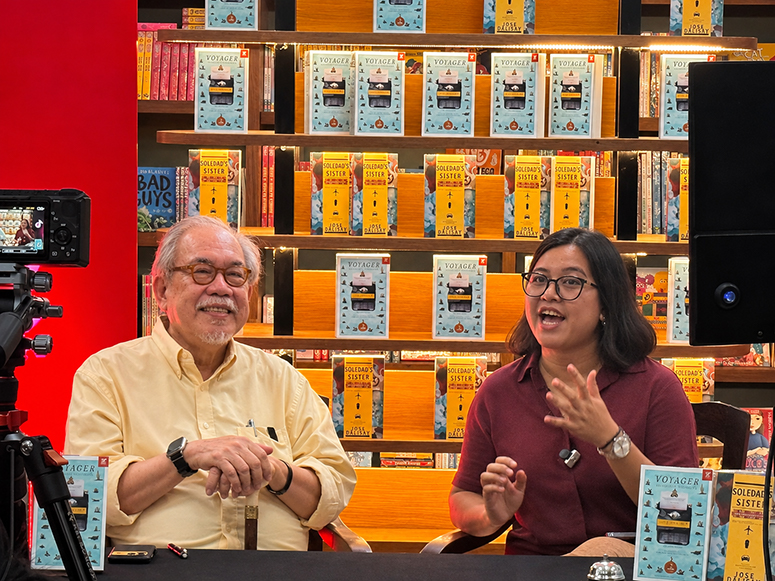
Two weekends ago, I had a totally new experience after I was invited to join National Book Store’s BookTok Festival. TikTok has become one of the Internet’s hottest sales platforms, and I knew they sold shirts, shoes, and bags on TikTok, but books? Yes, tons of books, as it turns out. They had me sit for an hour in front of a camera signing books and waving hello as full-throated agents pitched my books to buyers, who were promised delivery of signed copies within a few days. I must have signed a hundred books in that hour, and when we finished, all our stock—including our display copies—was sold out; at one point, we had over 100,000 views. And I was just one of many authors lined up for that weekend. Live selling can’t work for sleepyheads, but if you can take the frenetic pace, welcome to the future of book selling.
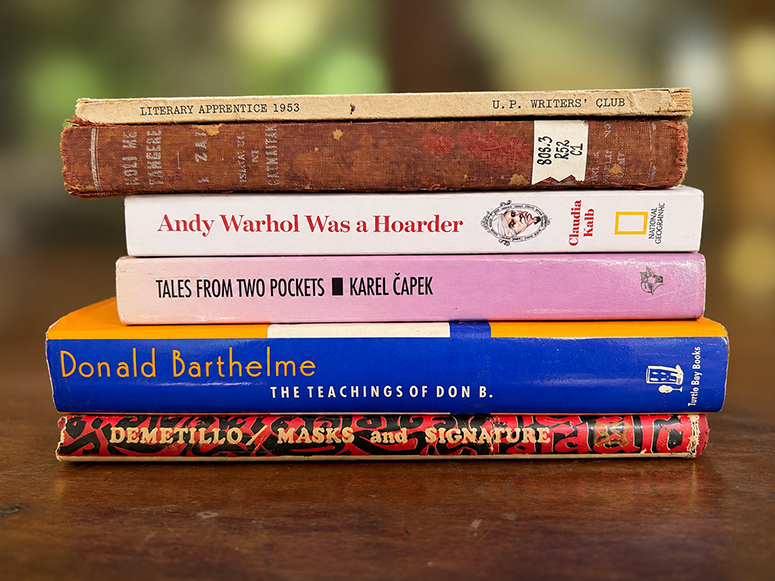
But there’s one special corner of the online book market that I have a soft spot for—the used book market, particularly for Filipiniana. Pinoys my age will recall going to C.M. Recto to pick up cheap used textbooks and pocketbooks (at least before BookSale became a thing). That marketplace has gone online, in such Facebook forums as the Filipiniana Bibliophile Group, where I’ve found such gems as books previously owned or signed by H.R. Ocampo, Amado V. Hernandez, and R. Zulueta da Costa, among many others. Because of these online book communities, I’ve been able to acquire, for not too much, a first Philippine edition of El Filibusterismo, published by Chofre in 1903, the very first edition of the UP Philippinensian yearbook, published in 1915, and probably the oldest extant copy of the Philippine Collegian, from 1922. (I have to add that, like other collectors, I get most of my antiquarian books on eBay and other online sources like AbeBooks and todocoleccion.net. You’d be surprised how much Filipiniana remains out there, as far away as Argentina, where I found a first edition of Aventure d’un Gentilhomme Breton by a favorite author, Paul Proust de la Gironiere.)
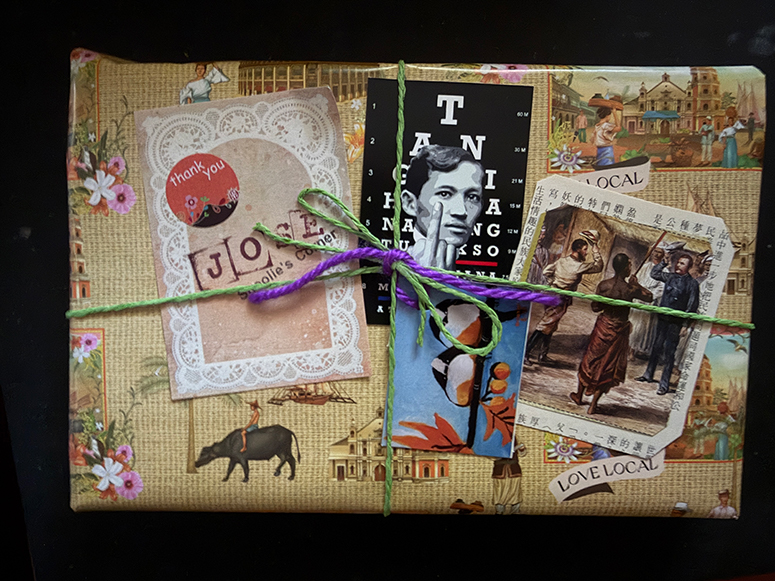
Another pleasure has been making the acquaintance of suki sellers such as a lady who goes by the trade name Shoolie’s Corner (she’s asked me to keep her identity private, although she’s well known in book and cultural circles). A lifelong reader, “Shoolie” traces her love of books from childhood trips with her father to the bookstores of Avenida and Raon, through a college turn toward “subversive” and Asian-history titles bought at Popular Bookstore in Doroteo Jose, to decades of hunting secondhand shops in Manila, Hong Kong, Singapore, Portland, San Francisco and Vancouver.
The pandemic supplied the turning point. With her food-delivery work limited to daytime and with cash short, a friend suggested she sell her books. Foreign titles drew no buyers, but her Filipiniana sold at once, beginning with a gold-edged Vibal edition of the Boxer Codex, which she let go of cheaply and still regrets. “I began buying books I liked to read. The earliest ones were Ambeth Ocampo's Looking Back series, Builder of Bridges by Jose Dalisay Jr. (thank you!), and Batis by Jose Victor Torres.”
Since then, Shoolie has cultivated a coterie of faithful buyers, drawn as much to her offerings as to her painstakingly pretty and unique packaging of each book sold. You buy a book from her, receive it from a rider, and you simply don’t want to tear the wrapper apart because it’s an artwork in itself. “I buy books that I like to read, then sell them after reading them. It's a win-win situation,” she says. “I sell not only books but the experience of buying books from me: receiving a book like a gift, even though in reality the reader paid for it. I want my books to arrive in style, with bookmarks, tassels, and all, wrapped securely with strings and stickers.”
Another suki is Remy Cabaltera, who runs an antique shop at Ali Mall called Remnants and who also sells books on FBG. She patiently consolidates my picks and has Lalamove deliver them to me in batches of half a dozen. All these acquisitions go to what I call my Tsundoku Library, for reading at a more leisurely time, probably in my nineties when I can’t do anything else but flip pages.
In the meanwhile, happy bookhunting—and as they used to say of the Yellow Pages, let your fingers do the walking on your laptop’s or phone’s keyboard.

WATCH: Why is it so hard to make friends? (Generations Ep. 26)
October 21, 2026
WATCH: Is Philippine cinema still thriving? (Generations Ep. 19)
September 2, 2026
WATCH: Pixar Summer Fest adventure at Hong Kong Disneyland
August 10, 2026