

Free learning frees
After more than a decade of creating educational content, I still dream of a day when everyone and anyone who wants to learn can learn for free.
As most millennials did, I grew up watching Sineskwela and Bayani; Sesame Street and Beakman’s World. I heard Ka Ernie Baron say, “Kung walang knowledge, walang power” every night. That was my cue to go to bed.
I was raised on my Lola Binyang’s stories of how education, even “free” public education, can still be too costly for a poor family. My life would be different, I was told, if my mother had not gotten into PUP and hadn’t gotten a job in the government—two life-altering opportunities that required her to pass examinations.
In my young mind, the message was clear. Passing exams meant open doors, especially for us who weren’t born with silver spoons in our mouths.
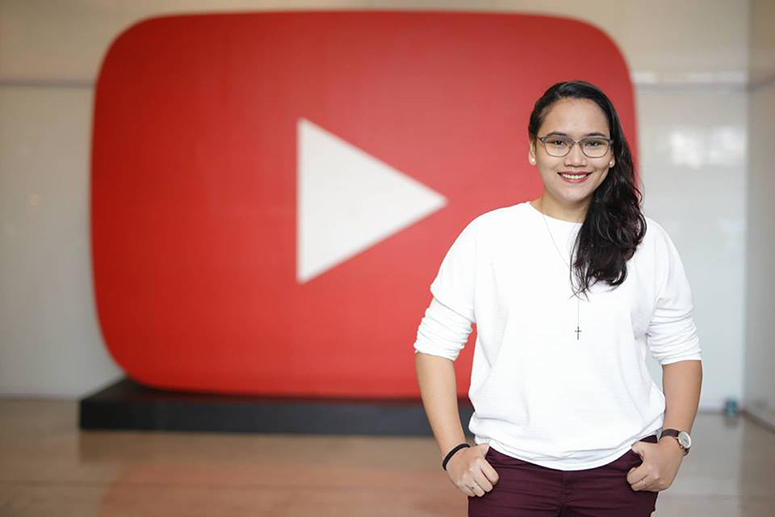
It wasn’t long before I had to take my first big ones: science high school entrance exams. That was when I first learned about review centers and how access to these can tilt the already lopsided scale when it comes to who gets which opportunities.
As more doors opened for me and shut for those around me, I did what I could to give back. Whether it’s tutoring kids for free or having my mom’s workmates who are taking the Civil Service Exam come over for a test prep session, I’ve always tried to share what I know. But it never felt enough.
CONTINUE READING BELOW

Then came YouTube.
The idea was simple. If I could learn from channels like Khan Academy and, my personal favorite, Crash Course, then I could also teach what I know on YouTube. Sure, EduCreators already existed at the time (this was in 2014), but the videos were in English.
So, armed with my old camera, a whiteboard, and a marker, I started creating and uploading my own videos.
But did they work? What has access to free learning freed learners from? What were they freed to do?
Freedom to learn
R.A. No. 10931, sponsored and authored by Senator Bam Aquino IV, guarantees free education in state and local universities in the Philippines. But with limited slots, competition can be tight. Add that to the sobering figures of learners’ proficiency in the EDCOM 2 reports, and it follows that passing without paying for tutors and review centers is now unlikely.
For those who can’t afford paid programs, I created a free downloadable 10-week study guide that learners can follow to help fill learning gaps and, hopefully, pass entrance tests and scholarship exams.
Aliah is just one of them. In a YouTube comment, she said: “I just passed the UPCAT, and I’m very thankful po sa mga videos niyo. You’re one of my inspirations, thank you so much.”
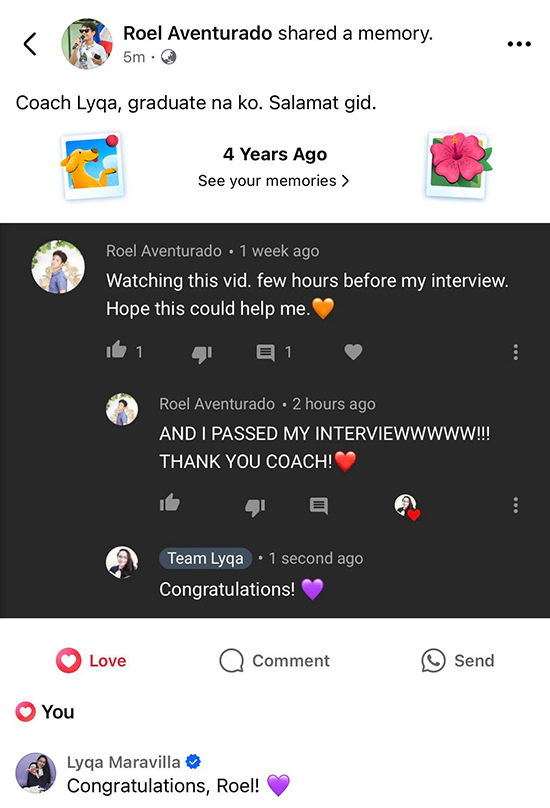
Kelsey proudly shared her and her sister’s good news in my TikTok comment section: “My sister and I passed the Civil Service Examination last 2018 too, and she even passed PNPACAT & UPCAT because of you! Thank you, Ms. Lyqa! And she was recently recognized as Cdt 4th Class of the Long Maroon Line last March 11, 2022!”
Access to free educational content has given them the freedom to learn, which, in turn, can give them the freedom to earn.
Freedom to earn
Saying that people learn to earn feels wrong or, as younger people would say, gives us the ick. But it is, at least, partly true.
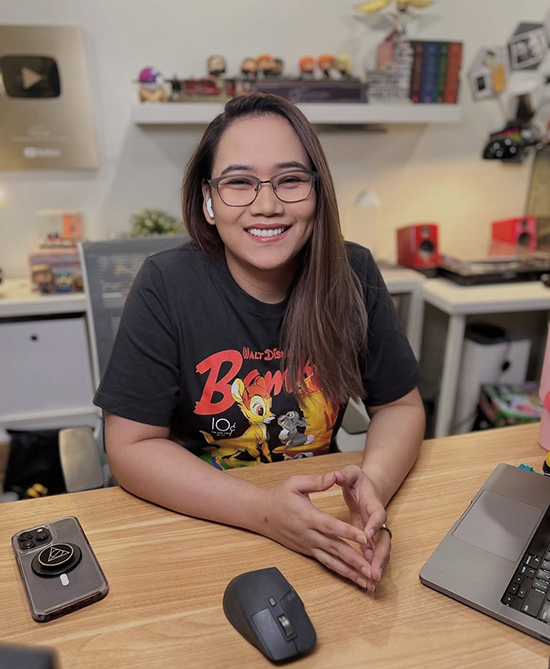
I started creating math and English lessons, topics included in most aptitude tests. Then, in response to the community’s requests, I started the Get Hired podcast and video series to help viewers, well, get hired.
These videos, especially the older ones, are nothing fancy. Those who graduated from prestigious universities mentored by professionals would find them too simple or obvious. But for people who were the first to graduate in their family, who had nobody to ask, they seem to help people like Ayesha, who commented on YouTube, “I used to binge-watch (the Get Hired series) when I was a fresh graduate about seven years ago, and now I’ve been working in the tech industry for five years.”
And Michelle, whom I met while waiting to meet Mickey Mouse at Disney. She told me that years ago, she watched my videos to prepare for the Civil Service Exam (now Career Service Examination). She passed the exam and worked in a government hospital for three years before taking the opportunity to work for Disney.
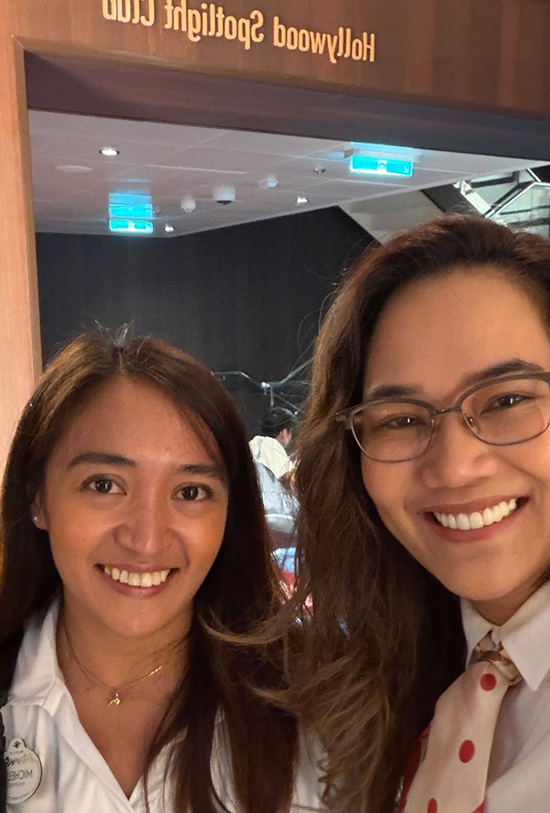
I’ve met many of my former learners in schools, corporations, and (of course) government offices here and abroad. Seeing them in action and learning that my videos played a small part in their journeys always makes my day. But more than the obvious effects of free learning, here’s my favorite.
Freedom from limiting beliefs
The most difficult thing to change is a person’s deeply held limiting belief. That’s why the first thing I set out to teach every learner who comes across my videos is not what they need to learn, but that they can learn.
Social media, with all its flaws, presents a unique opportunity for learning. One can learn at their own pace (you can repeat the videos, slow them down, speed them up, or hit pause), with me by writing comments during my livestreams, or in secret. After exam results are released, I get comments and messages from people who introduce themselves as silent viewers. They’re learners who, if I may say so, were failed by the system. I’ve heard stories of learners who were laughed at by their classmates and even their teachers; learners whose own families told them they won’t make it; learners who belonged to, in their own words, generations of people who were inherently bad at school.
Could watching a YouTube or TikTok video change their minds?
The messages and comments I’ve received over the years give me hope, like this one I got just a few days ago: “Napakalaking tulong niyo po sa’kin ever since Grade 6 pa po ako. Hindi po ako gaanong mahilig mag-aral and I struggled a lot in maintaining my grades, but watching your vids, especially ‘yung Math at English videos po, I have found importance and enjoyment in learning new things and improving my study habits. Now po, nakapasa po ako ng CETs lalo na po sa dream university at course ko po.”
And this one that never fails to bring tears to my eyes: “Gusto ko lang mag-thank you sa’yo (dahil) malaking tulong sa’kin lahat ng videos mo. Noon feel ko bobo ako, ‘di rin ako nakapagtapos ng pag-aaral, HS graduate lang, dahil noong araw, solo parent si Mama at naawa ako sa kanya, kahit anong kayod niya, ‘di talaga kayang pag-aralin kami. Kaya nagtrabaho ako para makatulong sa kanya financially.”
“Ngayon, 32 na ‘ko at may dalawang anak. Last year, bumalik ako sa pag-aaral. Grade 11 (ako), kasama ko lagi anak kong two years old pagpasok kasi walang magbabantay sa kanya. Mahirap pero masaya ako kasi kahit paano, nakabalik ako sa pag-aaral na akala ko ‘di na matutupad. Kahit kailan, ‘di nawala sa isip ko na maging English teacher in the future. Grade 12 na ‘ko this year at hindi ako nahihiya kasi naniniwala akong kapag gusto, may paraan.”
What I do, what I’ve done, leaves much to be desired. I’ll be the first to say that. It’s basic, surface knowledge, stuff people should learn as kids. The videos I create serve as a stopgap solution for the glaring learning gaps our learners, our kababayans, have.
For how long? I don’t know.
But for now, I’ll just keep trying to reach, teach, and breach barriers to help people be all they could be, online and offline.

WATCH: Why is it so hard to make friends? (Generations Ep. 26)
October 21, 2026
WATCH: Discovering Vietnam in three days
June 9, 2026
WATCH: Is Philippine cinema still thriving? (Generations Ep. 19)
September 2, 2026