

Showrunner Terry Matalas breaks down the making of Marvel’s 'VisionQuest'
Continuing a hit series is always going to be a risk. Still, for the WandaVision follow-up VisionQuest, Marvel Studios brought on a veteran showrunner who’s made a career of building on existing universes in the form of Terry Matalas (12 Monkeys, Star Trek: Picard). Over the course of VisionQuest’s eight episodes, Matalas guided Paul Bettany’s titular android through themes of self-awareness, nature versus nurture, and the cyclical nature of grief.
With the release of this week’s epic finale, PhilSTAR L!fe sat down with Matalas to discuss how the extraordinary series came to be, his thoughts on AI, and what it was like working with superstars Paul Bettany and James Spader.
“The show was never really designed to be a commentary on the present form of AI,” laughed Matalas when we asked how current debates on the technology shaped the storyline. “We wrote it two years ago, so anything we wrote then could be considered antiquated by the time this aired."
"I would say the universal message is that it's about parents, and nature versus nurture. I think there are a lot of ways we have to nurture AI, as the creators and the parents of AI. I think that's a message that we sort of, we definitely are loud about," he added.
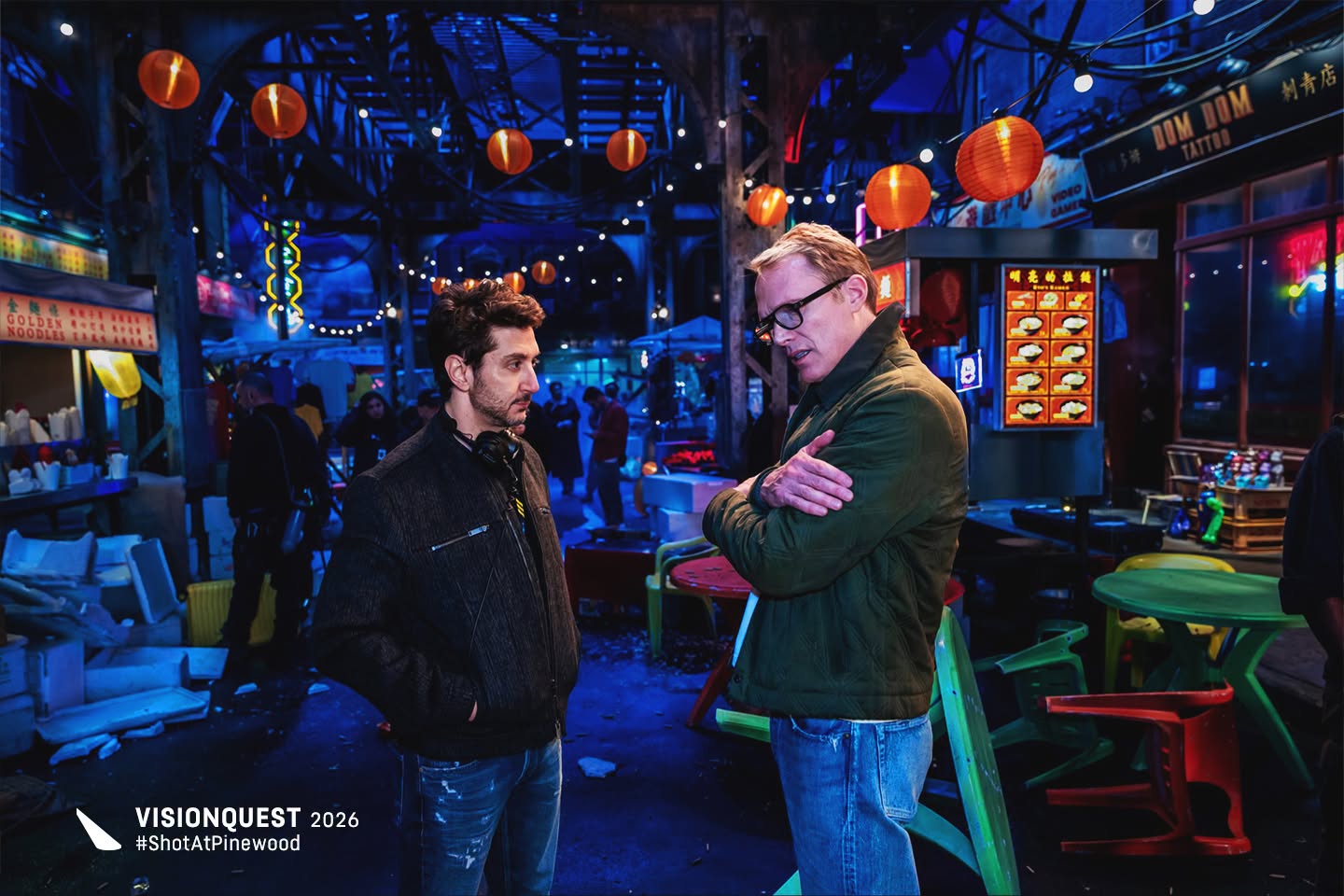
With the new series marking James Spader’s first return to the live-action MCU (having played Ultron in the animated What If?) since 2014’s Avengers: Age of Ultron, Matalas shared that the appeal of Ultron lay in his intelligence and charm, which the actor was happy to reprise even before reading a script: “We couldn't write it without, you know, him [Spader] being on board. So, it was a big leap of faith, based on a very long lunch we had, like a three- or four-hour lunch, where I took him through my vision of the story, how we would tell it, and he was on board! By the time we got the check, he was like, ‘I want to do this, this sounds great.’ We had already started coming up with ideas as we were talking, and that's really rare and exciting.”
CONTINUE READING BELOW

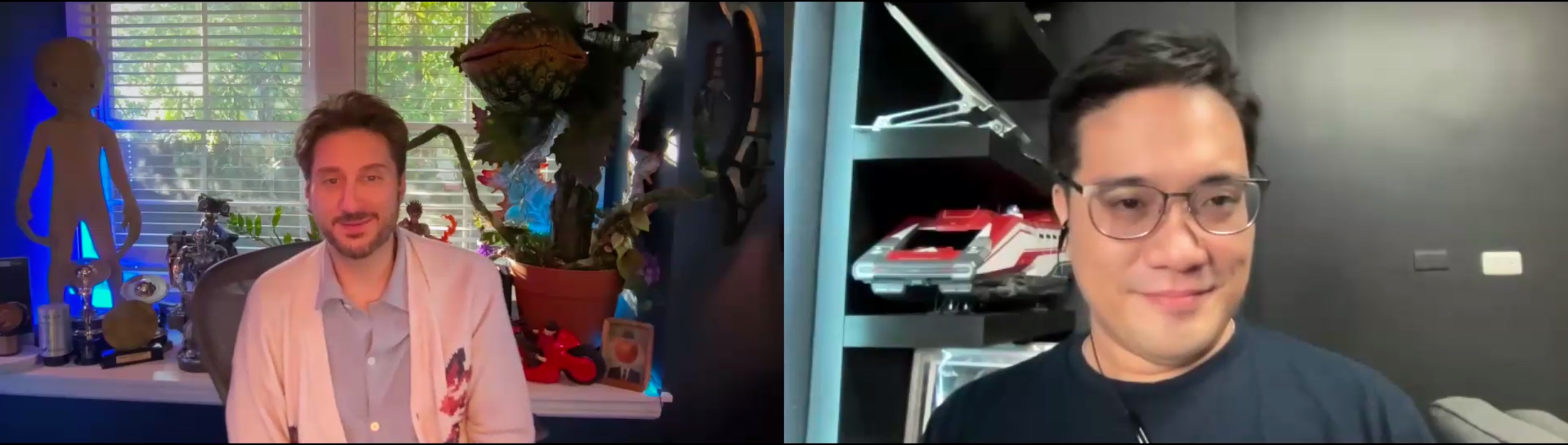
Surrounded by collectibles, props, and memorabilia during our interview, Matalas’ love of pop culture was on full display. During our talk, the showrunner happily walked us through his collection, while sharing that his influences ranged from TV mainstays like Cheers and The Shield, genre fare such as Battlestar Galactica, Star Trek, anime Death Note, and more recent series like Widow’s Bay.
According to Matalas, the beauty of episodic television was that it allowed for deep dives into characters’ psyches, noting, “[With] movies, you only have about two and a half hours max to… to really get across an idea, and what's so amazing about television is now suddenly you have 8 hours to really explore this character: you can see their paternal side, you can see them continue to be a villain, you can see them fall in love, and what does that mean? And that's what I love so much about television: it’s all the different kinds of stories you get to tell. It’s not to say movies aren't amazing, but they're limited in what they can do.”
On the challenge of not simply replicating what WandaVision (“One of the great television shows of all time”) had done vis-à-vis its homages to classic sitcoms, Matalas told us, “It was lightning in a bottle…I don't think they could ever do that again. [So] you hope you're gonna come up with something that people will love as much, but you can't really feel the pressure of doing that again.”
Indeed, by using its predecessor as a jumping-off point rather than a template, VisionQuest succeeds in telling a bigger (yet equally personal) story. By the time it introduces its own homage towards the end, it feels entirely earned. Matalas noted, “I think all good endings reflect the beginning in some way, and it just felt like it would be really fun to do that, and then turn it on its ear with what would happen if Ultron then got control of it. So it really comes from character and being organic about the story you want to tell.”
When asked about balancing the needs of a showrunner with his wants as a fan, Matalas said that, “You can't really force a fan thing, because it'll feel forced. It has to be organic and good for the story. There are fan ideas that we wanted to do; we're just like, it's not gonna work [if] there's no reason to do it. I see a lot of things online that's like, ‘oh, we're dropping a lot of Easter eggs’. We didn't design them to be Easter eggs… it's just living in that world and trying to find organic ways to touch upon all that stuff.”
As for the things he wasn’t able to include, Matalas revealed that there was, “Lots of stuff,” he hoped to include in future MCU entries, while noting that, as far as any such projects were concerned, “It'll be up to fans to decide whether or not it's good enough. We would love to do more; it really just sort of depends on how well this does.”
If the critical and fan responses to VisionQuest are any indication—to say nothing of the final episode’s post-credits shocker (which wasn’t included in our review copy!)—we have a feeling we’ll be hearing more of Vision, Ultron, and Mr. Matalas, very, very soon.
VisionQuest is now streaming on Disney+. Read our full review here.

WATCH: Do you still believe in marriage? (Generations Ep. 17)
August 19, 2026
WATCH: Why is it so hard to make friends? (Generations Ep. 26)
October 21, 2026