

A tale of two battles, Filipino-style
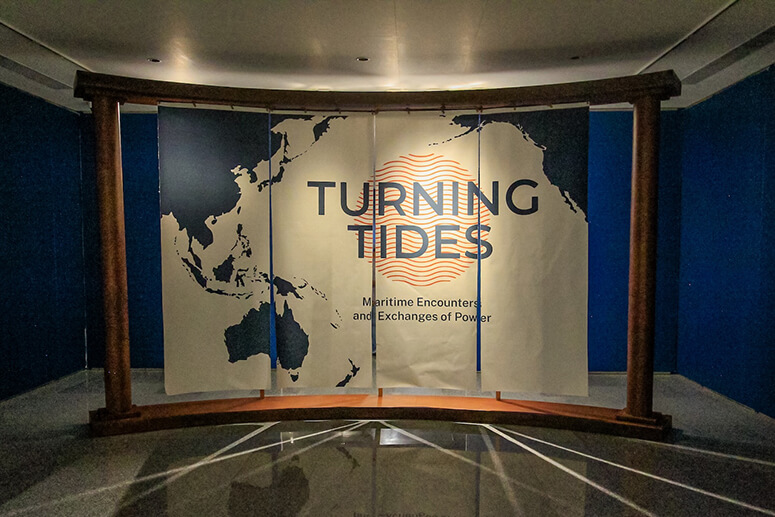
Not to take away from the entirety of the exhibit “Turning Tides: Maritime Encounters and Exchanges of Power” currently at Ayala Museum, but one section that just might capture young audiences’ attention first is a riff on Game of Thrones.
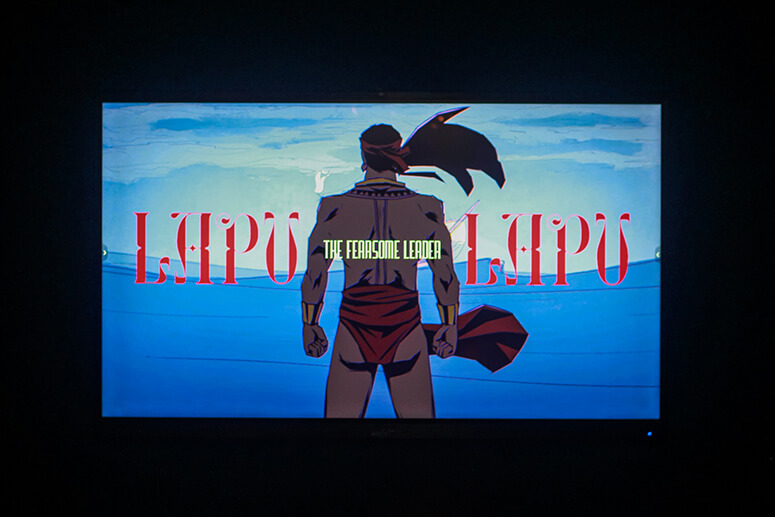
In one corner of the 3rd floor exhibit, a screen loops a faux opening to an animated drama series titled San Lorenzo. We’re introduced to the characters—Antonio Pigafetta, Enrique of Malacca, Ferdinand Magellan, Raja Siaui, Lapulapu, and others—as the action unfolds in 1521.
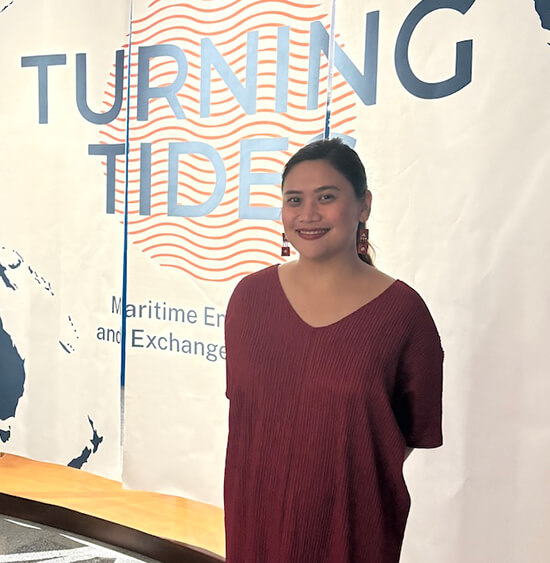
Yes, “Turning Tides” focuses on two key battles in Filipino history—the Battle of Mactan (1521) and the Battles of La Naval de Manila (1646)— and curator Jei Ente laid down the plot points of each in her preceding talk. She emphasized that these battles served as “pivotal” moments, shifts of power where Filipinos can now look back at history through their own perspective going forward. Through this exhibit, Ente wanted to “not look back from the viewpoint of empire, with Filipinos just watching the events; we emphasize they are active actors in these events.”
Hence the GOT-like opening credit sequence, which was developed by Ayala Museum with students of the University of Makati’s Institute of Arts and Design (they even came up with a theme song that echoes the Westeros saga). The idea is that Ente broke the story into 10 episodes highlighting those two battles, with 10 opening credit sequences (available for viewing online) that make history come alive.
“I was reading through Antonio Pigafetta’s chronicles of when they landed in the far region of Samar, culminating the Battle of Mactan,” says Ente. “It really translated to me like a medieval story, in the way we talk about Game of Thrones or House of the Dragon. I would argue that, if we flex our creativity and imagination, we can imagine the same kind of allegiances, the same kind of stakes” inside the historical facts.
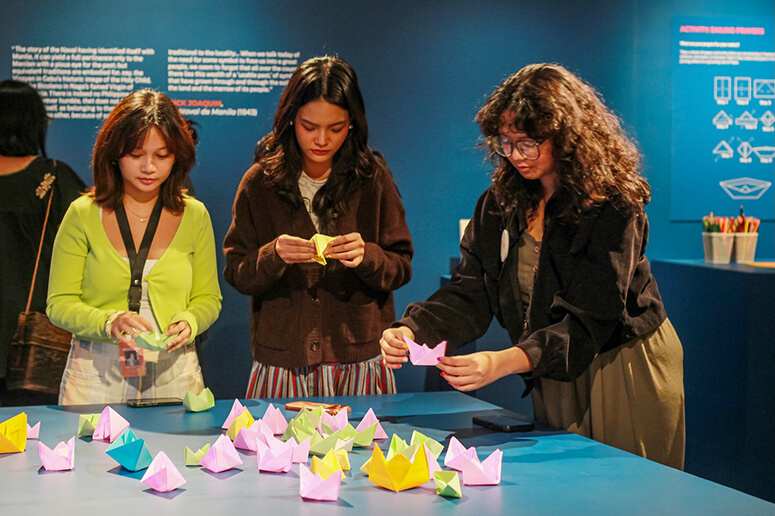
While “Turning Tides” does not position itself as a deep historical dive, it was developed through extensive research, in collaboration with national cultural institutions, religious organizations and lenders across the country, bringing together historical artifacts, paintings, devotional objects, multimedia installations, and interactive experiences.

Attending the talk was a group of Dominican Student Brothers from St. Domingo Parish, led by Master of Students Father Felix de los Reyes Jr., OP, who joined the tour later.
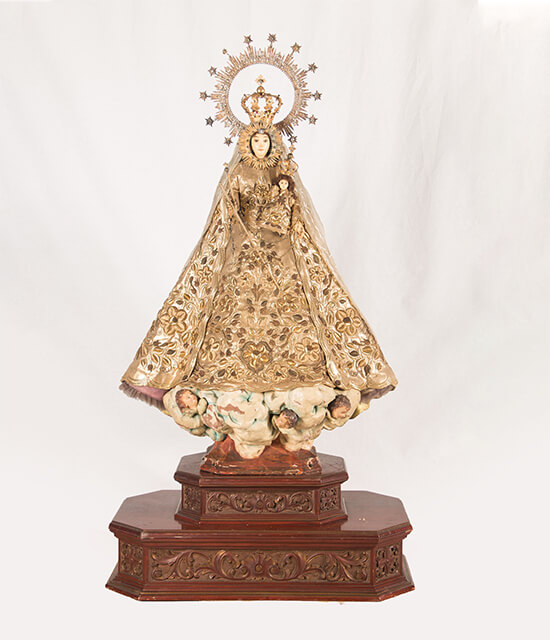
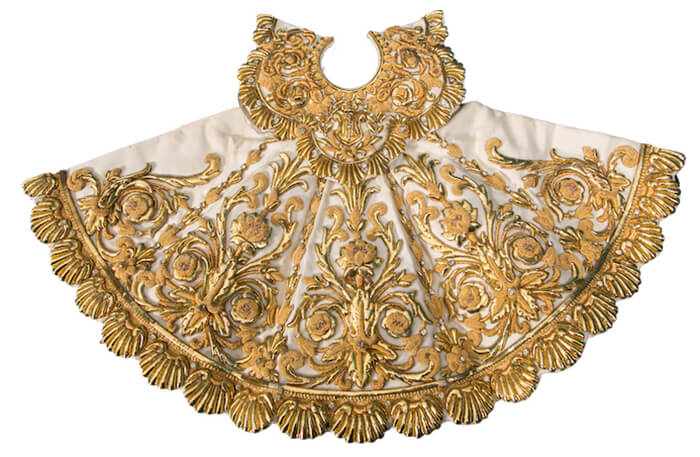
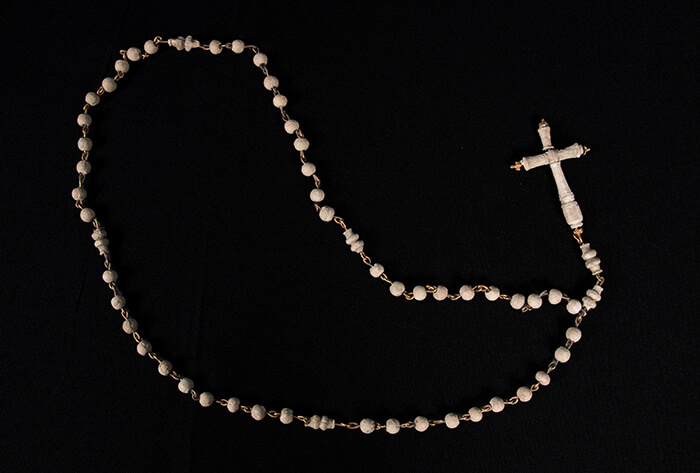
The narrative helps bring to life the objects on display. In the Battles of La Naval de Manila (1646), the Spanish colonists—with enlisted indio help—fought off the Dutch invaders, trying to carve out a slice of Southeast Asia for its trading company. No dice: the Dutch sailors lost to the Spanish-and-Filipino armada, and some said a holy “intercession” took place: the Virgin of the Holy Rosary helped repel the Dutch ships, something the Spanish and newly Christened Filipinos could get behind. Renderings of the Virgin’s appearance are on display, along with “The Japona,” a 17th-century image that reflects the mission of the order in Asia; an ivory and gold rosary recovered from the San Diego shipwreck which offers a rare glimpse into devotional life at sea; and the Manto Patrimonial, the ceremonial vestment worn by Our Lady of La Naval and the Child Jesus during the Quincentennial Celebration of the Arrival of Christianity in the Philippines designed by Rafael del Casal and executed by the Bordados de Manila.
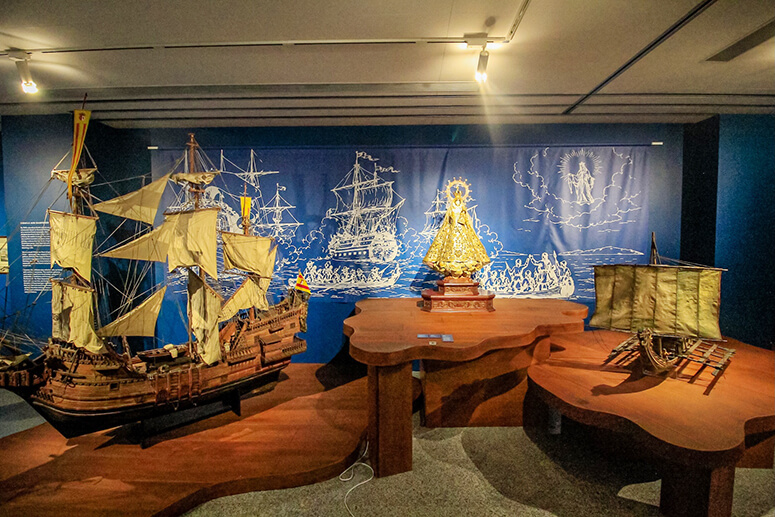
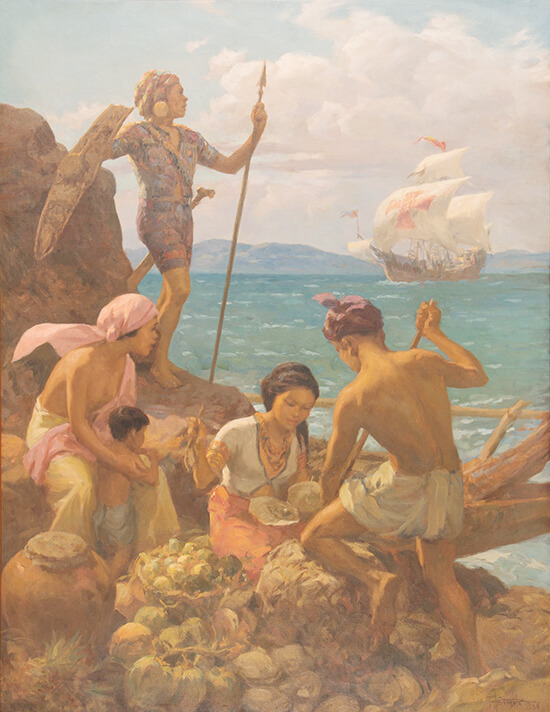
We know about Magellan’s encounters with Lapulapu, but a different frame of vision emerges here: something more Filipino-centric. Works of art—including two paintings by Fernando Amorsolo, “The First Baptism” and “The Traders”—bring to life the encounters and exchanges that shaped the early colonial period. Walking through the exhibit—entering the Battles of La Naval de Manila to the left, or the Battle of Mactan to the right—you encounter Ayala Museum’s scale models of a Spanish galleon, caravel, and precolonial Philippine vessels, illustrating the maritime technologies that connected the archipelago to wider networks of commerce, exploration, and cultural exchange.
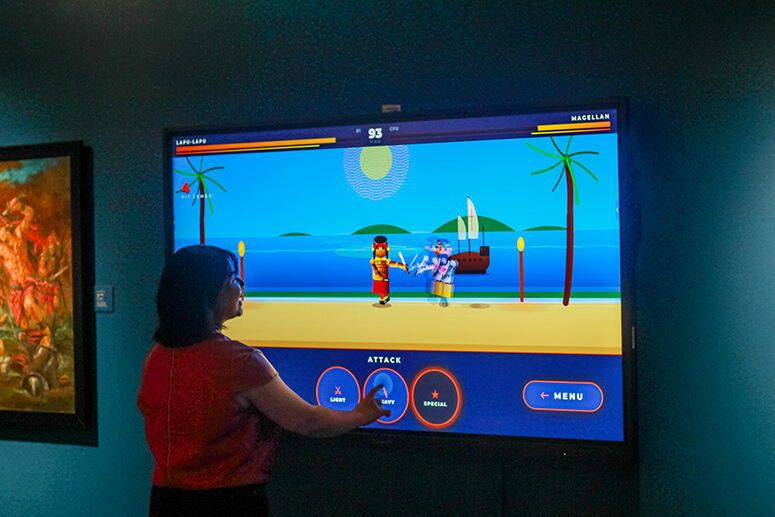
Other encounters: a video game lets you run different plays of the Battle of Mactan, calculating odds and uses of military (spoiler, though: Lapulapu always wins). There’s a section imagining what the Philippines would have been like under Dutch rule; and a name-search kiosk that traces early nomenclature in what became the Philippines, including original regions and meanings. For Ente, the participation of the Dominican Student Brothers was crucial: “The order of preachers was really at the heart of how devotion to the Holy Rosary started. And of course, it’s through their church that the La Naval image was commissioned. So they were more than generous in lending us some of the treasures in their collection.”
In her talk, Ente mentioned Nick Joaquin’s “usable past” as a way for new audiences to re-examine their own stories. “We value history, but how does that translate in the classroom in the way curricula are designed? We’re always fighting for history and culture to have more screen time in Philippine education, and I feel like the true value of history is really memory,” she says.
The exhibit tries to pick up such questions, offering an immersive, more intimate peek into the backstories.
“If you’re able to bridge that gap of history to ‘how I remember myself as a Filipino,’ or remembering our role in the world as Filipinos, then maybe that will be something that connects with more people than if it’s just a history lesson.”
Ayala Foundation senior director for Arts and Culture Jorell M. Legaspi adds: “‘Turning Tides’ presents the Philippines as an active crossroads of trade, diplomacy, religious faith and cultural exchange. It reflects Ayala Museum’s commitment to preserving Philippine heritage and making it accessible, relevant, and meaningful for our growing audiences.”
The exhibit, which launched July 16 at Ayala Museum, runs until Feb. 14, 2027, which coincides with the 65th anniversary of Ayala Foundation. There will be curator tours, lectures, family activities, and public programs to invite audiences to explore the stories behind the exhibition.
* * *
For exhibition schedules, public programs, and ticket information, visit Ayala Museum’s website or follow Ayala Museum on Facebook and Instagram.

WATCH: Is OPM still as good as it used to be? (Generations Ep. 20)
September 9, 2026
WATCH: LGBTQIA+ people with unlikely professions
June 28, 2026