

REVIEW: 'Sisa' is a powerful story of madness in a time of war
Jun Robles Lana's Sisa takes place in 1902, three years after Spain's infamous ceding control of the Philippines (along with Guam and Puerto Rico) to the United States after losing the Spanish-American War. For a people who'd been promised independence from colonial rule before the treaty, the betrayal led Filipinos to rise against the Americans in one of our nation’s bloodiest chapters.
Sisa opens with Hilda Koronel's (Insiang, The Mistress) titular madwoman approaching the outer perimeter of a concentration camp, where Filipino survivors of the ongoing genocide live in brutal conditions under the watch of American soldiers. Forced to live in the compound, Sisa assimilates into life with the local women, performing menial tasks for the colonizers. As the days progress, we learn that Sisa's madness belies a keen analytical mind, constantly observing the camp's goings-on to fulfill an unknown agenda. By the time we reach the film's climax, nobody in the camp will ever forget the name of Sisa.
While far from the battlefields of Heneral Luna or Sakay, the conflicts depicted here are no less brutal or provocative—from Eugene Domingo as a wife robbed of her husband and sons, to Jennica Garcia’s Leonor carrying on an illicit relationship with the garrison commander, experiencing the war through the traditionally marginalized female lens gives it a perspective rarely seen in the genre.
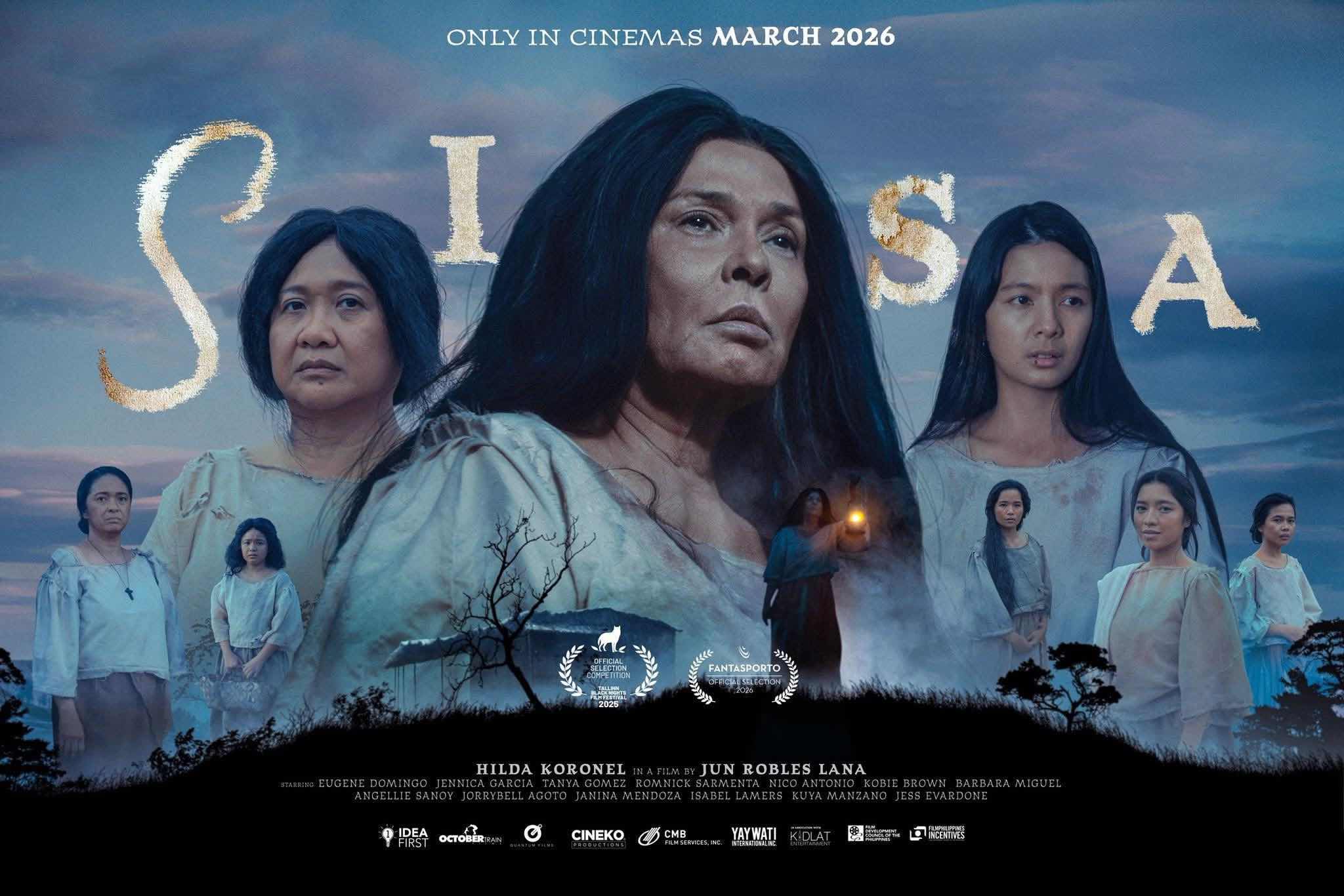
Koronel is the main draw here, and with good reason—despite this being her first onscreen role in thirteen years, you wouldn’t know it from her performance. With Sisa remaining purposefully mute for the bulk of the film, Koronel’s legendary ability to convey character through body language and facial expressions is on full display. Introduced as a near-silent amnesiac, the moments where Sisa does use her voice are made all the more impactful.
Domingo reunites with her And the Breadwinner Is… director Lana to deliver a solid turn as a broken matriarch, her overwhelming distrust of the occupying forces being justified in the worst possible way. Garcia's character is decidedly more complex, fraternizing with the enemy in every sense, blinded to the Americans’ atrocities by a woeful combination of self-delusion and naiveté.

While the script takes a definitive stance on the morality (or lack thereof) of the events taking place, it largely avoids placing judgments on its characters for their actions. Given that few, if any, of the people watching would have found themselves in similar circumstances, it’s difficult to say what one would do in any of these characters’ places. It’s a question that Lana’s screenplay asks of the audience, while leaving the answer entirely up to interpretation.
At the media conference immediately after the preview screening, Lana shared that his intention wasn’t to present history as it was, but to place his narrative in a representation of the time period—an experience heightened by non-diegetic sound design, costume choices, color grading, and computer-rendered skies that enhance the shooting location’s landscapes. This may not be an entirely accurate historical recreation, but the questions posed by the story are endlessly relevant.

By the time we reach the bravado final act, the tension reaches an almost breathless intensity, anchored by everything we’ve learned about these characters and their respective situations. If one had to nitpick, it would have been nice to see some of the scenarios discussed, though that's more a question of resources than anything else; what we’re given here is rendered no less compelling by their absence.
Overall, the film is a fascinatingly raw take on one of the darkest periods of Philippine history, told from an angle that demands conversation. That the Filipinos of the time were subjugated goes without saying, the fact that divisions and marginalization existed and continue to exist gives the film its core. It’s an intriguing dilemma, and one well worth exploring further.
Long live the revolution.
Sisa opens in Philippine cinemas on March 4. Watch the trailer below.

WATCH: Save for retirement or enjoy life now? (Generations Ep. 21)
September 16, 2026