

What collectors (hoarders?) inherently know
I recently found myself standing in front of a bookshelf trying to determine whether I am a collector or whether I simply have a purchasing problem “cleverly” disguised as a personality.
Collectors, after all, sound sophisticated, while hoarders sound like they are one episode away from intervention. The distinction feels important. Most of us collect something: books, shoes, perfume, vinyl records, teacups, art, handbags, kitchen gadgets—things we were absolutely convinced would transform us into the sort of people who make sourdough from scratch on a Tuesday. And there is a peculiar comfort in it. There is comfort in knowing these books are there even if I have not read them all. The comfort in knowing there is a perfume for every mood, weather condition, and minor emotional crisis. Comfort in opening a cupboard and finding abundance rather than absence. Which raises an uncomfortable question.

Why do we need all this stuff in the first place? Perhaps because collectors understand something that minimalists occasionally pretend does not exist: objects are rarely just objects. For me, a book is never only paper and ink. It is who I wish I was when I bought it, with the wholehearted intention of reading it because I am a sucker for learning, or it reminds me of who recommended it, where we found it, and the person we imagine ourselves becoming when we finally read it.
The same is true of almost every collection. Collections are autobiographies written in objects. They tell the story of our interests, our obsessions, our travels, our ambitions, and perhaps our delusions. The trouble begins when the collection starts serving us less, and we begin serving it. I think that the difference is that a collector knows exactly what they own: it is curated, categorized, and indexed, almost. Whereas, a hoarder is owned by their “collection”; they live around the collection rather than with it.
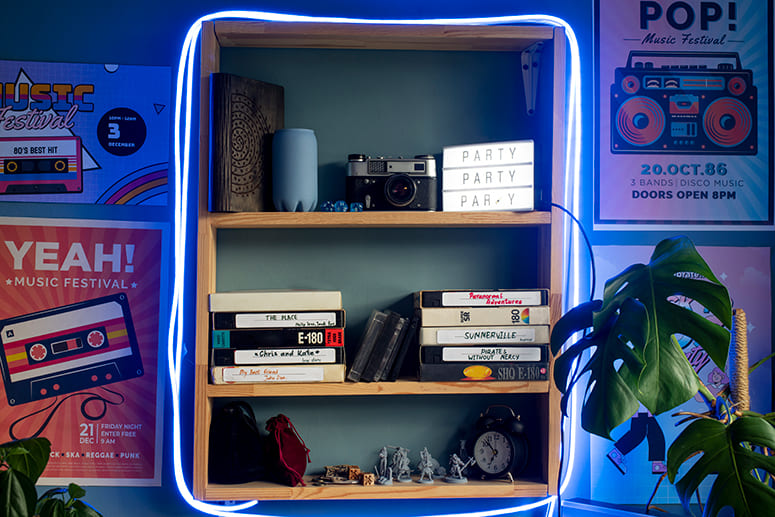
The difference is not quantity. I have met people with libraries that would rival small universities who could tell you exactly why every volume was there.
I have also seen many drawers filled with things nobody remembered buying. One is intentional and has meaning, while the other is accumulation, clutter and just mass.
CONTINUE READING BELOW

Of course, there is another reason people collect that has very little to do with the objects themselves, and that is because collections represent possibility.
Collections are autobiographies written in objects. Collectors do not merely collect objects. They collect potential.
If you were to inspect my bookshelves with a particularly judgmental eye, you would quickly discover that I own more books than I could reasonably finish in the near future. This is not a source of concern to me. It is, admittedly, a source of concern to my husband, and occasionally the structural integrity of my shelves, perhaps even the house, but every unread book represents a possibility. The possibility that one day I will finally tackle that Russian novel everyone insists is life-changing. The possibility that I will develop a deeper understanding of history, philosophy, mythology, art, business, gardening, or whatever fascination happened to capture my attention on a Tuesday afternoon. Or is it the hope?
The same applies to almost every collection. A collection is often a catalogue of the potential of future selves. The yarn collector imagines future projects. The gardener imagines future blooms. The perfume enthusiast imagines future occasions. The cook imagines future dinners. The reader imagines future conversations.
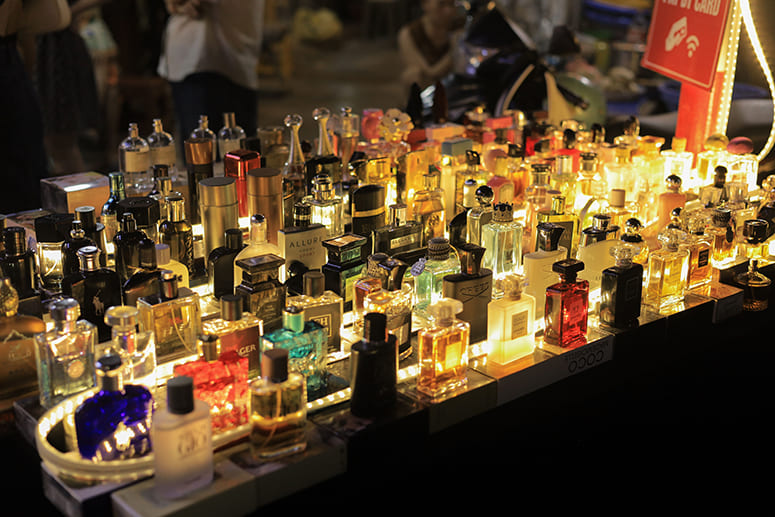
Collectors do not merely collect objects. They collect potential. And perhaps that is why parting with certain things can feel unexpectedly emotional.
We are not always giving away the object itself. Sometimes, we are saying goodbye to a version of ourselves: that bread-making machine that promised to bolster up our homemade sourdough era; the art supplies purchased during a brief but passionate conviction that we were destined to become watercolorists; the language textbooks that suggested fluency in Italian was just around the corner.
Sometimes the object survives long after the dream has quietly packed its bags, and perhaps that is perfectly normal, because if collecting teaches us about aspiration, editing teaches us about acceptance and accountability, both jagged pills to swallow. There is a peculiar maturity in being able to look at an object and say, “Thank you for the possibility, but I no longer need the promise.” That is not failure, but rather, it is clarity.
The older I get, the more I realize that the best collections are not necessarily the largest or the most expensive. They are the ones that still feel alive. The books that continue to be read. The art that still catches your eye. The perfume that still makes you smile when you reach for it. The collection evolves because we do. Which brings us back to the greatest skill any collector eventually develops. Not acquiring, but editing.
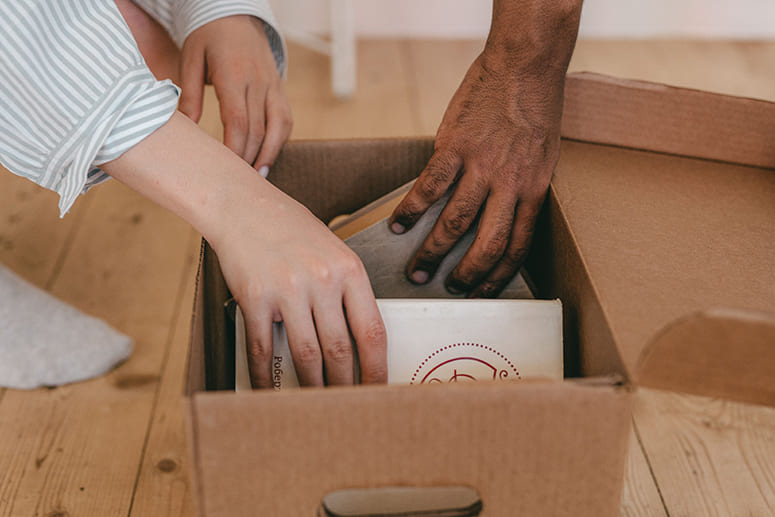
Because let’s face it, space is always the enemy, isn't it? Knowing when a book no longer belongs on the shelf, or when a piece of clothing no longer reflects the life you live. When a hobby has quietly run its course, or when keeping something is less about joy and more about habit disguised as sentimentality.
Oddly enough, the best collections often become smaller and more refined with age. Not because collectors stop loving beautiful things, but because they become increasingly selective about what deserves shelf space, closet space, and perhaps most importantly, mental space.
What fascinates me about collectors is that they are often misunderstood. To the untrained eye, they simply appear to be people with too much stuff: books spilling off shelves, perfume bottles multiplying in cabinets, records, teacups, watches, handbags, ribbons, stamps, art, fountain pens, whiskey, vintage cameras, stickers, fabric, and enough assorted treasures to make moving house a truly dreadful proposition. But spend enough time around collectors, and you begin to realize they know something the rest of us occasionally forget.
Not everything valuable is necessarily useful, but they all mean something. A rare book will not improve your Wi-Fi signal, and a beautiful painting cannot answer emails. An antique teacup contributes very little to modern productivity, apart from serving actual tea or coffee to whoever needs it. Yet somehow, we recognize their value anyway.
Collectors understand that usefulness is only one measure of worth, and the most boring one at that. Beauty matters. History matters. Craftsmanship matters. Memory matters.
Perhaps that is why collectors often become accidental historians. While the rest of the world rushes toward whatever is newest, fastest, or trending this week, collectors are quietly preserving what might otherwise disappear.
Old books, handmade textiles, family heirlooms, forgotten artists, discontinued fragrances, small pieces of history that somehow survived long enough to find their way into someone's careful hands.
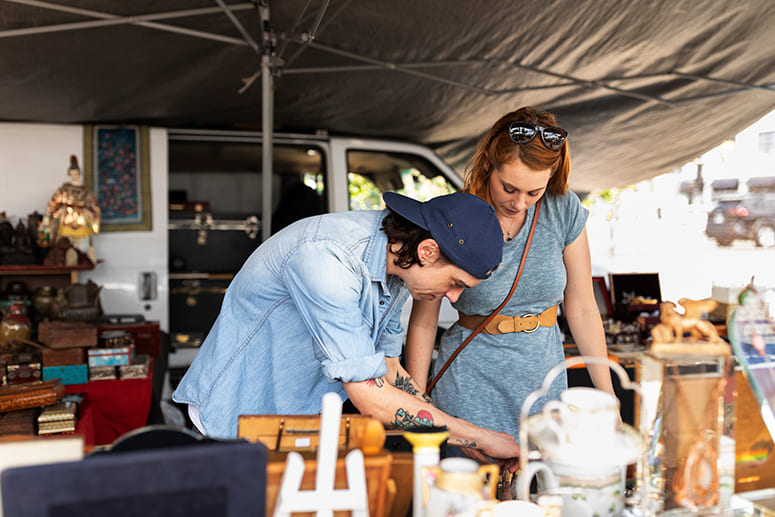
Of course, if you ask a collector what they enjoy most, many will confess something slightly inconvenient. It is the hunt that is often more exciting than the ownership.
That search and finding the elusive first edition, for example, or discovering the perfect bottle tucked away in a dusty shop, or stumbling upon the missing piece of a collection when you had almost given up looking. All collectors understand a truth that extends far beyond shopping. Anticipation often lasts longer than satisfaction. The destination matters, of course. But very often it is the searching, learning, discovering, and dreaming that brings the greatest joy.
Perhaps that is another reason collections tell us so much about ourselves. A collection is rarely just a pile of objects, but evidence of attention. And for me, this shows where, and how, curiosity lingered. What captured our imagination and what we found beautiful enough, interesting enough, or meaningful enough to bring home and make room for. And that, I suspect, is where the distinction between collecting and hoarding truly begins.
The difference is truly not quantity, but quality. It is what a real collector knows: what means something to me and what I want to share with the world. Perhaps that is the real wisdom collectors eventually arrive at.
Not that everything is worth owning, but that everything must earn its place. After all, space is finite. Shelf space. Closet space. Storage space. More importantly, attention space. Every object we bring into our lives occupies a small corner of our time and energy.
The older I get, the more I realize that collecting is not really about acquiring at all. It is about choosing. Choosing what deserves to stay. Choosing what continues to bring beauty, curiosity, joy, or meaning. In many ways, life itself is simply a larger version of the same exercise. We collect possessions, certainly, but we also collect commitments, friendships, responsibilities, ambitions, and dreams.
Eventually, we discover that we cannot keep everything. The art lies in knowing what deserves a place and what can be lovingly let go.
Maybe that is what collectors inherently know. The value of something is not often measured by its price, its rarity, or even its usefulness. It is measured by whether it continues to matter. The books we reread. The objects we treasure. The stories we preserve. The people we make room for.
In the end, a collection is simply a record of what we loved enough to keep, and there is for sure, a story behind it once you decide to pull up a chair and hang out.

WATCH: Discovering Vietnam in three days
June 9, 2026
WATCH: Can you still trust someone who betrayed you? (Generations Ep. 22)
September 23, 2026