

Porvenir’s flame burns bright with ‘El Fuego del Alma’
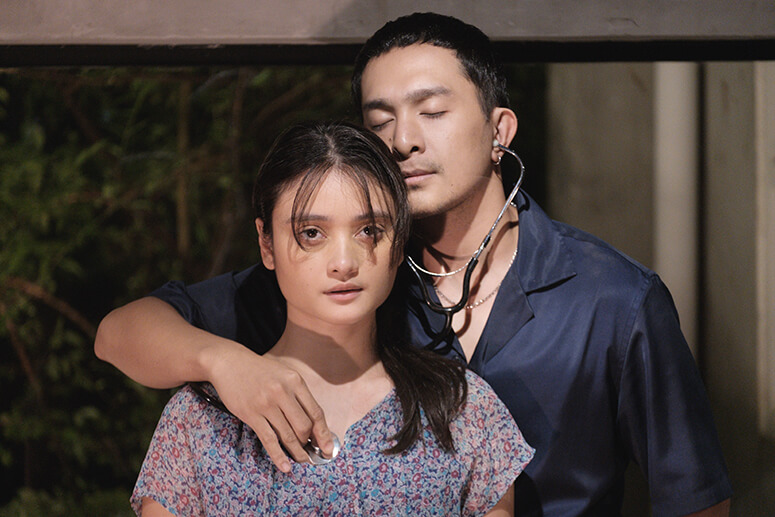
There’s a new theater company in town, and they bring alternative theater experiences. On a rainy Saturday morning, I met Porvenir at Sine Pop, an ancestral house turned into a creative hub. For weekends from July to August, Sine Pop became a stage for the production of El Fuego del Alma, a Filipino adaptation of Tennessee Williams’ Summer and Smoke.
Porvenir is a troupe of Dulaang UP alumni guided by their “angel”—their mentor and National Artist for Theater, the late Tony Mabesa. (The company also considers playwright Floy Quintos, actress Sue Prado, and actor Joel Garcia its “angels.”) It is co-founded by Mark Mirando, the director of El Fuego del Alma.
Mirando described themselves as part of a “misplaced generation,” as Mabesa’s passing left DUP without its usual platform and a diminished presence. It is important for Porvenir, he added, to carry on the teachings of the National Artist and the old guard while carving their own legacy.
Online reviews of El Fuego touch on the same points: the stage allowed for a more intimate experience, and no two shows are the same. These hooks made the show organically spread through word-of-mouth, selling out every 50-seat date amidst a very competitive theater scene.

“Kailangang handa kang matalo,” Mirando said enthusiastically about producing Porvenir’s stagings.
CONTINUE READING BELOW

In our interview, Mirando was joined by stage manager Dinah Briones, music director Tristan Bite, associate director and actress Nour Hooshmand, and actors Sandino Martin and Vincent Pajara.
Sine Pop as the spark that lit The Flame
For years, Mabesa had been egging on Mirando about doing Summer and Smoke, whose text Mirando first encountered in 2014. Last May, he mounted a stage reading of its Filipino adaptation in Sine Pop after a chance visit left him enamored with the place. It is the company’s second of only two stage readings so far. The 75-minute adaptation by Eljay Castro Deldoc is set in a conservative provincial setting (an analog of Mirando's hometown, Bicol) in 1989. Sine Pop and the stage readings’ success pushed Mirando to risk it all and finally do a full production. It is Porvenir’s first ever.
Sine Pop’s layout fits the material perfectly. Big windows guide actors’ movements and frame characters’ interiority. Bamboo stalks in the garden became integral to the story's setting. The upper floor holds unseen scenes told through diegetic sounds. The cozy lobby serves as both the main stage and audience auditorium.
Stage manager Dinah Briones said little had to be done to dress the place. “Dahil may character na ‘yung venue, dinagdagan lang namin para maayon sa script.” Associate director Nour Hooshmand added, “Naging character din siya ng play.”
While the stage readings used LED screens and lapel mics, the collective did without them in the full production. The venue’s acoustics allowed their natural voice to be heard. Music director Tristan Bite conjured up the aural world. “Umabot siya sa point na sobrang may freedom kami to explore. Hindi lang ako ’to, this is the accumulated work of everybody,” he said.
Beside the audience resides the “orchestra”—a row of instrument players giving the play its soul. Indigenous instruments were sourced from castmate Opaline Santos, and the signature bandurria from castmate Dolly Dolot. Experimentation is the name of the game. A production intern uses an indigenous instrument to make the sound of flowing water. At some point in the play, you’ll hear the convincing sound of thunder. It’s actually the crackle of sheet metal behind the audience.
Upon entering the venue, the audience easily gets acquainted with the world. “Sa house music pa lang, pumapasok ka na sa certain frequency. Intentional ‘yun lahat,” said Hooshmand. “Sobrang crucial ‘yung pre-show na parang binibitawan mo muna ‘yung pinanggalingan mo.”
“Ito rin ‘yung beauty ng venue na ito,” added Briones. “Kasi very intimate siya. Nagiging part ka ng mundo as an audience.”
The flame that never dances the same
El Fuego del Alma is a story about foils and doppelgangers. It is this dramatic reason why Mirando opted for the cast to play multiple roles, explaining, “Give ko ‘yun sa play na makita siya sa iba’t ibang perspective, iba’t ibang vessel.”
No two shows are indeed the same, including the 4 p.m. and 7 p.m shows. I asked the cast how they juggled multiple characters in a day. “‘Di naman siya gano’n kahirap. Pupuntahan mo lang ‘yung disposition ng bawat character na nasa ibang place,” admitted Vincent Pajara.
The cast also has physical rituals, like changing their underwear and shoes. “Iba ‘yung sapatos ni Juanito, iba ‘yung sapatos ni Archie,” shared Sandino Martin. “Para lang din na literal na I’m stepping in someone else’s shoes.”
As for the rotating cast permutations, it’s all about trust. “Tatanggapin mo lang, eh. Kaya mahalaga ‘yung bonded na kayo outside the production. Kasi naniniwala akong you can’t fake chemistry,” explained Martin. “Kailangan mo ring tanggapin na you can’t replicate a show. It’s just forever changing and becoming.” For Pajara, it’s observing his castmates backstage and internalizing attraction, yet letting his feelings go onstage for spontaneity.
“Napapansin ko rin sa aming live instruments, oo pare-parehas ‘yung timestamp kung kailan kami papasok, but the way we play is always different,” added Bite. “Nakaangkla talaga siya do’n sa mga taong nasa moment na ‘yon.”
When I watched the show, I had front-row seats in a five-row house. I was just a step away from the actors, and I could see all their emotions very clearly. Every tear, snot, and fleck of spit registered. I asked them if they are conscious of the audience when they perform, without the usual theater spotlight dimming us from them.
“May paborito akong nangyayari sa akin kapag umaarte ako na alam kong nasa flow na ako. Nagbu-blur lahat,” Sandino shared. “That’s the addictive part of acting, when everything blurs, and you’re just in this make-believe world.”
Pajara added, “Hindi ko sila tinitingnan sa mata. Ini-imagine ko lang sila na voyeurs.”
“Ang lapag sa akin ng audience, mga anino sila,” Hooshmand divulged. “As much as possible, bilang Alma, hindi ko sila maharap, hindi ko kayang tumingin.”
The fire that lights the way
Porvenir is a passion project as much as it is a business venture. There were no auditions held. The people I talked to are close-knit friends, forged by the art of theater, who quickly answered the call of the stage.
Like Pajara, who was itching to act again after being burnt out from his day job. “Nagda-drive ako no’n tapos biglang tumawag si Mark sa akin. Sabi, ‘Paj, may gagawin akong play.’ Tapos sabi ko, ‘Sakto! Gusto kong umarte agad!’”
And Sandino, whose competition is with himself. “I haven’t done anything like this before, in a found space. Sobrang experimental niya. Lagi akong nasa theater. It’s a risk because Sine Pop is not a theater venue, and yet gusto ko siyang gawin.”
And Hooshmand, a fast-rising star in cinema, who would’ve found it hard to transition back to theater from her multiple film roles in such a small timeframe. “Primarily, I wouldn’t be into it if hindi Porvenir ‘yung kasama ko. It’s the love and support. May mga pagpapatawad on their end, negotiations. Tinulungan nila akong lahat na makalapag,” she said. “Mahal ko magpelikula, pero sa teatro ako nagiging bata. Nakakapaglaro ‘yung inner child ko.”
For Mirando, found spaces aren’t new. It is the soul of theater after all—to make do with what you have. Community is what’s important. Porvenir has plans they aren’t ready to tell the public yet, both for El Fuego del Alma and the company itself. Porvenir got its name from the revolution-era theater company founded by Andres Bonifacio, Macario Sakay, and Aurelio Tolentino. But as Mirando pointed out, it's also Spanish for “future.”
***
Porvenir announced an extension of El Fuego del Alma for September and October 2026. Follow Porvenir at @porvenirph for further details.

WATCH: LGBTQIA+ people with unlikely professions
June 28, 2026
WATCH: Is Philippine cinema still thriving? (Generations Ep. 19)
September 2, 2026