

'East of Eden': Tale as old as time
In the first few episodes of East of Eden, a limited series now streaming on Netflix, my viewing pleasure was almost stopped in its tracks by the raw evil in the main female character, Cathy Ames (Florence Pugh).
Mercifully, the series, based on John Steinbeck’s classic novel of the same title, isn’t all about the evil in Cathy, portrayed with alternating allure and depravity by Pugh. It also plumbs the depths of why she turned out to be who and what she was in a very compelling narrative.

Cathy is both alluring and amoral. She seems to be the best argument for the death penalty—and the best argument for finishing the series. Not that it isn’t without its merits. Like a good book, the series is hard to pause.
Cathy is one end of the spectrum of good and evil, and the other characters are either to the near or far right of her. If there is a Cathy, there are also other characters that are the best argument for sainthood.
East of Eden, created and written by Zoe Kazan—granddaughter of Elia Kazan, the director of the 1955 East of Eden movie starring James Dean—is a tale as old as time. It’s the timeless tale of good versus evil, of brother versus brother. It is a sweeping multi-generational saga set in California’s Salinas Valley where history—starting with Adam and Eve, Cain and Abel—repeats itself.
Timshel
CONTINUE READING BELOW

Are we mortals chained to our fate? Is our future predetermined by our past? Are some of us innately good, and some, inexplicably evil? Is it in the DNA we inherited from Adam and Eve, Cain and Abel?
The novel, as well as the series, without being preachy, frees us from the bondage of moral inheritance. One of the novel’s most powerful philosophical ideas is the freedom to choose who you become. The tale’s peg is the Hebrew word, Timshel, meaning “Thou mayest” or “Thou mayest rule.” The central word in East of Eden, Timshel, conveys the idea that human beings have the freedom to choose between good and evil. You have free will, and you are not predetermined by your DNA or your past.
Brother vs. Brother
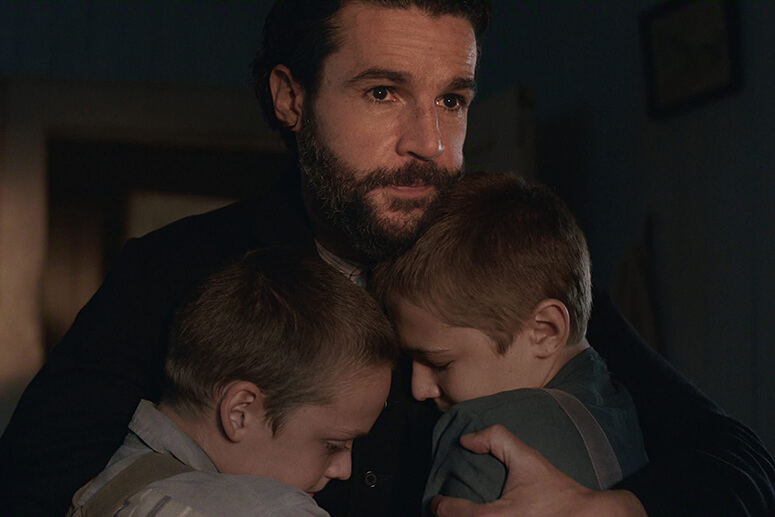
No, this isn’t the HGTV series starring Drew and Jonathan Scott. The series unravels the tales of brothers Adam (Christopher Abbott) and Charles Trask (Mike Faist). Adam is trying to build a peaceful life in the Salinas Valley with his beloved wife Cathy and their twin sons. Charles is Adam’s volatile and temperamental brother.
Cathy gives birth to twin boys Cal and Aron. Cal, like Charles, is troubled and struggling with the nature he may have inherited from one parent. Aron is the golden boy who does everything according to his morals, including serving his country through the Army.
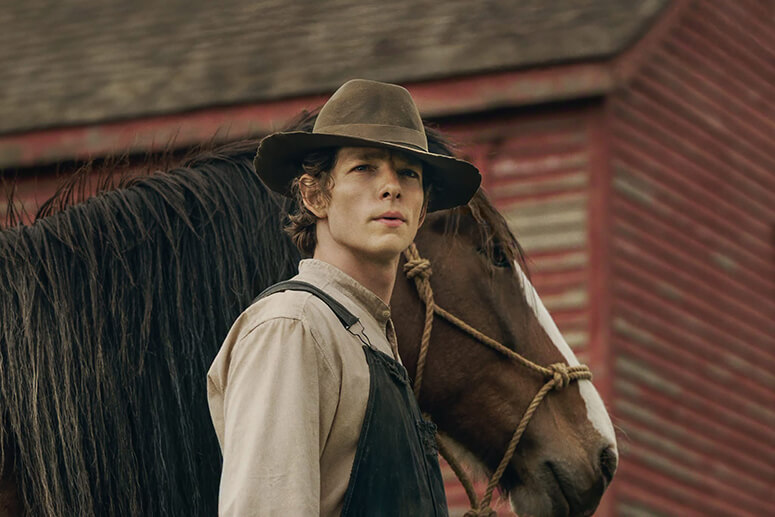
Again, there is a woman caught between the brothers Cal and Aron, just as their mother Cathy was caught in between their father and uncle. (I also see similarities between Legends of the Fall starring Brad Pitt and East of Eden.)
But fortunately for the younger Trasks, they have Lee (portrayed by Hoon Lee of Friends and Neighbors fame). A Chinese immigrant who is the fulcrum of the boys’ lives—he is their second parent, teacher, housekeeper, and conscience. He is their guardian angel on earth.
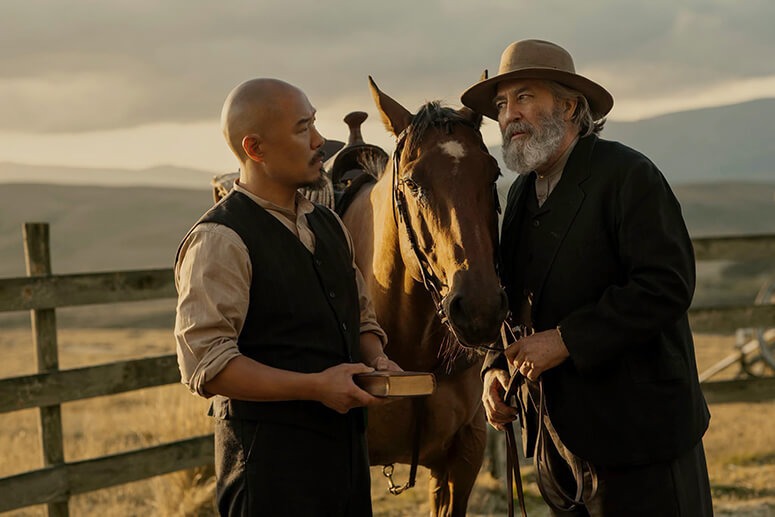
Deeply intelligent and philosophical, Lee unearths Timshel like a gem among words in his conversations with the Trasks’ family friend Samuel Hamilton. Lee’s character is so vivid, two episodes are devoted to his tale in turn-of-the-century San Francisco.
On why he is so devoted to the Trask boys—an explanation why nannies remain forever with their alagas: “Being needed is a hard bait for a lonely man.”
On why the truth shouldn’t be kept in a cage, even if the reason is to spare children from hurt: “There’s a beauty in the truth, even if it is a dreadful beauty.”
On being kind to the less fortunate: “When we have a surplus of blessings, we can afford to be generous.”
Sometimes, I felt like Lee was a priest hearing my confession.
Good vs. Evil
In the eternal fight between good and evil, who wins? How do we make good win? By believing not only that we have a choice, but by making others realize they have one, too, without sounding sanctimonious. Choosing to be kind is like choosing to be happy—it brings a wealth of dividends you did not seek, but find, nevertheless.
East of Eden, the biblical Eden and the modern Eden that is our world, is still paradise if we strive to make it so.

WATCH: Is OPM still as good as it used to be? (Generations Ep. 20)
September 9, 2026
WATCH: Good parent ka ba? (Generations Ep. 28)
November 4, 2026