

It’s never too late to take aim
They say age is just a number. Apparently, nobody told my back and shoulders.
Learning archery in my 40s has been an exercise in discovering new limits and testing what my body can handle. It’s not just about acquiring a new skill or proving that new beginnings have no age. Sometimes, it’s also about discovering just how many muscles you never knew you had —and how loudly they can complain.
At a stage in life when most people are expected to settle into familiar routines, I found myself drawn to something rather unexpected: archery. It wasn't a childhood dream, nor was it a sport I had spent years preparing for. It was more of an accidental discovery that eventually turned into a long-term relationship with a bow, a target and a pair of increasingly stiff shoulders.
Learning archery in my 40s, one sore shoulder and occasional plucked arrow at a time.
I actually used to be part of my university's rifle and pistol team in the late '90s, so I was looking for somewhere I could shoot again. Unfortunately, most shooting ranges in the city use live ammunition, which I was rather terrified of handling. I was accustomed to shooting pellets, after all. Yes, I know. The irony of being on a rifle and pistol team but being intimidated by actual bullets is not lost on me.
I eventually chanced upon a shooting range, only to discover that it used airsoft guns—essentially replicas of firearms—which weren't quite what I had in mind. The range also happened to have an archery section. Thinking that shooting and archery couldn't be all that different, I decided to give it a try.
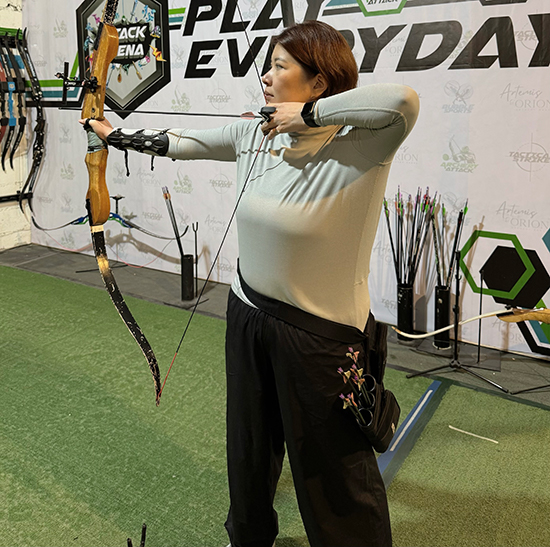
How wrong could I have been?
CONTINUE READING BELOW

As it turns out, the two sports may share some similarities in concentration, posture and precision, but archery is an entirely different physical undertaking. Pulling a bowstring and holding it at full draw requires considerable strength, particularly in the back and shoulders. These days, those happen to be my problem areas.
In the beginning, I would simply show up at the range, book a session and shoot for about 40 minutes to an hour. I had absolutely no idea about proper technique or form. I was using a barebow, essentially a bow without accessories such as sights and stabilizers. My approach was fairly straightforward: Pick up the bow, aim at the target, release the arrow and hope for a 10.
I was operating under the rather optimistic assumption that archery was simply a matter of pointing in the right direction and letting the arrow do its thing. What I didn't expect was how much it would help me beyond the sport itself. Having anxiety can sometimes make even an ordinary day feel like a mental marathon. But something about standing in front of a target, bow in hand, forces you to slow down. You cannot be busy worrying about a dozen other things when you need to concentrate on where you're aiming.
As I started visiting the range more frequently, I figured I might as well learn how to shoot properly. I signed up for lessons with coach Rhey and began learning recurve archery, the type of bow used in Olympic competition.
That was when the real work began.
It's been around five months since I started taking lessons, and I must say that learning something new when you're older is an entirely different experience. Unlike younger beginners, you become much more aware of your physical limitations. You also discover that muscle memory isn't necessarily as quick as you'd like it to be.
I may not have forgotten how to swim or ride a bicycle, but apparently, archery is another matter. Miss a week of practice, and sometimes it feels as though your body has forgotten everything it was supposed to do.
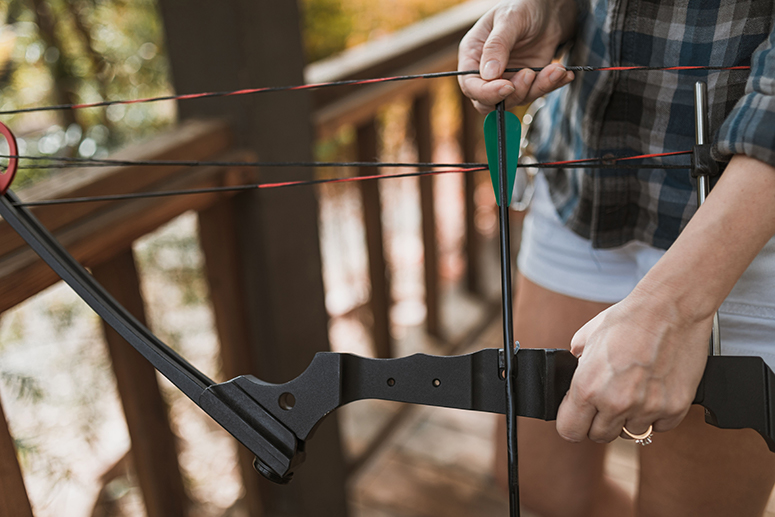
My coach recommended taking lessons twice a week to speed up my progress. Unfortunately, my schedule usually allows only one practice session a week. During practice, he would occasionally joke that I seemed to have forgotten everything from the previous lesson. I would spend the first part of the session trying to remember what I was supposed to be doing, only to start producing better shots toward the end.
He eventually described me as being like a diesel engine: slow to start but eventually getting going.
I suppose that's one way of putting it. I prefer to think of it as having a delayed performance mode.
The bow itself looks deceptively simple. You might think it's just a matter of pulling a string and releasing an arrow. In reality, mastering it requires an almost ridiculous amount of coordination. You have to work on your stance, breathing, posture, alignment, anchor point and release. Every little detail matters. Even the slightest movement can affect where your arrow lands.
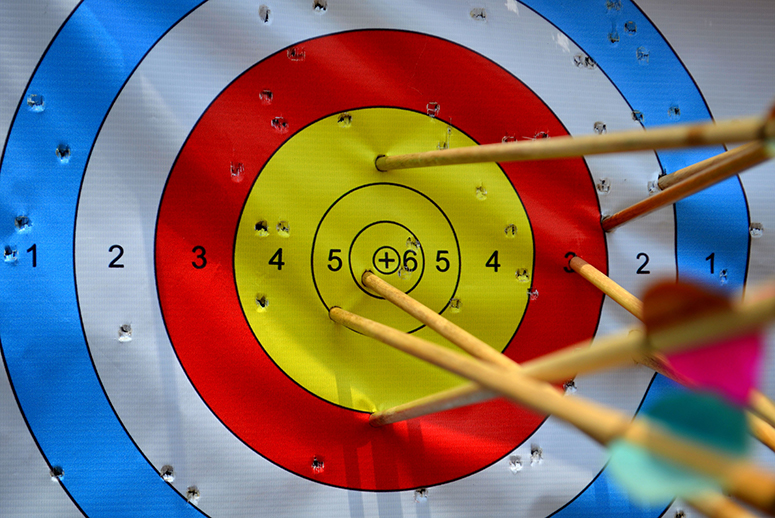
There are days when everything seems to fall into place, and then there are days when your arrows appear to have developed minds of their own. Your grouping can be impressive in one session and completely unrecognizable in the next. What began as curiosity soon turned into a personal challenge, one that has taught me more about patience, discipline and resilience than I initially expected. Learning later in life can be both frustrating and exhilarating. You celebrate the smallest improvements because you know exactly how much effort went into achieving them.
I've also learned that the competition isn't necessarily against another archer. Most of the time, it's against yourself—and occasionally against your own stubborn muscles.
In a world where everything seems to demand urgency, archery has given me a reason to slow down. You draw the bow, take aim, hold your position and release. For those few seconds, everything else disappears. The noise, distractions and endless mental to-do lists fade into the background.
Of course, that is assuming your shoulders aren't busy reminding you that you are no longer 20.
But there is something almost meditative about the process. Archery is as much an exercise in mindfulness as it is a test of physical ability. You learn to block out distractions, focus on the present and trust your movements. You cannot rush a good shot, no matter how impatient you are to see where the arrow lands.
I've also come to appreciate that strength isn't always about how much weight you can lift or how far you can push yourself. Sometimes, it is about holding your position, remaining composed under pressure and trusting the process, even when the results are not immediate.
There is something empowering about refusing to believe that certain experiences belong exclusively to the young. Growing older shouldn't mean becoming less curious or adventurous. If anything, it should give us more reasons to explore the things we haven't tried. Even in your 40s and beyond, you can still be a beginner. You can make mistakes, look completely clueless and discover interests that surprise even yourself.
After five months of lessons, I don't think I'm quite ready to join competitions. I'm still working on my form, improving my grouping and trying to achieve consistency with every shot. There is still plenty to learn. Perhaps the most valuable lesson archery has taught me is that it is never too late to find a new passion, challenge your physical and mental limits or discover an entirely different side of yourself.
You don't have to be young to start something new. You just need enough curiosity, a little courage and perhaps a regular masseuse on standby.

WATCH: Is Philippine cinema still thriving? (Generations Ep. 19)
September 2, 2026
WATCH: Is Gen Z too soft? (Generations Ep. 23)
September 30, 2026