

‘El Fuego Del Alma’ is a gothic classic made potent with a Filipino voice
It’s not often that a play is so powerful, with all the elements coming together so beautifully that you want to see it again. Such is the case with El Fuego del Alma, an Eljay Castro Deldoc translation of Tennessee Williams’ Summer and Smoke, presented by Porvenir, an independent theater collective that has totally reworked this 1948 classic, overwhelming theater critics and insiders with its intimate staging, psychologically driven storytelling, inventive use of found space and deeply moving performances. It’s no surprise that since its opening in July, shows have been selling out, with many watching it for the second time so they can experience both day and night versions as well as alternate casts before the run ends on Aug. 23.
Natural light casts different nuances on the mise en scene at the venue, Sine Pop, where expansive glass walls overlooking greenery bring sunshine and moonlight in, adding another dimension to the tableaus that have been lovingly crafted by director Mark Mirando and his creative team who ingeniously utilize the repurposed 1947 ancestral house. The architecture and light work together to create different atmospheres that make each performance feel distinct.
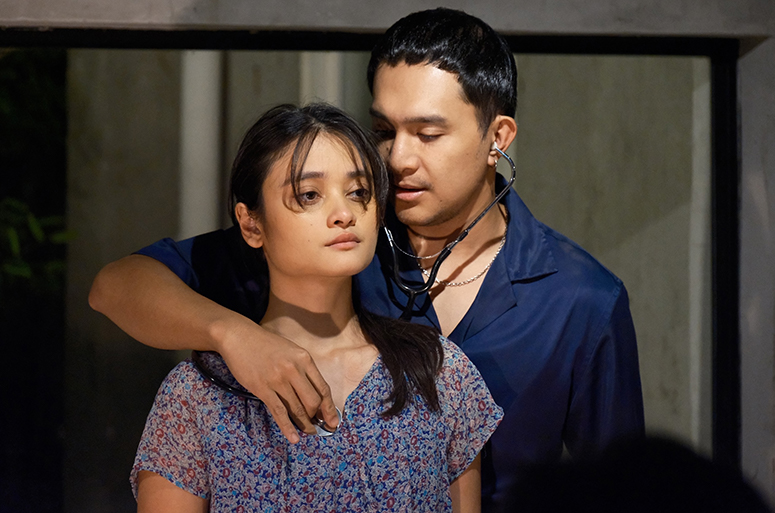
The ground floor serves as the theater and main stage while the bamboo forest, a side garden and hallway are satellite stages, and even the upper floor, although unseen, is the setting for some scenes where the actors are just heard together with footsteps on creaking floors, complemented by live string and percussion music. These “stages” are used one at a time or in tandem, resulting in innovative storytelling that pulls many surprises as the drama unfolds.
The house also works in consonance with the translation of Deldoc and the dramaturgy of Mirando which transpose William’s Mississippi Gothic to a Philippine provincial community shaped by Catholicism, family expectations and social propriety. This is not a literal translation but a cultural one that retains the emotional architecture while allowing it to speak naturally in a Filipino voice. It also distills the original into a brisk, gripping 90 minutes.
Of particular note is the use of a rotating cast where instead of merely alternating performers, Mirando has actors switch between psychologically opposing roles, highlighting the dualities running through the play—desire versus restraint, respectability versus freedom—and allowing audiences to discover different emotional emphases with each cast combination.
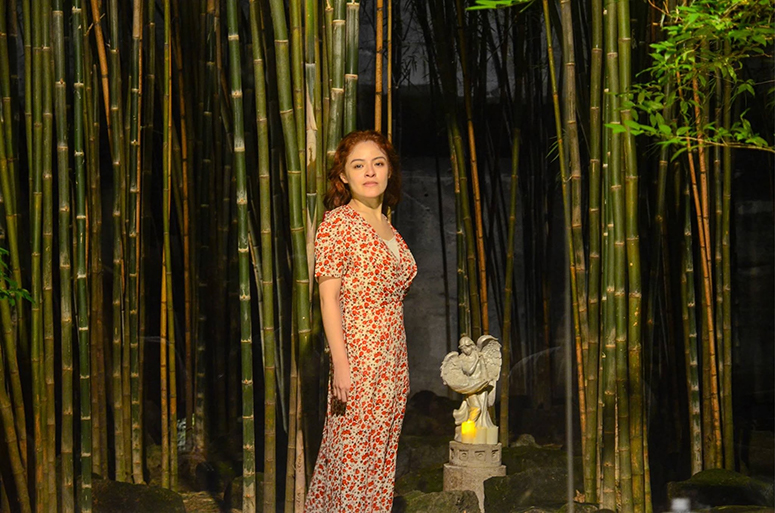

At the center is Alma (Nour Hooshmand alternating with Opaline Santos and Hariette Mozelle), the minister’s daughter who was taught to value purity, morality and self-sacrifice, thus suppressing her emotional and sexual desires for fear of sin and social judgement. She is drawn to the hot, hedonistic doctor (Vincent Pajara/Sandino Martin) who is the earthy, worldly antithesis to her spirituality. Rather than just playing her as repressed, Hooshmand is multifaceted—showing intelligence and moral conviction without being emotionally cold and bringing to light her inner conflict through subtle gestures that allow vulnerability to emerge gradually, making Alma’s collapse all the more affecting. Pajara plays Juanito with as much complexity—a Lothario’s confidence but with moments of insecurity, a sensuality with genuine affection that makes him totally irresistible to Alma despite her lofty ideals.
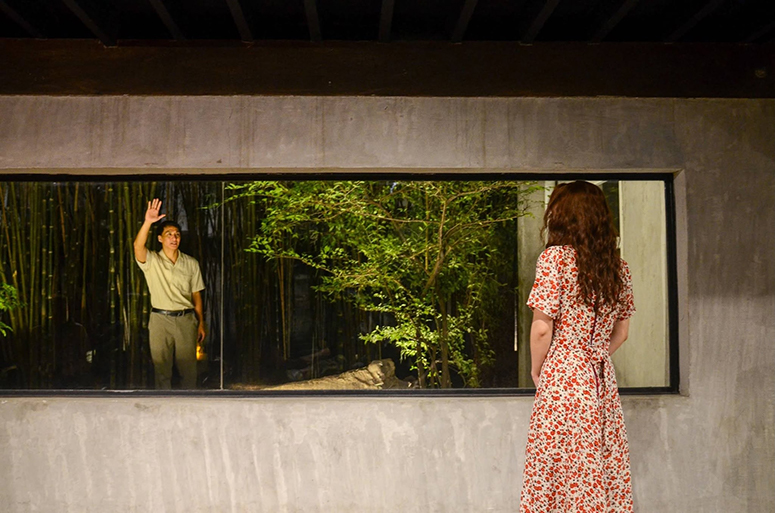
Hariette Mozelle’s Rosa (alternating with Opaline Santos), the daughter of the saklaan gambling den owner and the temptress to Juanito, has a self-assured seductiveness but reveals an unexpected depth as her inner thoughts and motivations come to fore, challenging society’s assumptions of morality and respectability.
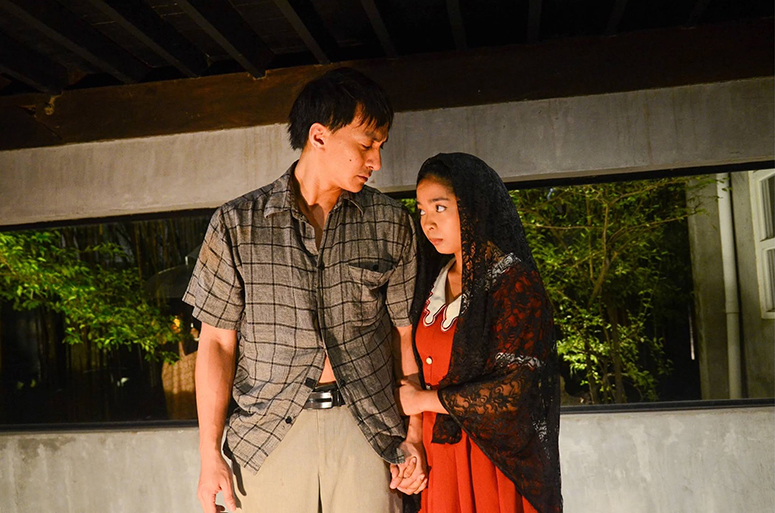
To create this world of family structures, religious expectations and social pressures, the supporting ensemble is just as crucial. As Mrs. Ortega, Alma’s mother grappling with mental illness, Sheryll Ceasico (alternating with Madeleine Nicolas) essays a childlike innocence that is touching and unsettling. Rolando Inocencio (alternating with JP Lopez), who plays both Juanito’s father, Dok Yago, and Alma’s father, Ministro Ortega, gives distinct portrayals where the former is a man of science confident in the physical world and the latter is deeply religious and morally disciplined—two patriarchs that represent the ideological conflict between body and soul. Janna Cortes as Nelia (alternating with Ingrid Joyce), who pines for Juanito, essays a convincing naivete that introduces hope and tenderness amidst the psychological tension, serving as a mirror reflecting what Alma may once have been and what she could no longer become.
It’s like a lost paradise, epitomized by the idyllic gardens, a time when we were one with nature before colonization and the imposition of Catholic mores separated us from our true selves. Ultimately, it’s tragic not simply because Alma and Juanito fail to love one another but that they fail to become their authentic selves when they still had the chance. It shifts the focus from romantic melodrama to psychological and existential tragedy, asking us to reflect on identities that we perform for society.
* * *
El Fuego Del Alma will have its final performances on Aug. 21 to 23 at Sine Pop. Tickets at @ticket2me. Follow @porvenir.
