

REVIEW: 'Gabriela: The Musical' explores conflict with oneself and the indigenous roots that heal it
Before the curtains rose inside Arete's Hyundai Hall at the Ateneo de Manila University for Gabriela: The Musical, a story was already unfolding in the aisles. Guests arrived draped in neo-indigenous weaves, answering the evening’s dress code.
Right behind me sat National Artist for Film Kidlat Tahimik. Although the air conditioning was freezing, he watched the show in his bahag with total ease. When performers also stepped onstage wearing the bahag in Metro Manila, my breath caught. Having lived in Baguio, I grew accustomed to seeing it as part of ordinary life in the Cordilleras. Seeing it brought proudly into the spotlight of a Manila stage felt revolutionary.
Throughout the show, I experienced the drama through two lenses: the action onstage and Kidlat’s unfiltered reactions behind me. When Gabriela finally embraced her roots, Kidlat broke into vigorous applause—a nod from an artist who has spent his lifetime defending indigenous identity.
After the curtain call, I caught up with him at a nearby restaurant and asked what he thought of the play. Expecting him to remark on the script or the showcase of weaves, I listened as he paused and answered: "Conflict with oneself."
That single observation unlocked the musical for me.
CONTINUE READING BELOW

Looking back at Pat Valera’s script, a quiet civil war plays out inside Gabriela in every scene. She longed to leave Vigan, yet stayed for Diego. Her spirit yearned for the Itnegs, even as her roots remained tethered to the town that raised her. Even her faith split down the middle, caught between the Itnegs bowing to Kabunian and the townsfolk kneeling before Catholicism. Loved and scorned in the same breath, she carried many names. She lived in the paradox of possessing inherited wealth while feeling impoverished in spirit. Through these competing identities, a weave made by her mother kept her grounded.
That same tension between rootedness and reach shaped how the musical handled language. Some of the dialogue and lyricism leaned boldly into Ilocano. Curious about how the language landed, I asked my seatmate, who only speaks English and Tagalog, if she followed those scenes. She shared that the emotional weight of the delivery carried the meaning. While the Ilocano cadence onstage varied in fluency, the conviction behind every line ensured the message landed clearly. Still, my favorite moments came when words like ili (community or hometown), kailyan (kababayan or fellow townsfolk), and kadwa (companion or partner) were mentioned, as they carry a history and kinship that reach far beyond fluent speakers.
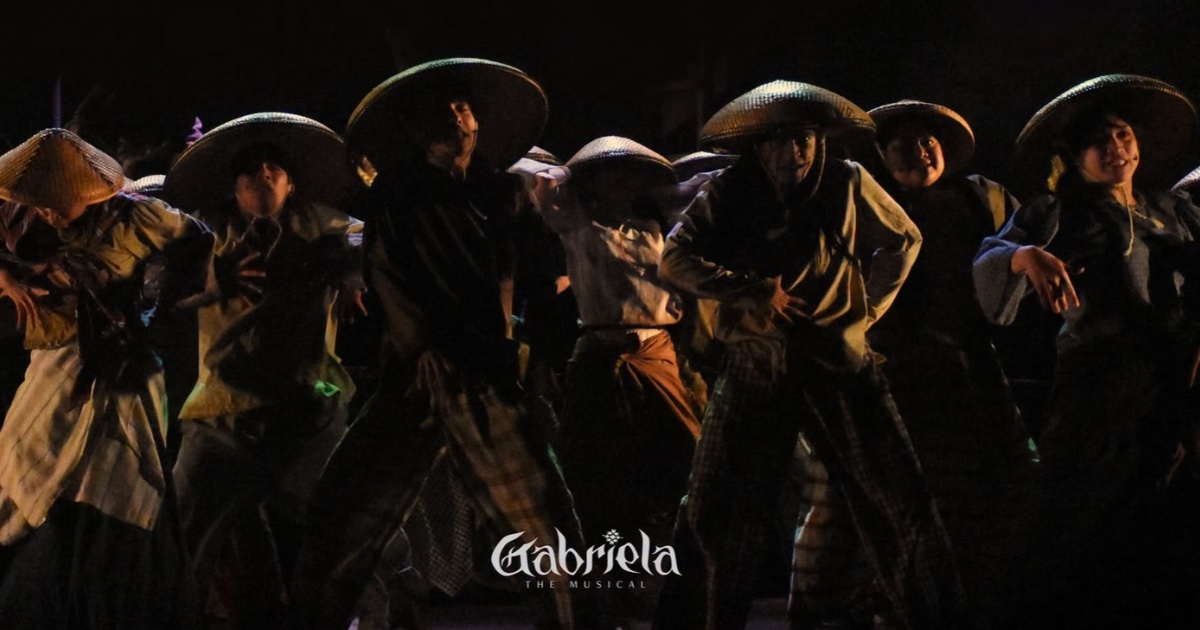
Beyond spoken words lies the deeper ache of voices silenced altogether. Through a key Itneg character, the narrative lays bare how indigenous peoples are systematically pushed to the margins of their own land.
.
This staging lands at a pivotal cultural moment. Across the Philippines today, indigenous communities are standing firm to protect their ancestral lands while opening our doors to foreign visitors. They are asserting their heritage and demanding genuine representation in decisions shaping their territories. Gabriela: The Musical holds up a mirror to the inner conflict we still carry as Filipinos today.
Pulling off that kind of reckoning requires high-skilled stagecraft. Gab Pangilinan’s stage presence and vocal grit give life to an empowered woman defying an era that confined women to the home. The creative direction by Mikko Angeles and score by Myke Salomon fuse contemporary musical theater with traditional Northern rhythms—including the haunting sound of the kalaleng, or traditional nose flute. Brilliant choice!
The staging and visual design match that intensity through painstaking cultural research. Every detail feels intentional, from the authentic traditional weaves and Vigan’s colonial capiz windows to the talahib, the tall grass of Abra and the Cordilleras. Most striking is how the production treats Gabriela’s iconic horse. Crafted from local materials and moved by performers, the horse serves as a living metaphor for her fighting spirit. Early on, palpable hesitation passes between rider and steed, a subtle foreshadowing of a resolve still wrestling with itself. Once she claims her purpose, the horse yields, carrying her forward in a triumphant sequence that drew the loudest applause of the night.
Walking out into the humid Manila night after more than two hours of stellar storytelling, I carried that image of the bahag under stage lights and the woven thread in Gabriela’s hands all the way home. I felt a rare sense of pride and validation as an empowered woman and as someone from the provinces.
Gabriela: The Musical stays with you because it confronts the conflict within oneself, showing that peace arrives when we claim and fight for every part of where we come from.
Disclaimer: PhilSTAR L!fe was given a free ticket to see Gabriela: The Musical, which will run until Dec. 6. Get your tickets here.

WATCH: Is OPM still as good as it used to be? (Generations Ep. 20)
September 9, 2026
WATCH: Can you still trust someone who betrayed you? (Generations Ep. 22)
September 23, 2026
WATCH: Is Gen Z too soft? (Generations Ep. 23)
September 30, 2026