

About a year ago, a group of communication arts students asked me to submit a photo of a “safe space,” from my own definition, for their undergrad thesis. I shared a photo of my two best friends from Catholic school. What would be safer, I thought then, than two girls I grew up with, who witnessed everything I did and didn’t become, and said, against all odds, “Let me keep loving you anyway”?
It’s not an original thought in any way; in fact, I feel affirmed that I’ve been seeing it everywhere. In Stupid Song, Olivia Rodrigo sings, “And if there is a God / He's the bond that's between us two.” In the third season of White Lotus, a character rants about having no belief system until she realizes that time and having spent so much of it with her two friends are what give her life meaning.
I see this a lot in the work of Australian singer-songwriter Julia Jacklin as well, especially in her fourth album “The Gem,” released late last September. God is a recurring motif in her songwriting — I was most excited to ask about it during our interview — but it’s not the kind we pray to in the sky, but the manifestations we find in our everyday lives. It’s the kind we can channel: “You have to be a God sometimes / Force the moment to change,” she sings on God Sometimes.
Jacklin reveals this new record has been transformative, though it only led her to things she had long been familiar with but needed some time to fully surrender to. In "The Gem," she goes back home, in every sense of the word.
The interview has been edited for length and clarity.
YOUNG STAR: I read that you reworked “The Gem” for 11 more months after it was mixed and mastered, and you already had a listening party. It stuck with me because I think it takes a lot of courage to be like, “Actually, I'm not done. Let me work on this again.” What did you feel was still missing from the record?
CONTINUE READING BELOW

JULIA JACKLIN: Sometimes you just have this gut feeling, (and) I have to learn constantly that you can't ignore it. I can try so hard to say, “Maybe my gut's wrong,” but it never is.
When I got into this work, the pace of it was so intense. You can get sucked into the three-year album cycle, thinking this is really important to meet. If you don't step back and interrogate (the reasons behind it), you can just keep going, not realizing why you're even doing it. You can lose sight of the flame.
In 'The Gem,' Julia Jacklin goes back home, in every sense of the word.
The first part of making this record, I had come out of my label deals. I wasn't working with my old manager anymore. I was quite untethered from the industry for the first time in many years. I think at first I was trying to prove that I could do it myself, (but) who am I trying to prove that to? And sure, you can put out a record, and then two days later people on the internet will say, “What's next?” That's just the nature of it.
(But) because I was surrounded by really old friends, like people I've known for a long time, and I was at home for the first time making a record, I felt safe enough to say, “Hey, I'm sorry. I was kind of pretending that I was ready. I was convincing myself, I was convincing you guys, but deep down, I’m not ready.”
I just didn't worry about when it was going to be done. I wasn't used to that; I've just always been in a rush. I feel like I've been rushing my whole life. It took the pressure off, and the second half ended up being a really enjoyable creative experience.
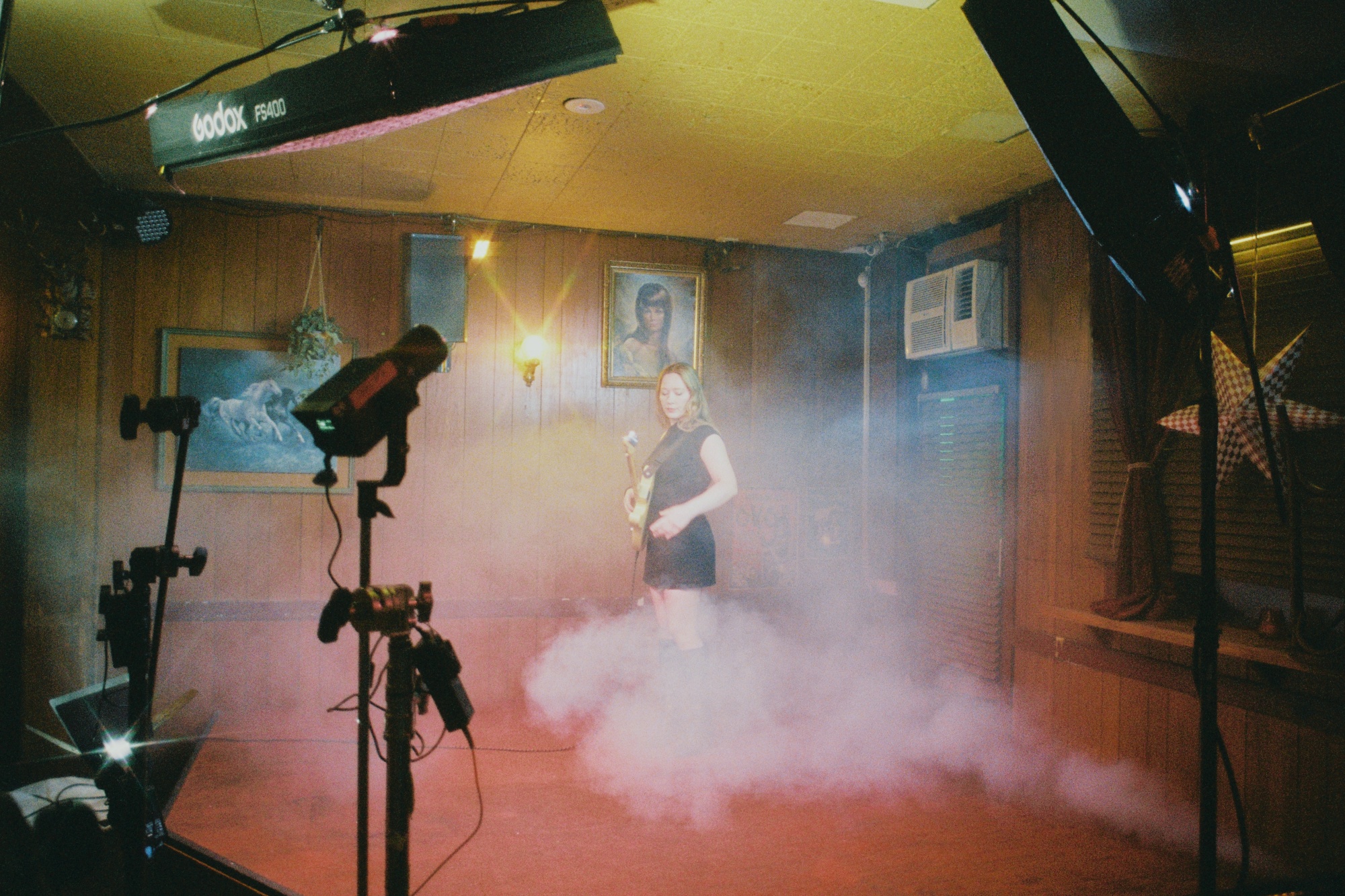
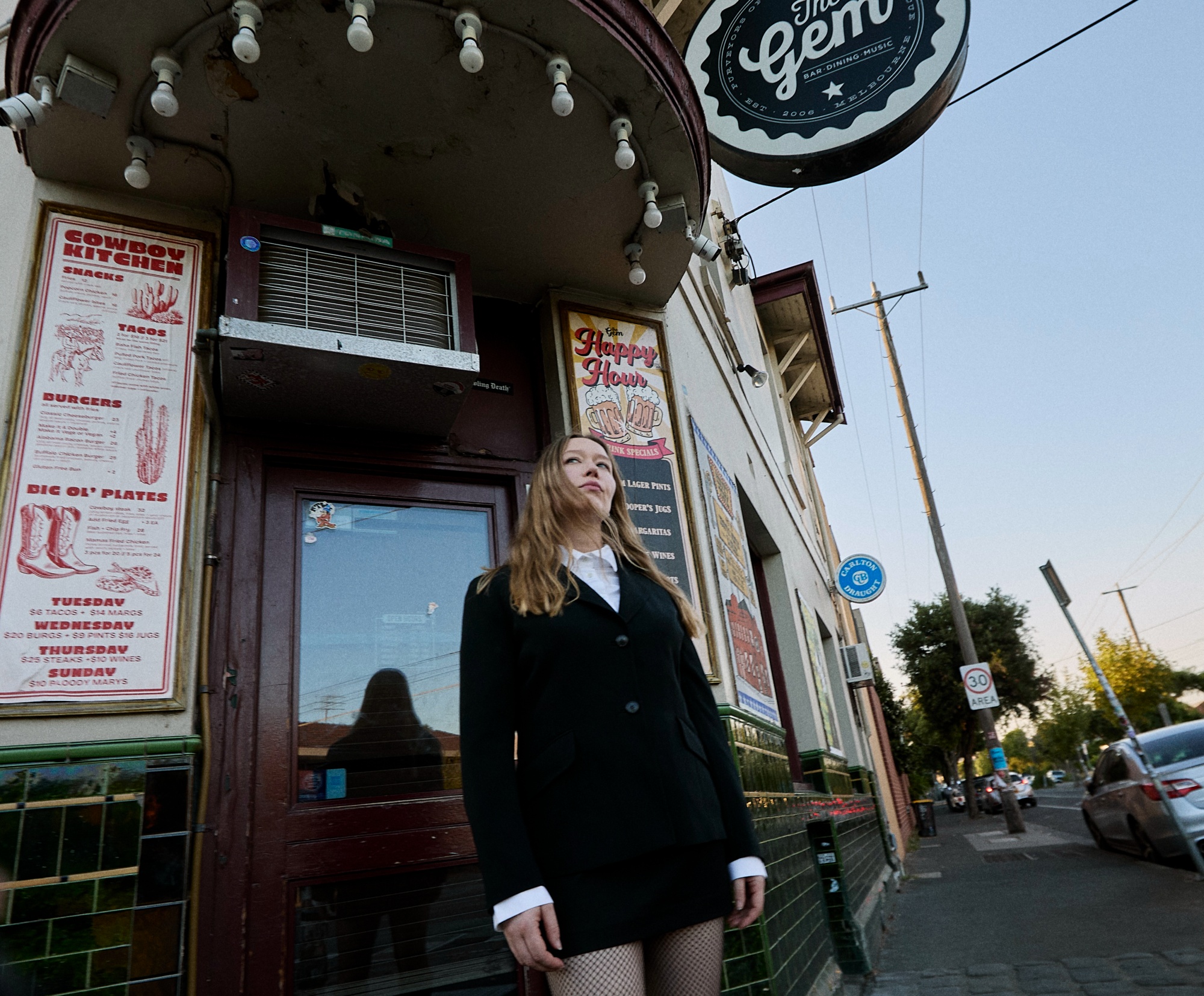
“The Gem” is named after a bar you frequented when you first moved to Melbourne, and you recorded some of the songs in a studio above it. How important is this title, and do you feel that the record particularly encapsulates the person that you became when you moved?
I'm glad that I could (title) it after The Gem, because I feel very passionate about small venues. I wouldn't be where I am today if it wasn't for (them); they allowed me to learn how to play music. There are so many in my life that I am very grateful for.
The Australian pub is kind of like a community space: I grew up in a smallish town with two pubs, and you go (there) to have lunch with your grandma, see friends, and see bands. It feels very comforting and familiar. And a lot of (my) job, I find quite difficult in (terms of) how unfamiliar it is and how much it takes me away from home.
It just felt really nice to go (to The Gem) to work every day. It felt more natural to what life is like outside the music industry, which then helped me connect a little more with myself and my life outside of music, even though I was there making music. I moved here 10 years ago but I've spent a lot of time away touring, and this helped me feel like part of this place; somebody that people can get used to seeing around instead of somebody who's always away.
I get what you mean. I've noticed in your previous interviews that you speak very frankly about music being, of course, your dream, but also your job. How do you remain in love with music, even with the demands of the industry?
It's always a challenge. It’s the “music” industry, but sometimes music feels secondary to a lot of things. But I'm obsessed with music. I feel more connected to being a music fan than a musician. I'm not somebody who's always playing music. I don't write heaps of songs. I'm not doing it every day, but what I am doing most days is listening to music. And I love going to shows. That's what keeps me connected.
That's what makes me feel connected as well to my childhood self that had dreams of being a singer. I've kept journals my whole life, and whenever I read anything (I wrote as a child), I'm reminded of how much I have always loved music, way before I knew anything about the music industry or what was cool.
I try to always keep in touch with my fandom of music. I think that's more important to me than actually being a musician, but it helps me to be a musician myself.
You said that something you’ve been contending with your whole life is wanting to love and be loved, but also wanting to feel free. What's the closest thing you have to an answer to that, at this point in your life?
When I was thinking about that, I don't think I ever thought I would feel the way I feel now. That's because the last couple of years and (having made) this record have been a big part of (my realization) that you can feel free and (still) love and be loved if you're surrounded by the right people. (Being with) people who see you and like you, who allow you to make mistakes and assume the best of you, can be so freeing. When I was younger, I thought freedom meant being alone.
Older people always tell you this, but you just don't learn it until you learn it: Your life is going to be made by the people you surround yourself with. It’s so important to get it right because they will reflect to you who you are, and they help you love yourself and see yourself.
I'm sure I'll have many moments in my life where I'll go down the wrong path again, but I think now (that) I've actually experienced what that feels like, I'm going to be a lot better at detecting when it's not right.
I want to ask about the running theme of spirituality, or at least this presence of an omnipotent being, not just in this album, but in the previous ones as well. You shared before that you studied in a Catholic school, although you're not particularly religious. Do you think that upbringing had a hand in shaping how you think about love and relationships?
Yeah. I grew up going to a Catholic school, and sometimes I would go to church with my grandmother. You're absorbing it when your brain is (still) developing. It's interesting when people either assume I'm religious now because I reference religious things or that I may be making a statement about it, and I'm like, it's just part of the way I was socialized to see the world, for better or worse. It's just part of my language.
My parents weren't religious, but they also grew up going to church. So their ideas about right and wrong are also tied up in religion. It's very hard to completely separate those things. In the band and (among) the people that I made this record with, more than half of (them) also grew up in organized religion, and it's very (influential) in who they are as people and how they learned about love, closeness, intimacy, and their relationships to themselves and their goodness. I don't think I have much control over it in a weird way.
Two of the songs on the record, God Sometimes and If I Had the Hand of God, were almost like stream-of-consciousness songs where those words just came out of my mouth and I had to honor them instead of overthinking (why I used them), because they obviously have such different meanings for many people. A huge part of why I make music is because I want to connect with people and express things, and that is something so many of us share.
***
Listen to “The Gem” by Julia Jacklin on all major music streaming platforms via 4AD. Follow the artist at @juliajacklin.
Story by Andrea Panaligan
Photos courtesy of 4AD
Cover design by Alyza Laforteza