

If I could time travel, I would choose the Victorian era
I wasn’t born during the Victorian era (obviously), but sometimes I wonder if I lived through it in a past life. It’s the only explanation I can come up with for my fascination with many things Victorian. Ever since I was young, I’ve been irresistibly drawn to the prettiness and femininity of that era.
Queen Victoria ruled Britain from 1837 to 1901 in one of the most fascinating periods in history. It was an era of progress. Railways transformed travel, photography was invented, cities expanded, and the British Empire reached its height. Yet for all its advances, the Victorian age also celebrated beauty, refinement and sentimentality. Homes were richly furnished, handwritten letters were treasured, flowers carried hidden meanings, afternoon tea became a cherished ritual, and even the smallest household objects were crafted with remarkable attention to detail. Perhaps that’s what captivates me most.
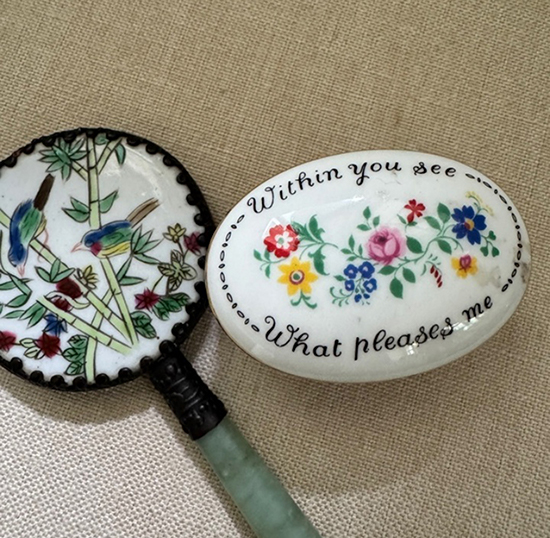
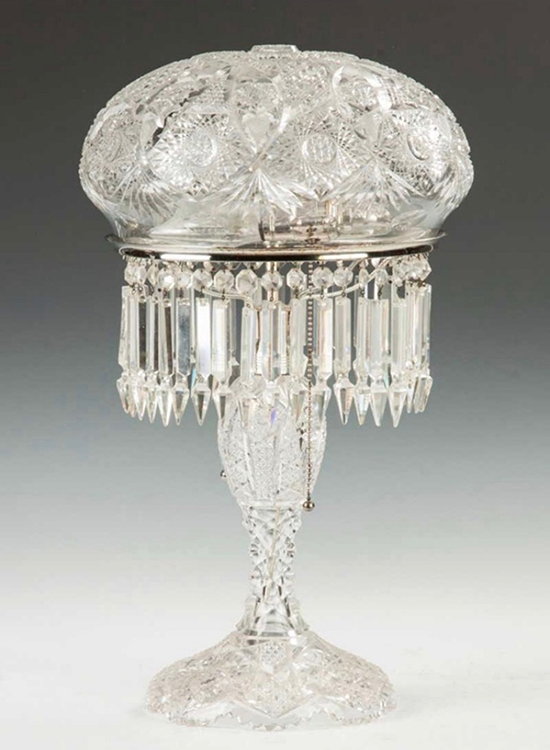
Looking back, I realize my bedroom growing up already reflected that fascination long before I even knew what “Victorian” meant. I had Victorian-style crystal lamps with dangling teardrops, furniture with painted flowers, and crystal bowls with potpourri. One of my favorite keepsakes was a tiny porcelain box that had the words, “Within you see what pleases me.” Open it, and it reveals a mirror. I still think that’s so much more romantic than sending someone a heart emoji.
Here are some of the Victorian things that continue to fascinate me and might interest you.
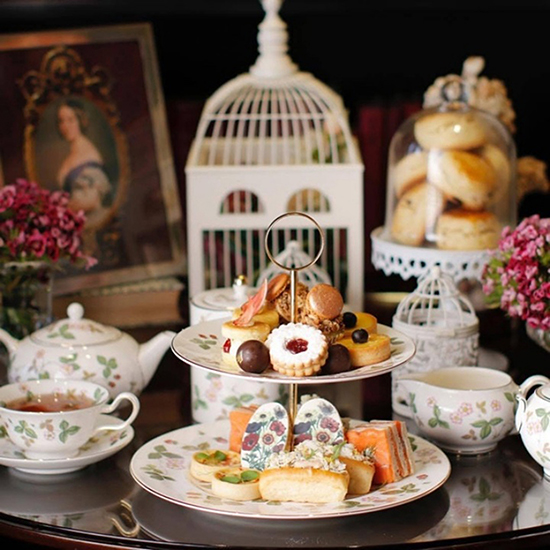
Afternoon tea: It’s actually low tea. One of my favorite Victorian traditions is afternoon tea. Ironically, one of the biggest misconceptions today is that luxury hotels serve “high tea.” In reality, what they’re serving is almost always afternoon tea, also known as low tea. The custom began in the 1840s with Anna Maria Russell, the Duchess of Bedford, one of Queen Victoria’s closest companions. Dinner among the upper classes had gradually moved later into the evening, often around eight o’clock, leaving an uncomfortably long stretch between lunch and dinner. To satisfy her afternoon hunger, the Duchess requested tea, bread and butter, cakes and sandwiches around four o’clock. She soon invited friends to join her, Queen Victoria embraced the custom and afternoon tea quickly became one of Britain’s most beloved social rituals.
CONTINUE READING BELOW

It was called low tea because it was served in drawing rooms on low sofas and armchairs around low tables. High tea, despite its grand-sounding name, was actually the hearty evening meal of working families, eaten at a high dining table after a day’s work. Think of it as an early dinner with heavier additions like meat pies, cold cuts, etc. Somehow, over the years, the two became confused. Of course, afternoon tea wouldn’t be afternoon tea without its scones served with clotted cream and strawberry jam, delicate sandwiches, assorted cakes, and perhaps the most iconic of them all, the Victoria sponge—a light sponge cake filled with raspberry jam and whipped cream, said to have been one of Queen Victoria’s favorites. Everything was served on elegant tiered cake stands alongside fine bone china, silver teapots and, of course, a perfectly brewed pot of tea. I’ve always loved afternoon tea because it celebrates something we’ve forgotten: slowing down. Imagine an entire tradition devoted to not rushing.
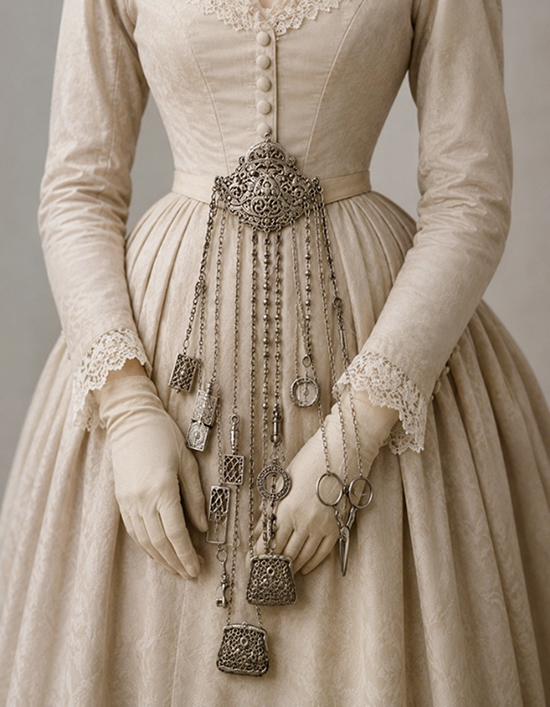
The chatelaine: The original bag charm. Long before luxury handbags became canvases for charms and accessories, Victorian women wore a chatelaine, an ornate clasp attached to the waist with delicate chains suspending scissors, keys, notebooks, sewing tools, watches, pencils and tiny perfume bottles. Aside from not having handbags (which, strangely, men carried), women had no pockets in their clothes. I can’t help thinking the Victorians invented the original version of today’s personalized handbags. Instead of Labubus, oversized bag charms, AirPods cases and miniature pouches dangling from designer bags, they carried exquisitely crafted silver accessories that were both practical and beautiful. Fashion may change, but our desire to personalize the things we carry remains.
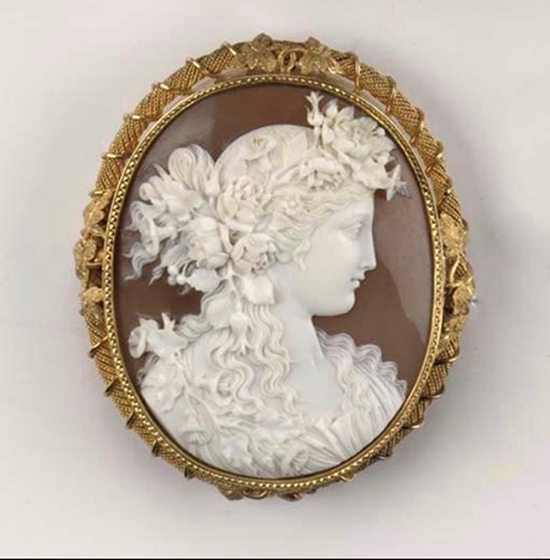
Fashion that defined an era. Victorian fashion was nothing if not elegant. Women wore full skirts supported by crinolines and later bustles, fitted bodices, high lace collars and sleeves adorned with ruffles and delicate embroidery. Gloves, parasols, cameos, ribbons and hats overflowing with flowers completed the look. Every outfit seemed designed to celebrate femininity. Looking at fashion today, it’s easy to see why the Victorian age continues to inspire period dramas, bridal gowns and even modern designers. While I certainly wouldn’t trade today’s comfortable clothing for a tightly laced corset (it reached the height of popularity during this time), I can’t deny that Victorian fashion possessed a timeless grace.
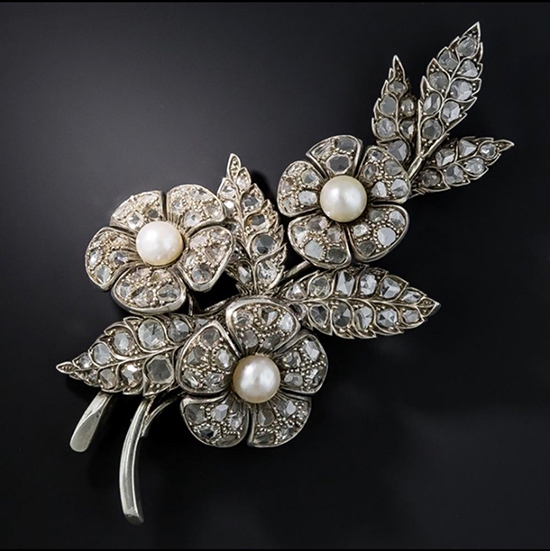
Jewelry that told a story. Victorian jewelry was never simply about sparkle. Every piece seemed to carry meaning. Cameo brooches carved with delicate classical profiles became symbols of refinement, lockets held miniature portraits or cherished mementos, and serpents, popularized after Prince Albert gave Queen Victoria a snake engagement ring, symbolized eternal love and wisdom. Flowers, hearts, bows and stars all conveyed messages that would have been immediately understood in Victorian society. More than a century later, Victorian jewelry continues to inspire contemporary designers. Cameos appear in the collections of luxury houses while pearls, lockets, ornate brooches and vintage-inspired earrings regularly return to fashion. It seems the Victorians understood something we still appreciate today: jewelry is at its most valuable when it tells a story.
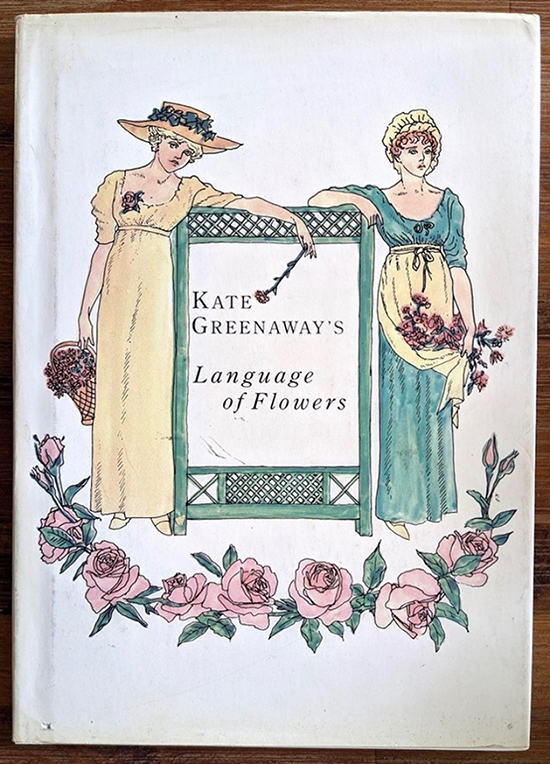
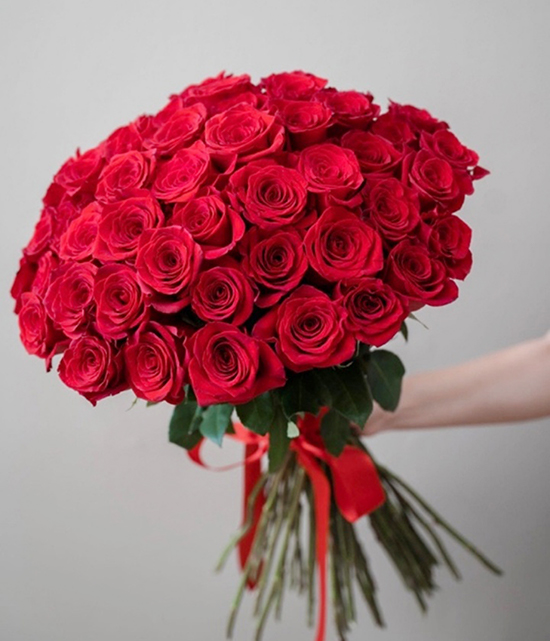
Floriography: When flowers did the talking. The Victorians turned flowers into a language, as it was a time when society was very restrained. The practice was called floriography, where every bloom conveyed a hidden meaning. Red roses declared passionate love, forget-me-nots pleaded to be remembered, lilies symbolized purity and yellow carnations hinted at disappointment. In fact, a popular book published in 1884 by Kate Greenaway was one of the best-loved Victorian books on floriography. So, imagine receiving a bouquet and having to decipher its message. It seems wonderfully romantic compared with a text message. The Victorians understood that sometimes flowers could say what words could not.
The secret language of fans. As if flowers weren’t enough, the Victorians even turned handheld fans into a form of silent communication. Whether all the gestures were universally understood, the idea itself is wonderfully romantic. Holding a fan to one’s lips could mean, “Kiss me.” Letting it rest against the right cheek might signal “Yes,” while the left cheek meant “No.” Opening and closing a fan in a particular way supposedly sent different messages across a crowded ballroom. Imagine carrying on an entire flirtation without saying a single word. There’s something exciting about the thought that a simple flick of a fan could set hearts racing.
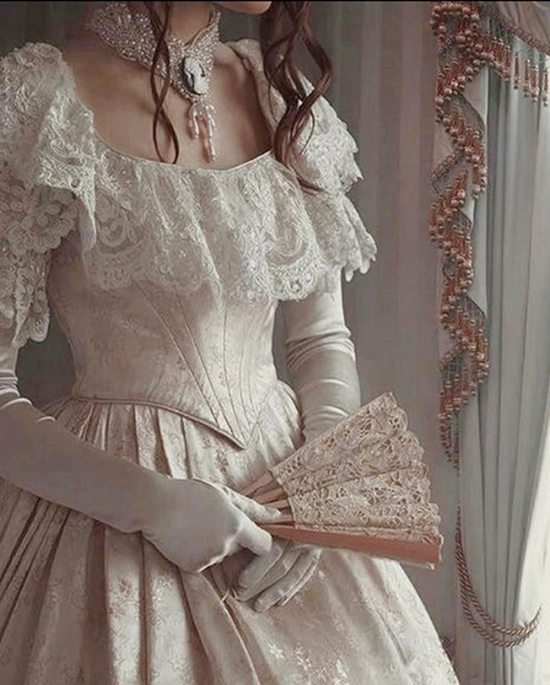
The delightfully elegant way they spoke. One of the things I enjoy most is the wonderfully elaborate language associated with the Victorian era. Social media is filled with humorous “Victorian translations” of everyday phrases. They’re parodies, of course, not authentic 19th-century quotations, but they capture the elaborate elegance we associate with the era. Instead of bluntly saying, “You’re an idiot,” a “Victorian translation” might read something like: “It is with no small measure of regret that I find myself compelled to observe that Providence, in its infinite wisdom, appears to have bestowed upon you many admirable qualities, though an abundance of sound judgment was, regrettably, not among them.” Instead of saying, “You’re wrong,” one might say, “With the greatest respect, I find myself unable to accompany you to that conclusion.” Instead of saying, “You’re being dramatic,” it becomes, “One fears your imagination has rather outrun the facts.” Hilarious!
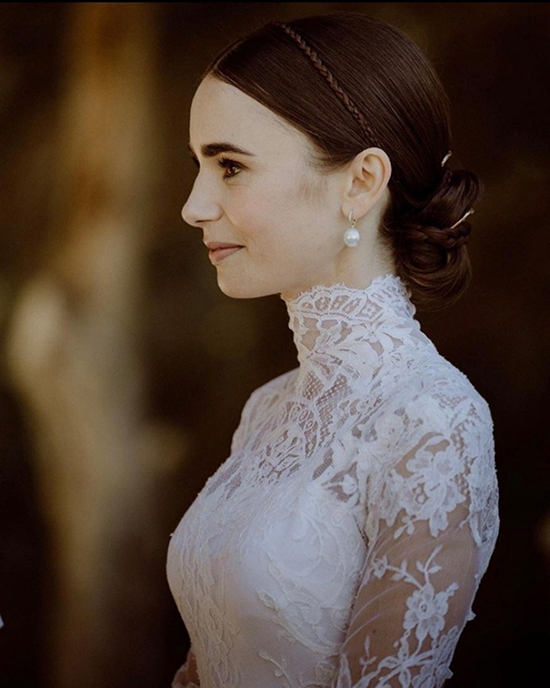
Tiny objects with big sentiment. The Victorians loved beautiful little things. Porcelain keepsake boxes, cameo brooches, lockets, calling card cases, perfume bottles, wax seal sets, fans and tiny decorative ornaments reflected a culture that found joy in life’s smallest details. I completely understand the appeal.
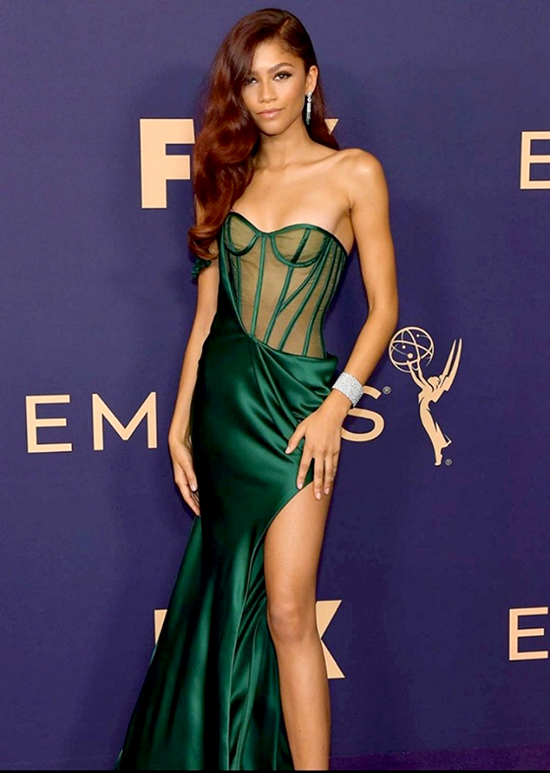
Ornate bird cages. Another object I can’t help admiring is the Victorian bird cage. These weren’t merely cages; they were beautifully crafted decorative pieces made of wrought iron often embellished with scrollwork, domes and intricate detailing. Even today, ornate bird cages remain popular as decorative accents filled with candles, greenery, flowers or fairy lights. It appeals to me to have birds and house them in a pretty Victorian birdcage.
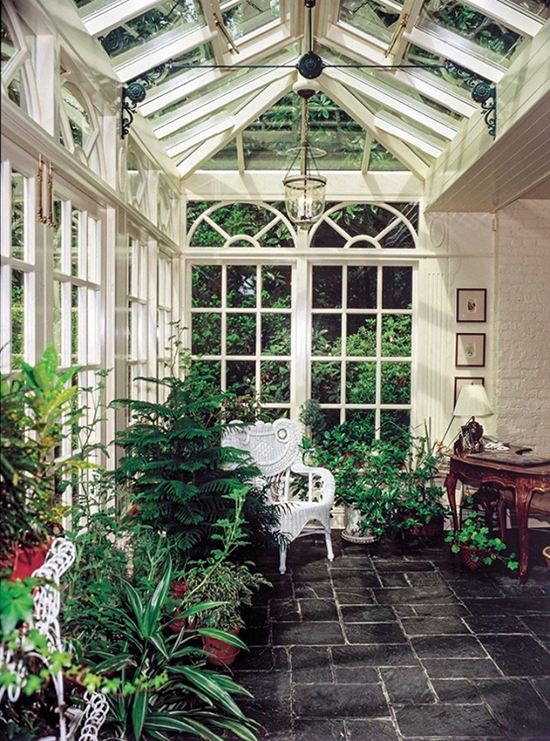
Conservatories and indoor gardens. Victorian homes often included magnificent conservatories filled with palms, orchids, ferns and exotic plants collected from around the world. Long before wellness became fashionable, they understood the calming effect of surrounding oneself with nature. Perhaps our modern obsession with houseplants is simply another Victorian revival.
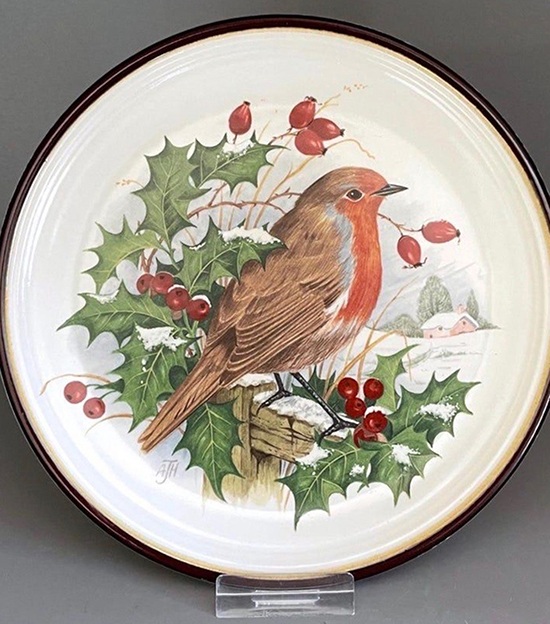
A Victorian Christmas and the curious story of the robin. Many of the Christmas traditions we still enjoy today flourished during Queen Victoria’s reign. Prince Albert, her husband, introduced the German custom of decorating Christmas trees to Britain. Christmas cards, too, became enormously popular. One of my favorite Victorian stories is how the robin became associated with Christmas. During the 19th century, British postmen who delivered Christmas cards wore bright red uniforms and were affectionately nicknamed “robins” because they resembled the little red-breasted birds. Artists soon began illustrating Christmas cards with robins carrying letters or perched beside mailboxes. Over time, the bird itself became one of the enduring symbols of Christmas, appearing on holiday cards and decorations. It’s one of those delightful little historical details that makes the Victorian era endlessly fascinating.
We all have an era that calls to us. Mine just happens to be Victorian England. And if someone ever invents a time machine, expect me to be on it—to perhaps enjoy some afternoon tea.

WATCH: Is OPM still as good as it used to be? (Generations Ep. 20)
September 9, 2026
WATCH: Do you still believe in marriage? (Generations Ep. 17)
August 19, 2026