

Did Coco Chanel try to set Elsa Schiaparelli on fire?
History has a beautiful, almost mischievous way of grouping opposites together, forcing individuals who share absolutely nothing but a timeline to divide a legacy. In the turbulent decades between the global wars, Parisian haute couture was ruled by two women who simply could not bear the sight of each other.
Gabrielle Coco Chanel and Elsa Schiaparelli were the architects of modern female style, yet they viewed the human body through irreconcilable lenses. One sought to strip away the useless clutter of the past to give women a sleek, functional uniform for a fast-moving century, while the other sought to turn women into walking canvases of wild, intellectual poetry. They were titans, visionaries, and bitter adversaries whose paths kept crossing in the narrow, gossipy spaces of high society.
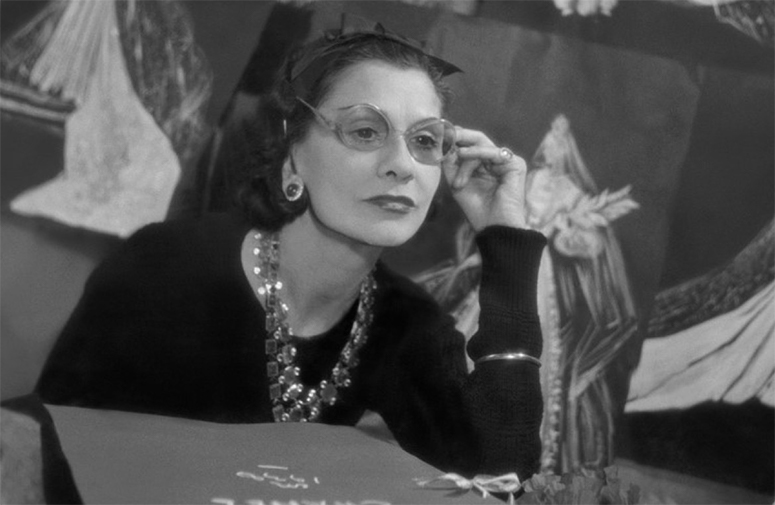
Their public warfare was fueled by a fascinating paradox in their origins, a contrast that defined their characters long before they ever touched a piece of fabric. Coco was born poor in rural Saumur in Western France while Elsa began her life with a silver spoon in her mouth, surrounded by the high culture of Rome. Yet, upon coming of age, they shared something else in common. They both spent their formative years under the care of Catholic nuns, Coco as an impoverished orphan learning to sew, and Elsa as a wealthy rebel being punished for her defiance.
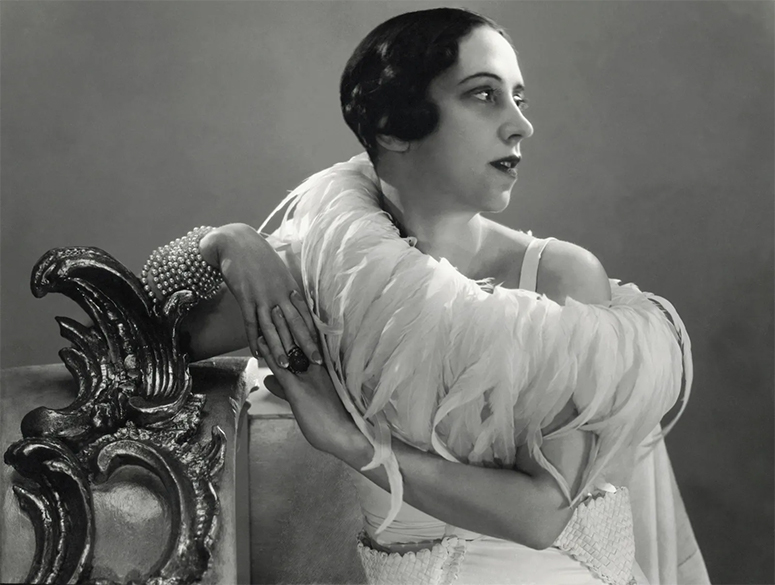
Though both were shaped by the strictness of the convent, they walked out seeing beauty through opposite eyes. For Coco, the harsh austerity of Aubazine became a permanent philosophy, a template for a clean, functional minimalism that stripped away the heavy decorations of the 19th century. For Elsa, the Swiss cloistered school sparked a lifelong romance with the avant-garde, a desperate need to provoke through clothes that defied standard classification.
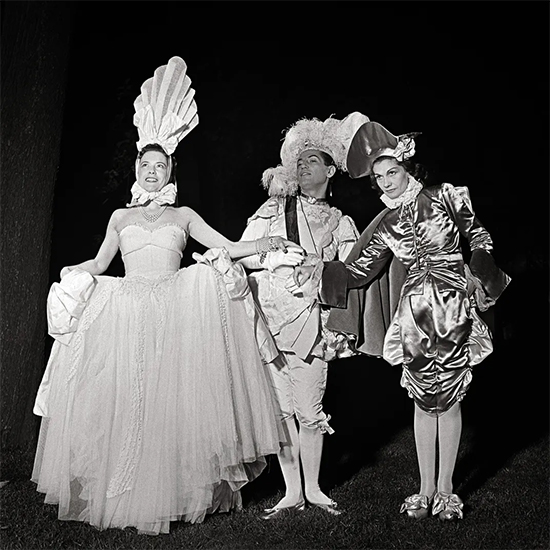
These two conflicting worldviews collided beautifully during the golden summer of 1938. At the infamous Circus Ball, hosted by Elsie de Wolfe at her Villa Trianon in Versailles, their orbits aligned.
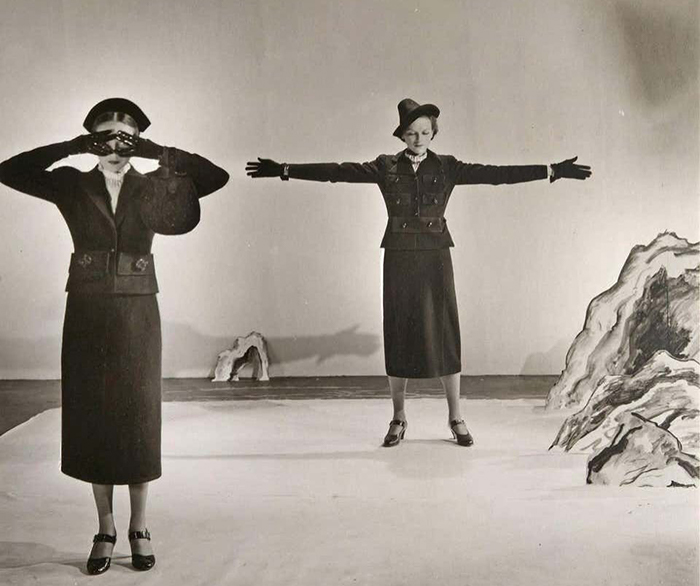
Coco arrived in her signature, austere, impeccably tailored black. Elsa showed up as a walking piece of art, covered in branches and Surrealist bark. The grand lawn was a dream of tented pavilions, live circus animals, and flowing vintage champagne. The international elite mingled under the warm French sky, but the real theater began when the two queens of couture walked into the pavilion.
CONTINUE READING BELOW

Coco looked like the embodiment of modern pragmatism, her dark dress absorbing the light around her. Moments later, Elsa turned every head in the room. She had collaborated with her close surrealist friends, including Salvador Dalí, to create a garment that resembled a mythical tree that had just walked out of an enchanted forest. It was a direct provocation aimed straight at Coco’s devotion to realism. The surrounding chatter dimmed as the two women squared off near the edge of the floor, drawing an immediate ring of painters, counts, and socialites.
Let me imagine what they could have said to each other using their own words that have gone down in history. Decades before both would die peacefully at home in Paris, Coco at the Ritz in 1971 and Elsa in her hôtel particulier two years later, they stood face-to-face in the summer of 1938, two titans measuring each other across a crowded room.
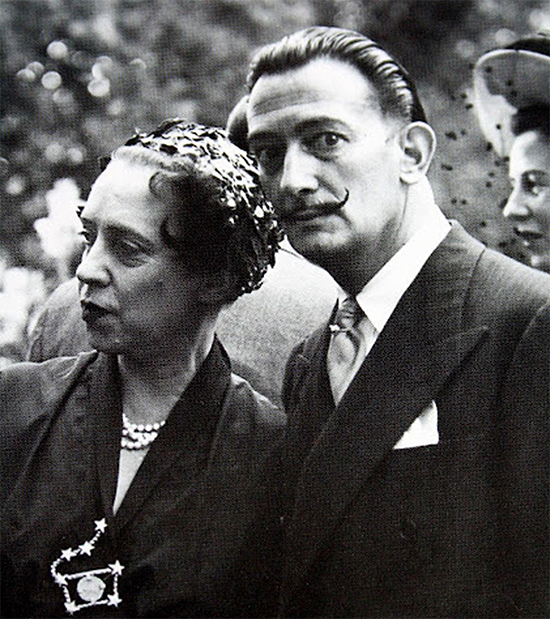
Coco looked at Elsa with a cold, critical eye before speaking. “Fashion changes, but style endures,” she said, her voice dropping like an absolute decree.
Elsa did not flinch, adjusting a twig of her garment with a slow, deliberate movement. “Dresses that are truly beautiful are never unfashionable,” she replied, her tone laced with aristocratic confidence.
Coco tilted her head, her sharp eyes scanning the elaborate bark costume with unmistakable disdain. “Fashion is not something that exists in dresses only. Fashion is in the sky, in the street, fashion has to do with ideas, the way we live, what is happening,” she shrugged.
Elsa offered a thin, mocking smile, unfazed by the criticism of her theatrical elegance. “Fashion is born by small facts, trends, or even politics, never by trying to make little pleats and furbelows, by trinkets, by clothes easy to copy, or by the shortening or lengthening of a skirt,” she argued, aiming her words directly at Coco’s commercial success and highly copied designs.
Coco, who pridefully guarded her independence, looked at the Italian aristocrat with a steady, unyielding gaze.
“The most courageous act is still to think for yourself. Aloud,” she hissed.
Elsa let out a delicate sigh, glancing briefly at the sea of sleek black gowns that filled the room, all of them mimicking her rival’s uniform.
“Women dress alike all over the world. They dress to be annoying to other women,” she countered, her wit cutting through the polite veneer of the ballroom.
Coco looked down at her champagne flute, her expression momentarily turning reflective.
“It’s probably not by chance that I’m alone,” she said, her voice carrying a rare, raw honesty. “It would be very hard for a man to live with me, unless he’s terribly strong. And if he’s stronger than I, I’m the one who can’t live with him.”
Elsa nodded in agreement, recognizing the unique burden borne by women who refused to subordinate their minds to the expectations of society.
“Many men admire strong women but they don’t love them,” she mused, her thoughts lingering on the delicate balance between ambition and emotional fulfillment. “Some women succeed at being strong and also tender, but most of those who have intended to walk alone, making their own way, have lost their happiness.”
A waiter interrupted them with a pass-around tray of tender lamb chops. Coco waved him away with dismissive authority while Elsa smiled and took one.
Coco watched her rival with an expression of sharp disapproval. “Elegance is refusal,” she said, shaking her head.
Elsa savored the bite, entirely unbothered by the critique, her eyes twinkling with appreciation for life’s luxuries. “Eating well gives a spectacular joy to life and contributes immensely to goodwill,” she retorted.
The psychological tension of the conversation could not hold under the low ceilings of the tented pavilion. Coco, infuriated by Elsa’s refusal to be diminished, put her champagne glass down on a nearby table. Her face was a mask of polite malice as she invited the Italian designer onto the crowded dance floor for a waltz. Elsa accepted the challenge without a single trace of hesitation, stepping into the throng of dancers who quickly parted to watch the two titans move together.
Coco took the lead with dramatic precision, her movements sharp and controlling. She navigated the crowded floor, seemingly blind to a massive, tiered candelabra that stood near the edge of the pavilion, its real wax candles burning brightly in the summer air. With a sudden, forceful swing of the dance, Coco brought Elsa straight into contact with the blazing fixtures.
The dry branches and faux bark of Elsa’s costume brushed against the open flames and caught fire instantly. Bright tongues of fire leaped up her shoulder, casting a sudden, terrifying glow across the faces of the onlookers. Shouts of panic echoed through the ballroom as the surrealist tree began to burn. Socialites scrambled backward in terror, but Elsa stayed still, maintaining her dignity even as the flames wrapped around her torso. Several alert guests lunged toward the bar, grabbing siphons of chilled soda water and dousing the designer until the fire was extinguished.
Elsa stood in the center of the floor, soaked and smelling of burnt wood, yet her posture remained unbroken. She smoothed her damp dress with complete composure, looking directly at Coco, who stood a few feet away with an air that could have passed for concern—or cold triumph. In their lifelong war, it was a moment when the practical dressmaker tried to burn the fantasy of the artist, only to find that her rival’s spirit was fireproof.
Years later, the fires of their rivalry would finally burn themselves out in the soil of the French capital. They left behind a world forever altered by their presence, an industry shaped by the collision of their minds. Their legendary confrontation at Versailles remains an intoxicating reminder of a time when fashion was a matter of life and death, and when two different girls from two different convents fought to give the modern woman her soul.

WATCH: Do you still believe in marriage? (Generations Ep. 17)
August 19, 2026
WATCH: Is Gen Z too soft? (Generations Ep. 23)
September 30, 2026