

The trouble with looking your age
Age, lately, feels less like a number and more like a guessing game—one where everyone is oddly confident and frequently incorrect.
We tend to talk about ageism in its louder forms: being deemed “past your prime,” assumptions about adaptability or energy, the sense that relevance has a shelf life. But there’s also a quieter, everyday version—the labels and snap judgments that slip into casual conversation. “Boomer,” for example, has drifted from a literal generation into a catch-all insult. It’s less about birth year now and more about attitude, a shorthand for being out of touch.
Age has become aesthetic. Something to be read at a glance—and, increasingly, something to be managed.
The beauty industry is thriving on that premise. There are serums promising age reversal, intimidating sci-fi-like treatments, and skincare routines that require both commitment and disposable income. The goal isn’t just to look good; it’s to look unchanged. Or at least, ambiguously aged. Aging is inevitable, but looking like you’re aging is treated as optional.
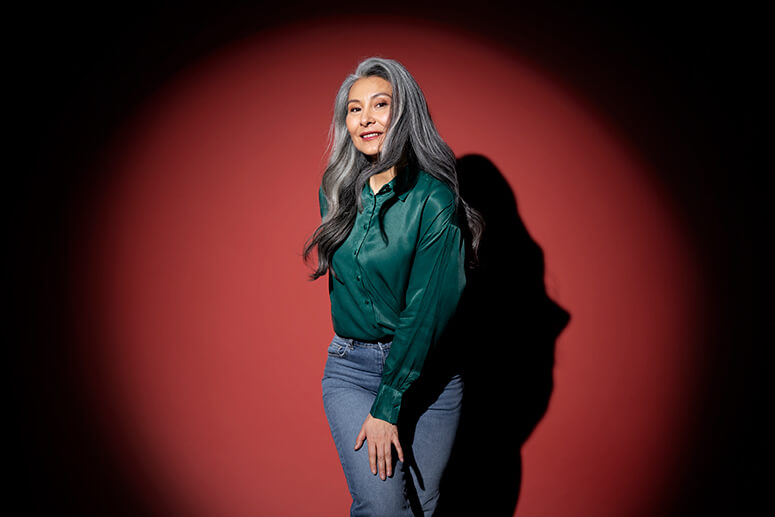
Hair sits right in the middle of this negotiation. More women are embracing silver, wearing it as a kind of quiet defiance—or relief. Others, myself included, aren’t quite ready to give up the dye. Partly vanity, partly preference, partly a strategic commitment to remaining just ambiguous enough that people can’t immediately place you. There’s also that faint, persistent whisper about what years of chemicals might be doing—but not quite enough to tip the balance.
And then there’s social media, where age has entered its fully surreal era.
CONTINUE READING BELOW

Filters and editing tools have become so sophisticated that some people now post versions of themselves that appear to be separated from reality by at least three decades. One understands the impulse. Ageism has made looking “old” feel almost like a moral failure, particularly for women. The pressure to appear perpetually youthful doesn’t end at 40—the age that apparently marks the official start of middle age. It simply acquires better apps.
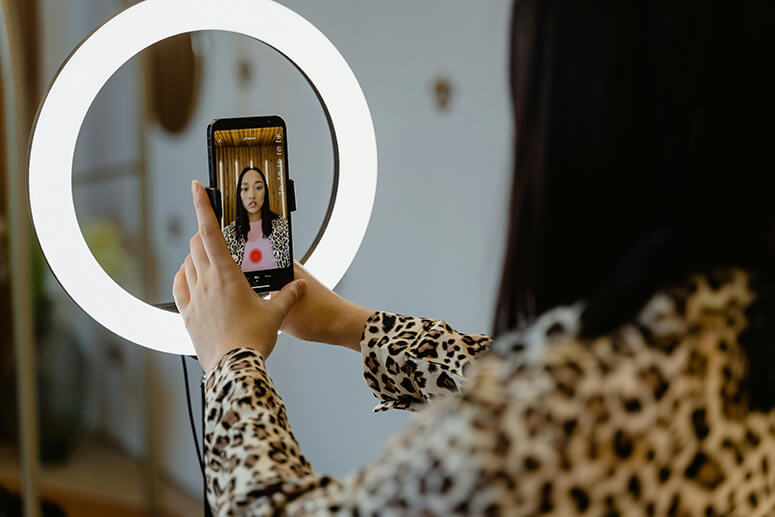
Still, there comes a point where the editing becomes unintentionally comedic. Madam, you’ve earned the senior discount. You do not need to present yourself online as a dewy 25-year-old with the skin texture of a hard-boiled egg. Nobody is fooled, least of all your former classmates from high school who saw your tagged photos from last week.
This is especially funny in my own family because I have a cousin—a fellow middle-ager—who has a real commitment to heavily filtered social media photos. After every get-together, there are effectively two sets of photos posted online: the normal version and her version, where everyone suddenly has poreless skin, enlarged eyes, sharpened jawlines, and the soft-focus glow of people who have recently been reborn as K-drama stars. Half the time, we don’t even recognize ourselves.
Everyone wants to age gracefully; still, nobody wants to look old doing it.
My Gen Z nieces call this the “AI version,” which is both hilarious and devastatingly accurate. And once you notice it, you start seeing it everywhere—the gap between people’s online faces and their real ones becoming wider and wider. Sometimes you meet someone in person after only seeing their social media photos and experience a brief moment of genuine confusion, like your brain is trying to match software to hardware.
What’s ironic is that many of these women already look good. More than good, actually. But ageism has trained people to fear the visible signs of time so intensely that even a perfectly normal face becomes something to digitally negotiate with.
And yet, something more interesting is happening beneath all that surface management.
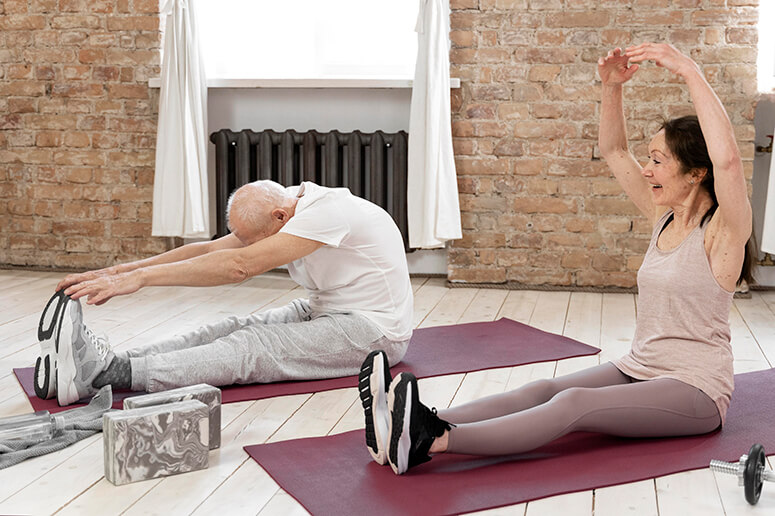
People are putting real effort into aging well—not just looking younger, but functioning better. The shift is subtle but meaningful: strength over thinness, sleep over hustle, consistency over quick fixes. Gyms are fuller, yes, but so are early bedtimes. Wellness has moved, at least in part, from aesthetics to capability. And because of better habits and lifestyles, 50- and 60-somethings today often look younger than their counterparts from previous generations.
There was a time when sleep was optional, nicotine was practically a food group, and “self-care” wasn’t yet part of our lexicon. The body coped, until it didn’t. Now, the priorities look different: regular workouts, actual rest, a kind of maintenance that would have seemed excessive years ago.

The result isn’t necessarily a smaller body. But it is, often, a stronger one. I’m certainly stronger now than I was back in my 20s—when sleep was scarce and bad habits were plentiful. Not as skinny, perhaps, but sturdier. More reliable. Strong enough, at least, to keep up with the young ones.
Which is why aging can feel so strange: Outwardly, people are looking younger longer, while internally, the body still keeps score.
I was reminded of this during a recent visit to a pain management doctor for chronic neck pain. He looked at me, then at my chart, then at my scans. Finally, almost apologetically, he said: “You look very young. Unfortunately, your scans say otherwise.”
It was both hilarious and ego-bruising—the perfect summary of middle age, really.
Because that’s the contradiction nobody quite prepares you for. You can sleep better, work out regularly, hydrate, take your supplements, and still discover that your cervical spine has apparently been living a completely separate life.
And yet, the visual expectations remain stubbornly simplistic.
We still expect people to look their age, and when they don’t, confusion follows. There’s a particular kind of shock when someone’s age turns out to be completely different from what everyone assumed.
There’s also the language, which quietly gives the game away. A woman rarely just “looks good.” She looks good for her age. The compliment arrives with a qualifier, as if beauty past a certain point needs context, nay, permission.
Even Madonna — arguably one of the most age-defying women in pop culture—is trapped in this impossible balancing act. Age naturally and people say you’ve let yourself go. Fight aging too aggressively and suddenly you’re accused of refusing to accept reality. It’s hard not to conclude that the real issue isn’t aging itself, but the discomfort people have with women remaining visible as they grow older.
There was a time, not long ago, when a friend and I learned that someone we both thought was comfortably older was, in fact, younger than we were. Our reaction wasn’t graceful. It was snickers—the slightly disbelieving kind that comes from realizing how unreliable our internal measuring systems are.
This same friend then recounted, with genuine indignation, the moment someone addressed him as “Tatang.” The offense was immediate and disproportionate, which of course made it even funnier. It says a lot about how we have become sensitive to the language of aging—even affectionate speech can suddenly sound like demographic reassignment.
That instinct to categorize shows up elsewhere, too. Take the old idea of “dressing your age.” It lingers, vaguely, like a rule no one remembers agreeing to but many still feel judged by. In 2026, it feels increasingly outdated—less a guideline and more a relic. Fuchsia hair at 60, a miniskirt at 50—none of it reads as rebellion anymore. It just reads as personal style.
Which may be the real shift.
Because if age can’t be reliably seen—and if it no longer dictates how someone should look or dress—then the shortcuts start to fall apart. The idea that you can tell who’s capable, relevant, or adaptable just by looking becomes harder to defend.
So we hover in this strange middle ground—still joking about “boomers,” still investing in creams and photo filters, still holding onto small illusions (hair dye included). But also, increasingly, redefining what it means to age well.
Less about appearing untouched by time. More about meeting it with a bit more strength, self-awareness, and humor than before.
Even if, occasionally, your MRI has other plans.

WATCH: Discovering Vietnam in three days
June 9, 2026
WATCH: Is Philippine cinema still thriving? (Generations Ep. 19)
September 2, 2026
WATCH: Pixar Summer Fest adventure at Hong Kong Disneyland
August 10, 2026